Post by cebudentalimplants (@cebudentalimplants)
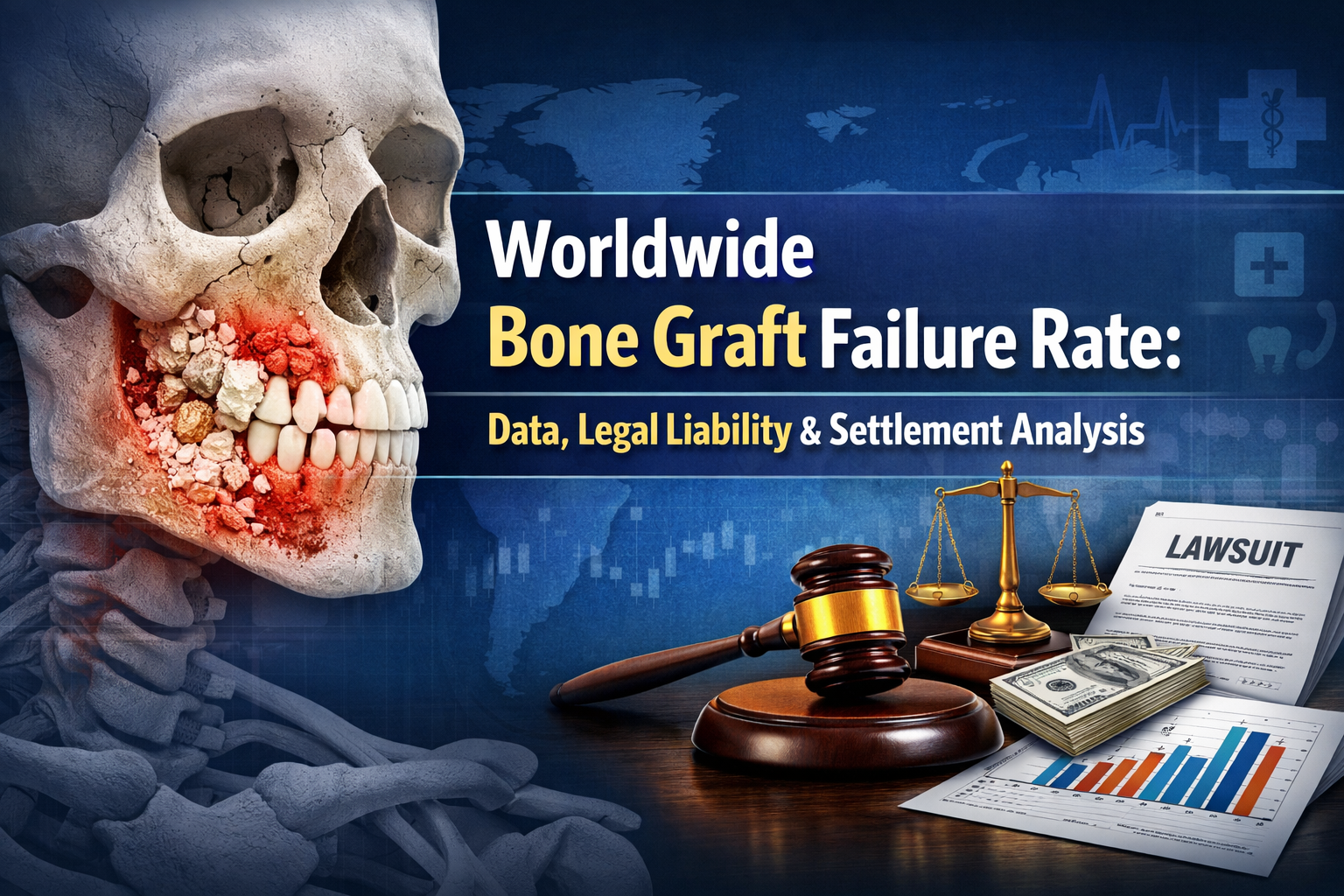
Language : EnglishTopics: Bone graftWorldwide Bone Graft Failure Rate: Data Analysis, Liability & Legal Reality
Bone grafting is widely used in implant dentistry to rebuild jawbone volume before placing implants. Globally, it is considered a predictable procedure — yet failures still occur.
This article reviews worldwide data, analyzes responsibility (dentist vs. patient health factors), and explains how a legal lawyer would examine a potential malpractice case.
Global Bone Graft Success & Failure Rates
Based on systematic reviews in implant dentistry literature:
Overall bone graft success rate: 90% – 95%
Failure rate: 5% – 10%
Guided Bone Regeneration (GBR) success: 88% – 96%
Sinus lift graft success: 85% – 95%
These numbers vary depending on:
Type of graft material
Surgeon experience
Infection control
Patient systemic health
Smoking habits
Important: A failure rate of 5–10% does NOT automatically mean malpractice. Even well-performed procedures have biological risks.
Is Bone Graft Failure the Dentist’s Fault or Patient’s Health Issue?
There is no automatic answer. It depends on causation.
1. Patient-Related Causes (Non-Negligent Situations)
Common health factors contributing to failure:
Heavy smoking
Uncontrolled diabetes
Osteoporosis
Poor oral hygiene
Autoimmune disease
Severe bone deficiency
Non-compliance with post-op instructions
If documentation shows these risks were disclosed and properly managed, liability may not fall on the dentist.
2. Dentist-Related Causes (Possible Negligence)
Failure may involve professional fault if:
No CBCT evaluation was performed
Wrong graft material used for the case
Sterility protocol breached
Membrane not properly secured
Implant placed before full integration
Substandard or counterfeit materials used
No informed consent provided
If clinical standards were not followed, the issue may shift toward professional negligence.
How a Legal Lawyer Examines a Bone Graft Case
If you are a legal lawyer assessing malpractice, you would analyze the case in 4 key stages:
Step 1: Duty of Care
Was there a professional relationship established?
(Almost always yes.)
Step 2: Breach of Standard of Care
Did the dentist deviate from accepted implant protocol?
This requires:
Expert witness review
Comparison with international implant guidelines
Review of CBCT and treatment planning
Step 3: Causation
Did the dentist’s mistake directly cause the failure?
Example:
Infection due to poor sterilization = strong causation
Failure due to heavy smoking despite warnings = weaker claim
Step 4: Damages
Was there measurable harm?
Additional surgery cost
Permanent bone loss
Medical complications
Emotional distress
Without proof of all four elements, malpractice claims weaken.
Do These Cases Go to Higher Court?
Globally, most dental malpractice cases:
Settle privately
Resolve through insurance mediation
Avoid lengthy court trials
Why?
Legal costs are high
Dental damages are often financially limited compared to hospital malpractice
Clinics prefer settlement to protect reputation
Higher court escalation usually occurs if:
Severe infection led to hospitalization
Permanent disability occurred
Fraud or counterfeit materials were proven
Death (extremely rare in bone graft cases)
In most countries, including the Philippines, USA, and Australia, dental malpractice insurance often handles negotiation before court escalation.
Percentage of Cases That Go to Trial
While exact global percentages vary, legal reviews show:
70–90% of dental malpractice claims settle before trial
Less than 10–20% proceed to full court judgment
Only a small fraction reach higher appellate courts
Most disputes are resolved financially rather than through prolonged litigation.
How to Determine If It Is a Strong Legal Case
Ask these questions:
Was proper diagnostic imaging performed?
Was informed consent signed and explained?
Are materials traceable and certified?
Is there documentation of post-op instructions?
Did the patient follow medical advice?
If documentation is complete and standards were followed, biological failure alone rarely wins a lawsuit.
If documentation is missing or materials are questionable, legal risk increases significantly.
Practical Advice for Patients
Always request CBCT before major grafting
Ask the brand and origin of graft materials
Keep copies of all records
Follow post-op instructions strictly
Seek second opinion before filing legal action
Practical Advice for Dental Clinics
Document everything
Use certified implant systems
Maintain sterile protocol
Provide detailed consent forms
Avoid rushing implant placement
Documentation protects both patient and dentist.
Final Analysis
Bone graft failure occurs in approximately 5–10% of cases worldwide.
Not all failures are malpractice. Many are biological or health-related.
Legal responsibility depends on proving deviation from accepted standards and direct causation of harm.
Most cases settle privately. Only severe negligence or fraud typically moves to higher courts.
The key difference between a complication and malpractice is documentation, protocol compliance, and material quality.
Looking for dentist : Visit directory list
Source: https://cebudentalimplants.com/worldwide-bone-graft-failure-rate-legal-liability
0 likes · 0 comments · 0 shares