Post by cebudentalimplants (@cebudentalimplants)
Language : EnglishTopics: Post-root canal painRoot canal infectionMany patients in Stockton, California are surprised when they hear the words "you need a root canal." In many cases, the tooth may have been causing discomfort for weeks, months, or even years before treatment becomes necessary. Others may experience sudden severe pain, facial swelling, or sensitivity that seems to appear overnight.
As a dentist who has treated root canal cases for many years, I often tell patients that root canal treatment is not the problem—it is the solution. The real problem is the infection, inflammation, or damage occurring deep inside the tooth.
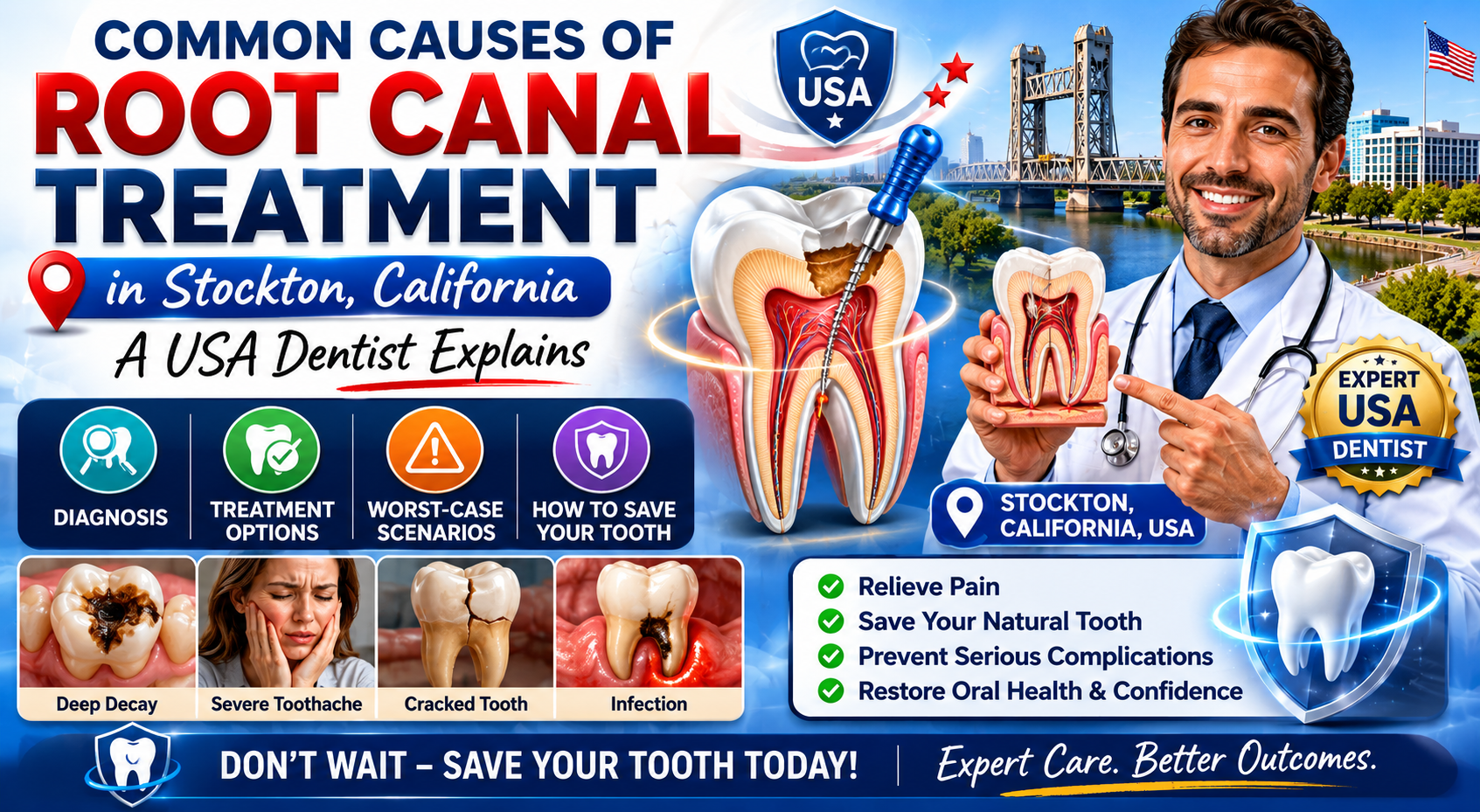
Understanding the common causes of root canal treatment can help you recognize warning signs early and potentially save your natural tooth before the situation becomes more serious.
This comprehensive guide explains the most common causes of root canal treatment in Stockton, California, how dentists diagnose these conditions, treatment options, potential complications if treatment is delayed, and a real-world success story showing how modern root canal therapy can preserve teeth for many years.
What Is a Root Canal?
Inside every tooth is a soft tissue called the dental pulp. This pulp contains:
Blood vessels
Nerves
Connective tissue
Specialized cells that help develop the tooth
When the pulp becomes infected, inflamed, or damaged beyond repair, root canal treatment may be necessary.
During a root canal procedure, the infected tissue is removed, the inside of the tooth is carefully cleaned and disinfected, and the root canals are sealed to prevent future infection.
The goal is simple:
Remove infection. Eliminate pain. Save the natural tooth.
Common Causes of Root Canal Treatment in Stockton, California
1. Deep Tooth Decay
The most common reason patients need root canal treatment is advanced dental decay.
A cavity usually starts on the outer enamel surface. If left untreated, bacteria continue penetrating deeper layers of the tooth.
Progression often follows this pattern:
Enamel decay
Dentin involvement
Pulp inflammation
Pulp infection
Tooth abscess
Once bacteria reach the pulp chamber, root canal treatment often becomes necessary.
Warning Signs
Toothache
Sensitivity to sweets
Pain when chewing
Cold sensitivity
Heat sensitivity
Why It Happens
Many patients delay treatment because the cavity initially causes little or no discomfort. Unfortunately, pain often appears only after significant damage has already occurred.
2. Cracked Teeth
Even healthy-looking teeth can develop cracks.
Common causes include:
Chewing ice
Biting hard foods
Sports injuries
Teeth grinding
Aging dental restorations
A crack may allow bacteria to enter the pulp chamber.
Symptoms
Sharp pain while chewing
Pain when releasing bite pressure
Intermittent discomfort
Temperature sensitivity
Small cracks may be repairable with crowns.
Deeper cracks extending into the pulp often require root canal treatment.
3. Large Dental Fillings
Older fillings can contribute to pulp damage over time.
Each time a filling is replaced, additional tooth structure is removed.
Eventually:
The remaining tooth becomes thinner
The pulp becomes irritated
Bacterial leakage develops
Infection reaches the nerve
Patients frequently need root canal treatment years after receiving large restorations.
4. Repeated Dental Procedures
Multiple procedures on the same tooth can stress the pulp.
Examples include:
Repeated fillings
Crown replacements
Extensive restorative work
Even when performed properly, cumulative irritation can trigger irreversible pulp inflammation.
The tooth may gradually become:
Sensitive
Painful
Non-vital
When the pulp cannot recover, root canal therapy becomes necessary.
5. Dental Trauma
Trauma can damage the nerve even if no visible crack exists.
Common causes include:
Falls
Car accidents
Sports injuries
Workplace accidents
A tooth may appear normal immediately after injury.
Months or years later:
The nerve dies
Infection develops
Root canal treatment becomes necessary
This delayed presentation surprises many patients.
6. Severe Tooth Grinding
Teeth grinding, also called bruxism, places tremendous force on teeth.
Over time it can cause:
Cracks
Fractures
Pulp inflammation
Tooth sensitivity
Chronic grinding may slowly damage the nerve until root canal treatment becomes necessary.
7. Advanced Gum Disease
Severe periodontal disease can affect the roots of teeth.
When infection travels through root surfaces, the pulp may become involved.
In advanced cases, both periodontal treatment and root canal treatment may be needed.
8. Failed Previous Dental Work
Dental crowns and fillings do not last forever.
As restorations age:
Margins can leak
Bacteria can enter
Decay can recur underneath
Patients often believe a crowned tooth is permanently protected.
Unfortunately, recurrent decay beneath crowns remains a common cause of root canal treatment.
Symptoms That May Indicate You Need a Root Canal
Not every infected tooth causes pain.
Common symptoms include:
Persistent Toothache
Pain may be:
Dull
Throbbing
Constant
Intermittent
Sensitivity to Hot Foods
Lingering heat sensitivity often suggests nerve inflammation.
Sensitivity to Cold
Pain lasting several seconds or minutes after cold exposure may indicate pulp damage.
Pain While Chewing
Biting pressure can aggravate infected tissues around the root.
Swelling
Facial swelling is often a sign that infection has spread beyond the tooth.
Gum Pimple
A recurring bump on the gums may be draining infection from an abscess.
Tooth Discoloration
A darkened tooth can indicate nerve death.
How Dentists Diagnose Root Canal Problems
Proper diagnosis is critical.
Not every toothache requires a root canal.
Clinical Examination
Your dentist evaluates:
Tooth structure
Existing restorations
Cracks
Gum condition
Digital X-Rays
Radiographs help identify:
Deep decay
Root infections
Bone loss
Abscess formation
Cold Testing
Cold testing evaluates pulp vitality.
Healthy nerves typically respond briefly.
Damaged nerves may respond excessively or not at all.
Percussion Testing
Gentle tapping helps identify inflammation around the root.
Bite Testing
This helps detect cracks and ligament inflammation.
Cone Beam CT Imaging
Complex cases may benefit from three-dimensional imaging.
CBCT scans provide detailed views of:
Root anatomy
Fractures
Hidden infections
What Happens During Root Canal Treatment?
Modern root canal therapy is far more comfortable than many people expect.
Step 1: Local Anesthesia
The area is completely numbed.
Most patients report little to no discomfort during treatment.
Step 2: Access Opening
A small opening is created in the tooth.
Step 3: Removal of Infection
The infected pulp tissue is removed.
Step 4: Cleaning and Shaping
The canals are disinfected and shaped.
Step 5: Filling the Canals
Special materials seal the root canals.
Step 6: Tooth Restoration
Most root canal-treated teeth require a crown for long-term protection.
Why Crowns Are Often Necessary
After root canal treatment:
Teeth become more brittle
Large cavities weaken structure
Fracture risk increases
A crown helps:
Protect the tooth
Restore strength
Improve longevity
Skipping the crown is one of the most common reasons root canal-treated teeth eventually fail.
Worst-Case Scenarios If Treatment Is Delayed
Many patients postpone treatment because symptoms temporarily improve.
Unfortunately, infection usually continues spreading.
Scenario 1: Severe Dental Abscess
An abscess forms when bacteria spread beyond the root tip.
Symptoms include:
Severe pain
Swelling
Fever
Difficulty chewing
Emergency treatment may become necessary.
Scenario 2: Facial Swelling
Infection can spread into facial tissues.
Patients may experience:
Puffy cheeks
Eye swelling
Jaw swelling
This situation requires immediate dental care.
Scenario 3: Bone Destruction
Untreated infection can destroy surrounding bone.
Extensive bone loss may complicate future treatment.
Scenario 4: Tooth Fracture
Weakened teeth may crack beyond repair.
A tooth that could have been saved may ultimately require extraction.
Scenario 5: Tooth Loss
Delayed treatment can lead to permanent tooth loss.
Replacing a missing tooth often costs significantly more than saving it.
Scenario 6: Spread of Infection
In rare situations, serious dental infections can spread into deeper facial spaces.
These cases may require:
Hospitalization
Intravenous antibiotics
Surgical intervention
Root Canal Versus Tooth Extraction
Many patients ask:
"Should I just pull the tooth?"
Whenever possible, preserving the natural tooth is generally the preferred option.
Advantages include:
Better chewing function
Natural appearance
Preservation of jawbone
Reduced treatment complexity
Extraction may be necessary when:
Fractures are severe
Bone loss is extensive
Remaining tooth structure is insufficient
A thorough evaluation determines the most appropriate treatment.
Preventing Future Root Canal Problems
Many root canals can be prevented.
Maintain Excellent Oral Hygiene
Brush twice daily.
Floss daily.
Use fluoride toothpaste.
Attend Regular Dental Exams
Routine examinations allow dentists to detect problems before they reach the nerve.
Treat Cavities Early
Small fillings are easier and less expensive than root canals.
Wear a Night Guard
Patients who grind their teeth should consider a professionally fitted night guard.
Avoid Chewing Hard Objects
Do not chew:
Ice
Pens
Hard candy
Popcorn kernels
Replace Failing Dental Work
Old crowns and fillings should be monitored regularly.
A Stockton Root Canal Success Story
A patient from Stockton arrived at our office complaining of severe pain in a lower molar.
For nearly six months, he had noticed occasional sensitivity while drinking cold beverages. Because the discomfort came and went, he assumed the problem would resolve on its own.
Several weeks later, chewing became uncomfortable. Soon after, he woke up with a swollen jaw and throbbing pain that kept him awake at night.
Clinical examination revealed:
Deep decay beneath an old filling
Infection reaching the pulp
Early abscess formation
Digital imaging showed a significant infection around the root tip.
The patient was concerned that the tooth might need extraction.
After discussing treatment options, we proceeded with root canal therapy.
The procedure involved:
Complete removal of infected tissue
Thorough cleaning of the canals
Disinfection of the root system
Sealing of the canals
Placement of a protective crown
Within days:
Pain disappeared
Swelling resolved
Normal chewing returned
At follow-up visits, healing progressed exactly as expected.
One year later, the tooth remained healthy and fully functional.
Several years later, the patient continues using the same tooth comfortably for daily eating and speaking.
The experience reinforced an important lesson:
Early treatment often allows patients to save teeth that might otherwise be lost.
Frequently Asked Questions
Are Root Canals Painful?
Modern root canal treatment is typically no more uncomfortable than receiving a filling.
Local anesthesia keeps patients comfortable throughout the procedure.
How Long Does Treatment Take?
Most cases require one or two visits depending on complexity.
How Successful Are Root Canals?
When properly performed and restored with a crown, success rates are very high.
Many treated teeth last decades.
Can an Infected Tooth Heal Without Treatment?
Unfortunately, infected pulp tissue cannot heal on its own.
Professional treatment is usually required.
What If I Ignore the Problem?
Ignoring infection increases the risk of:
Abscesses
Bone loss
Tooth fractures
Tooth loss
More extensive treatment
Final Thoughts From a USA Dentist
Root canal treatment remains one of the most effective methods for saving natural teeth affected by infection, trauma, deep decay, or nerve damage.
The most common causes of root canal treatment in Stockton, California include deep cavities, cracked teeth, dental trauma, large fillings, repeated restorative procedures, severe grinding, advanced gum disease, and failing dental work. Early diagnosis is the key to preventing complications and preserving your smile.
If you experience persistent tooth pain, sensitivity, swelling, chewing discomfort, or changes in tooth color, do not wait for symptoms to worsen. Early evaluation can mean the difference between a straightforward root canal and the eventual loss of a tooth.
Modern dentistry offers highly predictable solutions that can eliminate infection, relieve pain, and help patients maintain their natural teeth for many years to come. The sooner treatment begins, the greater the likelihood of a successful long-term outcome.
Can tooth extraction cause infection? Mild inflammation is normal, but increasing swelling, fever, or severe pain may indicate infection. Learn more about post-extraction infection warning signs in this detailed guide.
Book a consultation with our Cebu dental specialists for proper evaluation and care.
Ready to get expert guidance?
If you’re experiencing severe pain or delayed healing, book a consultation with our Cebu dental specialists to get proper evaluation and care.
Consultation or contact page .
Book a Consultation
For severe discomfort or delayed healing, book a consultation with our Cebu dental specialists today.
Looking for a dentist? Browse our Cebu dental directory to find trusted clinics near you.
Medical Review and Clinical Basis
This article is based on clinical dental guidelines and real patient recovery patterns observed after tooth extraction procedures. The information reflects common post-extraction healing stages, including normal clot formation, gum tissue repair, and signs of possible complications such as dry socket or infection.
While mild discomfort is expected after a dental extraction, worsening pain after Day 3, bad odor, exposed bone, or spreading pain may require professional evaluation. These symptoms are consistent with known post-extraction complications described in standard dental practice.
About Cebu Dental Implants
Cebu Dental Implants provides comprehensive tooth extraction, surgical procedures, and dental implant services in the Philippines. Our team evaluates post-extraction healing, manages complications such as dry socket, and advises patients on proper aftercare to prevent infection and delayed healing.
If you experience severe pain or unusual symptoms after extraction, early professional assessment is recommended to prevent further complications.
Important Medical Disclaimer
This content is for educational purposes only and does not replace professional dental diagnosis. Every patient heals differently. If symptoms worsen or do not improve within a few days, consult a licensed dentist for proper evaluation and treatment.
Author
This article was prepared by the Cebu Dental Implants content team in consultation with licensed dental professionals experienced in tooth extraction and implant procedures.
Source: https://cebudentalimplants.com/common-causes-root-canal-stockton-california-usa-expert-dentist-guide
0 likes · 0 comments · 0 shares