Post by cebudentalimplants (@cebudentalimplants)
Language : EnglishTopics: Dental ImplantsDental Implants FixingDental implant inflammation (peri-implantitis)A U.S. Dental Expert’s 10-Year Perspective on Price, Value, and Risk
Introduction: Why Patients Look Overseas
In my 10 years practicing implant dentistry in the United States, I’ve seen a steady rise in patients asking the same question:
“Doctor, is it worth going abroad for full mouth dental implants?”
The short answer: sometimes—but only if you understand the full picture.
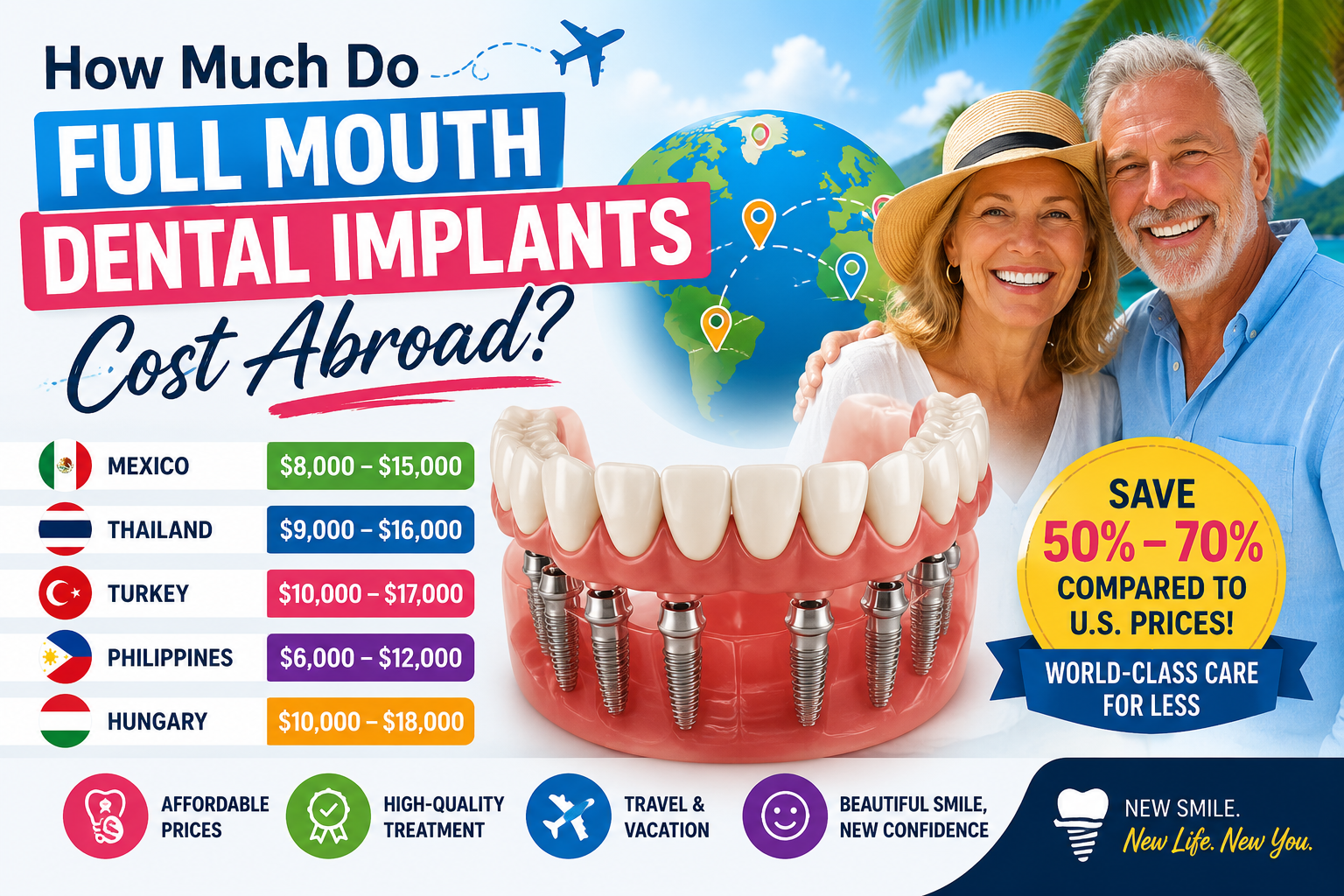
Full mouth dental implants in the U.S. typically cost $40,000 to $90,000 total (both arches). Abroad, that number can drop dramatically—sometimes by 50–70%.
But cost alone doesn’t determine value.
This guide gives you a clear, experience-based breakdown of:
Real costs abroad
Country-by-country comparisons
Hidden fees most clinics don’t disclose
Risks vs savings
How to make a smart, safe decision
What “Full Mouth Dental Implants” Really Includes
Before comparing costs, you need to understand what you’re paying for.
A full mouth case typically includes:
4–8 implants per arch (All-on-4 / All-on-6)
Temporary teeth (same-day or next-day)
Final prosthesis (zirconia or acrylic)
CBCT imaging and digital planning
Surgery (often with sedation)
Follow-up care
Many overseas clinics advertise a “package price”—but details vary significantly.
Average Cost of Full Mouth Implants Abroad
Mexico
Cost: $15,000 – $30,000 (full mouth)
Popular cities: Tijuana, Cancun, Los Algodones
Why It’s Popular
Close to the U.S.
Lower travel costs
Many English-speaking clinics
Expert Insight
Mexico is the most accessible option for U.S. patients, especially for staged treatments.
Costa Rica
Cost: $18,000 – $35,000
Strong reputation for dental tourism
Strengths
High-quality private clinics
U.S.-trained dentists in many cases
Weakness
Slightly higher cost than Mexico
Turkey
Cost: $12,000 – $25,000
One of the fastest-growing destinations
Strengths
Competitive pricing
Advanced cosmetic dentistry
Concerns
Variability in clinic standards
Aggressive marketing practices
Philippines
Cost: $10,000 – $22,000
Emerging dental tourism hub in Southeast Asia
Strengths
English-speaking providers
Lower lab costs
Consideration
Longer travel for U.S. patients
Hungary (Europe’s Dental Hub)
Cost: $20,000 – $35,000
Strengths
Strong reputation in Europe
High clinical standards
Limitation
Travel distance and cost for U.S. patients
Why Prices Are Lower Abroad
From a clinical and business standpoint, the cost difference comes down to:
1. Labor Costs
Dentists, assistants, and lab technicians are paid significantly less.
2. Overhead Expenses
Lower rent, insurance, and regulatory costs.
3. Laboratory Fees
Dental labs abroad often produce prosthetics at a fraction of U.S. prices.
4. Government Regulation
Less stringent compliance costs in some countries.
The Hidden Costs Most Patients Miss
Lower advertised prices don’t always reflect the final cost.
Travel Expenses
Flights: $500 – $2,000+
Accommodation: $50 – $300/night
Meals and transport
Multiple Visits
Implants often require:
Initial surgery trip
Second trip (3–6 months later for final teeth)
Time Off Work
Lost income can offset savings.
Complication Management
If something goes wrong:
U.S. dentists may not fix work done abroad
Revision costs can be significant
Quality: Not All Clinics Are Equal
This is where experience matters.
In the U.S., implant dentistry follows strict protocols influenced by organizations like:
American Academy of Implant Dentistry
American Dental Association
Abroad, standards vary widely.
What I’ve Seen in 10 Years
Excellent results from top-tier international clinics
Severe complications from poorly trained providers
The difference is not the country—it’s the clinic and doctor.
Risks of Getting Full Mouth Implants Abroad
1. Limited Follow-Up Care
Implants require long-term maintenance.
2. Communication Gaps
Even in English-speaking countries, clinical communication can vary.
3. Material Differences
Some clinics use:
Lower-grade titanium
Non-branded implant systems
4. Warranty Limitations
Many warranties:
Require returning to the original clinic
Don’t cover travel expenses
When Going Abroad Makes Sense
Based on my experience, dental tourism works best for patients who:
Have significant cost constraints
Are medically straightforward (no complex bone grafting)
Can travel multiple times
Choose highly vetted clinics
When It’s Better to Stay in the U.S.
You should strongly consider staying local if you:
Have advanced bone loss
Need sinus lifts or grafting
Have medical conditions (diabetes, smoking history)
Want long-term, consistent follow-up care
Cost vs Value: The Real Comparison
U.S. Treatment
Higher upfront cost
Strong regulation
Easier follow-up care
Abroad Treatment
Lower initial cost
Higher variability
Potential hidden risks
My Professional Take
The best outcome is not the cheapest—it’s the one that lasts 10–20 years without major complications.
How to Choose the Right Overseas Clinic
If you decide to go abroad, here’s what I advise every patient:
Verify Credentials
Training background
Years of implant experience
Ask About Implant Brands
Nobel Biocare, Straumann, etc.
Request Real Case Documentation
Before/after photos
X-rays
Long-term follow-ups
Understand the Full Treatment Plan
Avoid vague “package deals.”
Related Topics (3 Essential Reads)
1. Full Mouth Dental Implants Cost USA vs Abroad
A deeper breakdown of price differences and value comparison.
2. All-on-4 vs All-on-6 Dental Implants Explained
Understand structural differences that affect cost and longevity.
3. How Long Do Full Mouth Dental Implants Last?
Key factors that determine whether your investment lasts decades.
FAQ: Full Mouth Dental Implants Abroad
1. How much can I really save going abroad?
Typically 40–70% compared to U.S. pricing, depending on location.
2. Are implants abroad safe?
Yes—if you choose a reputable clinic. Risk increases with low-cost providers.
3. How many trips are required?
Usually 2 trips, spaced 3–6 months apart.
4. Can U.S. dentists fix work done abroad?
Many will not, or will charge premium fees.
5. What is the cheapest country for implants?
Countries like Turkey and the Philippines offer some of the lowest prices.
6. Are materials the same as in the U.S.?
Top clinics use global brands—but not all do. Always verify.
7. Do I need a passport and visa?
Yes. Requirements depend on destination country.
8. What happens if an implant fails?
You may need to return abroad or pay for treatment locally.
9. Is financing available for overseas treatment?
Some clinics offer it, but most require upfront payment.
10. Is it worth it overall?
For the right patient and clinic, yes. But it requires careful planning and risk awareness.
Final Expert Advice
After a decade in implant dentistry, here’s the most honest guidance I can give:
Going abroad for full mouth dental implants is not just a financial decision—it’s a clinical one.
Focus on:
Proven outcomes
Doctor experience
Long-term maintenance
Because in the end:
A failed implant case is far more expensive than a well-done one—no matter where it’s done.
Can tooth extraction cause infection? Mild inflammation is normal, but increasing swelling, fever, or severe pain may indicate infection. Learn more about post-extraction infection warning signs in this detailed guide.
Book a consultation with our Cebu dental specialists for proper evaluation and care.
Ready to get expert guidance?
If you’re experiencing severe pain or delayed healing, book a consultation with our Cebu dental specialists to get proper evaluation and care.
Consultation or contact page .
Book a Consultation
For severe discomfort or delayed healing, book a consultation with our Cebu dental specialists today.
Looking for a dentist? Browse our Cebu dental directory to find trusted clinics near you.
Medical Review and Clinical Basis
This article is based on clinical dental guidelines and real patient recovery patterns observed after tooth extraction procedures. The information reflects common post-extraction healing stages, including normal clot formation, gum tissue repair, and signs of possible complications such as dry socket or infection.
While mild discomfort is expected after a dental extraction, worsening pain after Day 3, bad odor, exposed bone, or spreading pain may require professional evaluation. These symptoms are consistent with known post-extraction complications described in standard dental practice.
About Cebu Dental Implants
Cebu Dental Implants provides comprehensive tooth extraction, surgical procedures, and dental implant services in the Philippines. Our team evaluates post-extraction healing, manages complications such as dry socket, and advises patients on proper aftercare to prevent infection and delayed healing.
If you experience severe pain or unusual symptoms after extraction, early professional assessment is recommended to prevent further complications.
Important Medical Disclaimer
This content is for educational purposes only and does not replace professional dental diagnosis. Every patient heals differently. If symptoms worsen or do not improve within a few days, consult a licensed dentist for proper evaluation and treatment.
Author
This article was prepared by the Cebu Dental Implants content team in consultation with licensed dental professionals experienced in tooth extraction and implant procedures.
Source: https://cebudentalimplants.com/how-much-do-full-mouth-dental-implants-cost-abroad
0 likes · 0 comments · 0 shares