Post by cebudentalimplants (@cebudentalimplants)
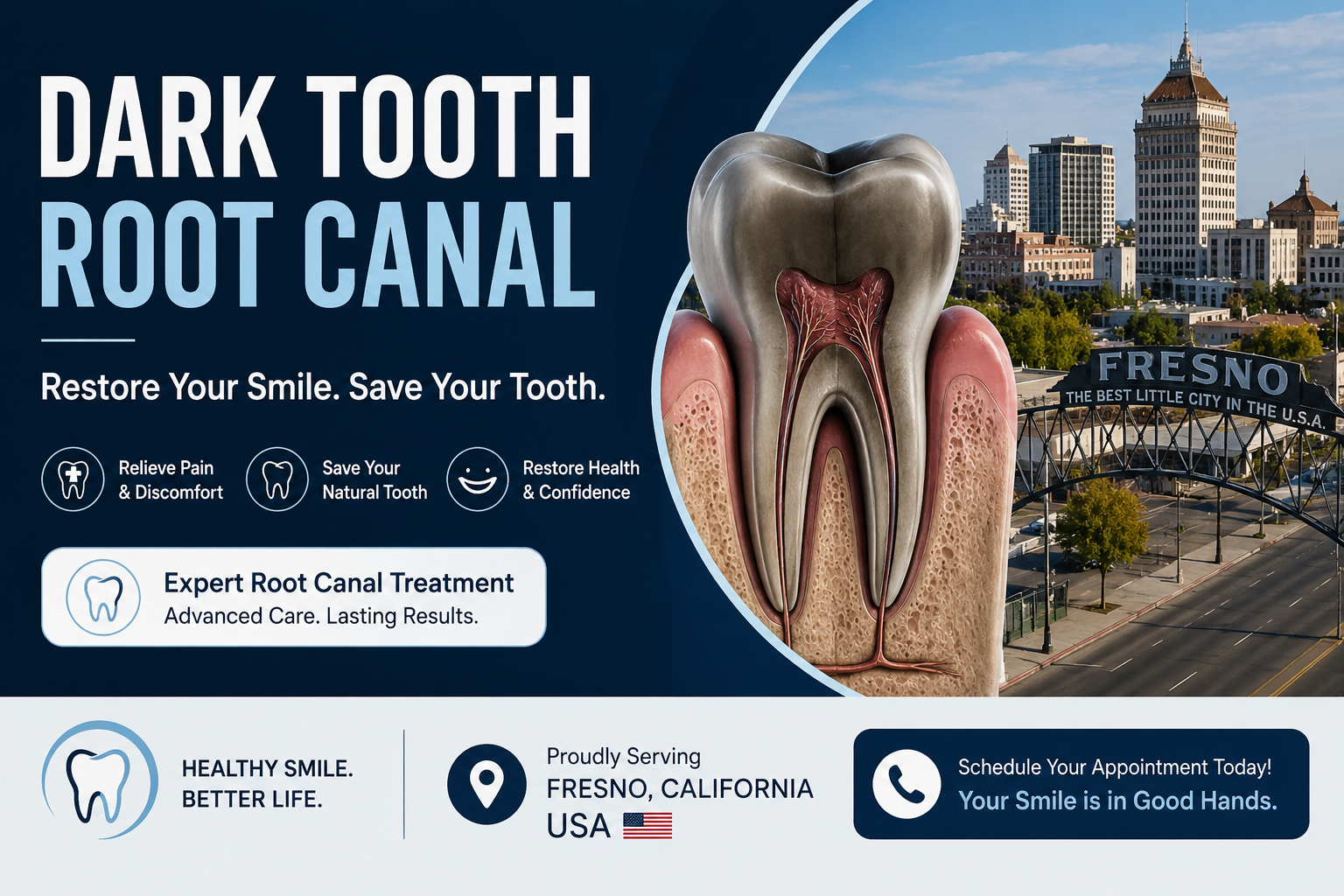
Language : EnglishTopics: Post-root canal painRoot canal infectionOne of the most alarming changes a patient can notice is when a tooth suddenly becomes darker than the surrounding teeth. A dark tooth may appear yellow-brown, gray, blue-gray, or even black in severe situations. Many patients in Fresno, California, initially assume the discoloration is simply a stain caused by coffee, tea, wine, tobacco, or aging. However, when only one tooth becomes noticeably darker than the others, it often signals an underlying dental problem that requires professional evaluation.
As a USA dentist who has treated patients with traumatic dental injuries, infections, deep decay, and failed restorations for over two decades, I can tell you that a dark tooth is frequently a warning sign that the nerve inside the tooth has been damaged or has died. In many cases, root canal treatment can save the tooth before the infection spreads and causes more serious complications.
The good news is that modern root canal therapy is highly effective when performed at the appropriate time. The challenge is recognizing the signs early and seeking treatment before irreversible damage occurs.
This comprehensive guide explains why a tooth may turn dark, how dentists diagnose the problem, when root canal treatment becomes necessary, the worst-case scenarios that can develop if treatment is delayed, and what Fresno patients should know about preserving their natural teeth.
Why Does a Tooth Turn Dark?
A healthy tooth receives nourishment from blood vessels and nerves located inside the pulp chamber. When the pulp becomes injured, infected, or dies, changes occur within the internal structure of the tooth.
These changes can alter the color of the tooth from the inside outward.
Common causes include:
1. Dental Trauma
A blow to the mouth is one of the most common reasons a tooth darkens.
Examples include:
Sports injuries
Bicycle accidents
Car accidents
Falls
Physical impacts
Even if the tooth does not crack immediately, the blood supply may become damaged. Over time, the nerve can die, causing the tooth to turn gray or dark brown.
Many Fresno patients are surprised when a childhood injury causes discoloration years later.
2. Dead Tooth Nerve
A tooth can lose vitality without obvious trauma.
Common causes include:
Deep cavities
Long-term decay
Repeated dental procedures
Large fillings
Cracked teeth
When the nerve tissue dies, breakdown products accumulate within the tooth structure and create a darker appearance.
3. Internal Bleeding
Trauma can cause bleeding inside the pulp chamber.
Blood pigments may penetrate the dentin layer, creating:
Gray discoloration
Purple discoloration
Brown discoloration
This often occurs before the nerve completely dies.
4. Severe Tooth Decay
Advanced decay may destroy significant portions of the tooth.
As bacteria invade deeper layers, discoloration becomes more noticeable.
The tooth may appear:
Brown
Dark brown
Black
Such cases frequently require root canal treatment before restoration.
5. Failed Dental Restorations
Old fillings, crowns, and dental work can leak over time.
This leakage allows bacteria to penetrate the pulp chamber and cause internal infection.
The result may include:
Darkening
Pain
Swelling
Root infection
Symptoms Associated with a Dark Tooth
Not every dark tooth causes pain.
Some patients experience severe symptoms while others remain symptom-free until the infection becomes advanced.
Common symptoms include:
Mild Symptoms
Slight discoloration
Occasional sensitivity
Mild discomfort when chewing
Moderate Symptoms
Persistent toothache
Temperature sensitivity
Pressure sensitivity
Gum irritation
Severe Symptoms
Facial swelling
Gum abscess
Severe throbbing pain
Pus drainage
Bad taste in the mouth
Some completely dead teeth become dark without causing any discomfort at all.
This is why professional evaluation is essential.
How Dentists Diagnose a Dark Tooth
Accurate diagnosis determines whether root canal treatment is necessary.
Several tests are typically performed.
Visual Examination
The dentist evaluates:
Tooth color
Cracks
Fractures
Decay
Existing restorations
Comparing neighboring teeth often reveals subtle color differences.
X-Rays
Dental radiographs help identify:
Infection at the root tip
Bone loss
Deep decay
Hidden fractures
Previous root canal treatment
X-rays often reveal pathology that is not visible externally.
Pulp Vitality Testing
Special tests determine whether the nerve is alive.
These include:
Cold testing
Electric pulp testing
Heat testing
A non-responsive tooth often indicates pulp death.
Percussion Testing
The dentist gently taps the tooth.
Pain may indicate inflammation around the root.
Bite Evaluation
Cracks often become painful during chewing.
Special instruments help identify hidden fractures.
When Is a Root Canal Needed?
Root canal therapy becomes necessary when the pulp tissue cannot recover.
Conditions requiring treatment include:
Irreversible Pulpitis
The nerve becomes permanently inflamed.
Symptoms may include:
Lingering cold sensitivity
Spontaneous pain
Nighttime toothaches
Without treatment, the pulp eventually dies.
Pulp Necrosis
This means the nerve has died completely.
Common findings include:
Dark tooth appearance
No response to vitality testing
Root infection
Root canal treatment removes the dead tissue and disinfects the tooth.
Dental Abscess
An abscess indicates bacterial infection beyond the root tip.
Symptoms include:
Swelling
Pain
Pus
Facial enlargement
Root canal therapy often eliminates the infection while preserving the tooth.
What Happens During Root Canal Treatment?
Modern root canal treatment is comfortable and predictable.
The procedure generally includes:
Step 1: Local Anesthesia
The area is thoroughly numbed.
Most patients report minimal discomfort.
Step 2: Access Opening
A small opening is created in the tooth.
This allows access to the infected pulp.
Step 3: Cleaning and Disinfection
Special instruments remove:
Dead nerve tissue
Bacteria
Infected debris
The canals are disinfected thoroughly.
Step 4: Canal Filling
The cleaned canals are sealed with biocompatible material.
This prevents reinfection.
Step 5: Final Restoration
A filling or crown restores strength and function.
For many posterior teeth, crowns are strongly recommended.
Can a Dark Tooth Return to Normal Color After a Root Canal?
Not always.
Although infection can be eliminated, discoloration may remain.
Several cosmetic options are available.
Internal Bleaching
A whitening agent is placed inside the tooth.
This can significantly improve color.
Dental Bonding
Composite resin can mask discoloration.
Porcelain Veneers
Veneers provide excellent cosmetic improvement.
Dental Crowns
Crowns may completely restore appearance and function.
Worst-Case Scenarios if Treatment Is Delayed
Ignoring a dark tooth can lead to serious consequences.
The longer infection remains untreated, the greater the risk.
Scenario 1: Complete Tooth Death
The nerve dies completely.
The tooth becomes increasingly brittle and weak.
Fracture risk rises significantly.
Scenario 2: Large Dental Abscess
Bacteria may spread beyond the root tip.
An abscess can develop.
Symptoms include:
Severe pain
Swelling
Fever
Difficulty chewing
Emergency treatment becomes necessary.
Scenario 3: Facial Swelling
Untreated infection may spread into facial tissues.
Patients may experience:
Puffy cheeks
Swollen jaw
Facial asymmetry
This represents a true dental emergency.
Scenario 4: Bone Destruction
Chronic infection gradually destroys surrounding bone.
Consequences include:
Reduced support
Tooth mobility
Complex future treatment
Bone loss can continue silently for months or years.
Scenario 5: Root Fracture
Dead teeth become more fragile.
A severe crack may extend below the gumline.
When this occurs, extraction is often unavoidable.
Scenario 6: Spread Into Facial Spaces
Advanced infections can spread through anatomical spaces.
This can involve:
Jaw spaces
Cheek spaces
Neck spaces
Hospitalization may be required in severe cases.
Scenario 7: Tooth Loss
The ultimate consequence is losing the tooth entirely.
Many teeth that could have been saved with an early root canal eventually require extraction.
How Fresno Patients Can Prevent Root Canal Emergencies
Early intervention dramatically improves outcomes.
Recommendations include:
Schedule Regular Dental Exams
Routine examinations help detect problems before symptoms develop.
Many infections are discovered through X-rays before pain begins.
Address Trauma Immediately
Even minor injuries should be evaluated.
A tooth may appear normal initially but develop complications later.
Treat Cavities Early
Small cavities are easier and less expensive to treat.
Delaying treatment increases the risk of pulp damage.
Replace Failing Dental Work
Old restorations eventually wear out.
Regular monitoring reduces infection risk.
Do Not Ignore Color Changes
A darkening tooth is often the earliest visible sign of pulp injury.
Prompt diagnosis can prevent major complications.
Is Tooth Extraction Better Than a Root Canal?
Patients often ask whether removing the tooth is a better option.
In most situations, preserving a natural tooth is preferable.
Benefits of saving the tooth include:
Natural chewing function
Better jawbone preservation
Lower long-term treatment complexity
Improved bite stability
Extraction may be necessary only when:
Severe fracture exists
Extensive decay cannot be restored
Bone support is inadequate
Previous treatment failures cannot be corrected
Whenever possible, saving the natural tooth remains the preferred approach.
Recovery After Root Canal Treatment
Most patients recover quickly.
Expected symptoms may include:
Mild soreness
Temporary chewing sensitivity
Minor tenderness
These symptoms generally improve within several days.
Patients should:
Follow post-treatment instructions
Maintain oral hygiene
Attend follow-up visits
Obtain recommended crowns promptly
Failure to place a recommended crown increases fracture risk.
Long-Term Success Rates
Root canal treatment has an excellent success record.
With proper restoration and maintenance, many treated teeth function successfully for decades.
Factors influencing success include:
Quality of cleaning
Timely treatment
Proper crown placement
Good oral hygiene
Regular dental examinations
Many root canal-treated teeth remain healthy for a lifetime.
Special Considerations for Fresno, California Residents
Fresno residents often lead active lifestyles involving sports, outdoor recreation, and busy work schedules. Dental trauma, untreated cavities, and delayed treatment are common reasons patients seek care after a tooth has already darkened.
Unfortunately, waiting until severe pain develops often means the infection has been present for months or years.
If you notice:
A single dark tooth
Gray discoloration
Brown discoloration
Previous dental trauma
Persistent sensitivity
Swelling
schedule a comprehensive dental evaluation immediately.
Early diagnosis offers the greatest opportunity to save your tooth and avoid more invasive procedures.
Final Thoughts From a USA Dentist
A dark tooth is more than a cosmetic concern. It is often your body's warning sign that something serious may be happening inside the tooth. Whether the cause is trauma, deep decay, internal bleeding, infection, or nerve death, prompt diagnosis is essential.
In many Fresno, California cases, root canal treatment can successfully eliminate infection, relieve discomfort, preserve the natural tooth, and prevent dangerous complications. The sooner treatment begins, the more predictable the outcome becomes.
Ignoring a dark tooth can lead to abscesses, facial swelling, bone loss, fractures, and eventual tooth loss. On the other hand, seeking professional care early can often save the tooth for many years or even a lifetime.
If a tooth has recently become darker than the surrounding teeth, do not assume it is simply a stain. A comprehensive dental examination, vitality testing, and diagnostic imaging can determine whether root canal treatment is necessary and help protect your long-term oral health.
Can tooth extraction cause infection? Mild inflammation is normal, but increasing swelling, fever, or severe pain may indicate infection. Learn more about post-extraction infection warning signs in this detailed guide.
Book a consultation with our Cebu dental specialists for proper evaluation and care.
Ready to get expert guidance?
If you’re experiencing severe pain or delayed healing, book a consultation with our Cebu dental specialists to get proper evaluation and care.
Consultation or contact page .
Book a Consultation
For severe discomfort or delayed healing, book a consultation with our Cebu dental specialists today.
Looking for a dentist? Browse our Cebu dental directory to find trusted clinics near you.
Medical Review and Clinical Basis
This article is based on clinical dental guidelines and real patient recovery patterns observed after tooth extraction procedures. The information reflects common post-extraction healing stages, including normal clot formation, gum tissue repair, and signs of possible complications such as dry socket or infection.
While mild discomfort is expected after a dental extraction, worsening pain after Day 3, bad odor, exposed bone, or spreading pain may require professional evaluation. These symptoms are consistent with known post-extraction complications described in standard dental practice.
About Cebu Dental Implants
Cebu Dental Implants provides comprehensive tooth extraction, surgical procedures, and dental implant services in the Philippines. Our team evaluates post-extraction healing, manages complications such as dry socket, and advises patients on proper aftercare to prevent infection and delayed healing.
If you experience severe pain or unusual symptoms after extraction, early professional assessment is recommended to prevent further complications.
Important Medical Disclaimer
This content is for educational purposes only and does not replace professional dental diagnosis. Every patient heals differently. If symptoms worsen or do not improve within a few days, consult a licensed dentist for proper evaluation and treatment.
Author
This article was prepared by the Cebu Dental Implants content team in consultation with licensed dental professionals experienced in tooth extraction and implant procedures.
Source: https://cebudentalimplants.com/dark-tooth-root-canal-fresno-california-expert-dentist-guide
0 likes · 0 comments · 0 shares