Post by cebudentalimplants (@cebudentalimplants)
Language : EnglishTopics: Bone graftThis guide explains detailed expenses, service inclusions, equipment used, and overall value comparison.
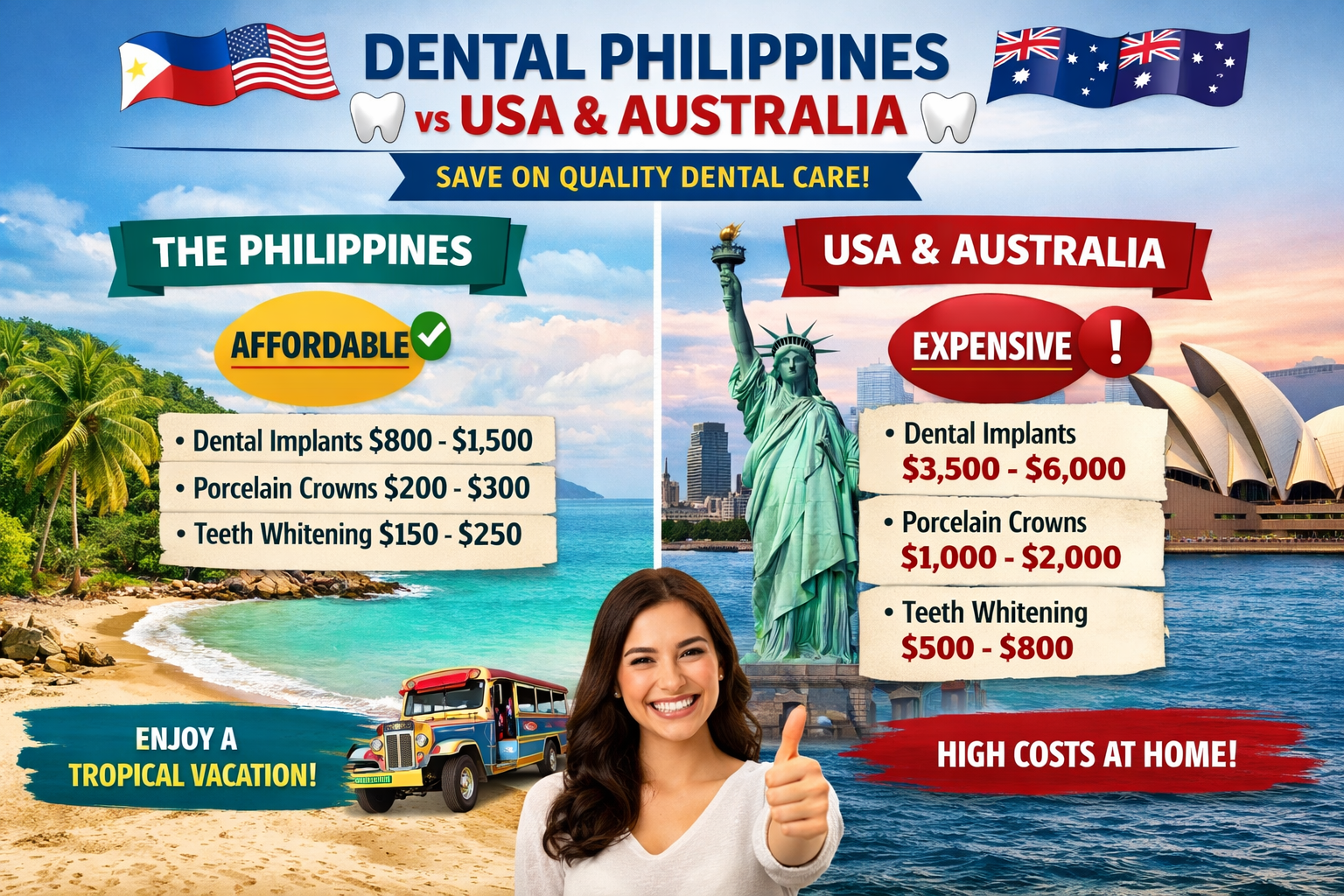
Purchasing Power Advantage: Why USD and AUD Earners Get Higher Value in the Philippines
The Philippine peso is significantly weaker compared to the US Dollar (USD) and Australian Dollar (AUD). This currency gap creates a strong purchasing power advantage for patients earning in USD or AUD.
When income is earned in a stronger currency and spent in a lower-cost economy, patients can access high-quality medical and dental services at a fraction of the price compared to their home country.
How Currency Leverage Works
USD and AUD have higher exchange value compared to Philippine Peso.
Clinical overhead in the Philippines is lower.
Labor and operational costs are significantly reduced.
International implant brands cost similar globally, but service cost differs.
This means patients earning in USD or AUD can often afford premium implant brands, zirconia bridges, and advanced digital technology in the Philippines at costs that would be considered mid-range or even basic in the USA or Australia.
Example of Purchasing Power Impact
A full All-on-4 treatment costing USD 60,000 in the United States may cost USD 24,000 in the Philippines. For a patient earning in USD, this represents a major value difference while maintaining comparable implant systems and digital equipment.
Even after airfare and accommodation expenses, total savings often remain between 30,000 to 40,000 USD.
Why This Matters for Retirees and Overseas Workers
Retirees on fixed USD pensions gain stronger lifestyle leverage.
Australian patients benefit from currency conversion advantage.
Overseas Filipino Workers earning abroad maximize savings when treated locally.
The key advantage is not simply “cheap dentistry.” It is the economic leverage created when a stronger currency is used in a lower-cost healthcare environment.
Important Reminder
While purchasing power gives financial advantage, treatment decisions should still focus on surgeon experience, implant brand quality, sterilization standards, and long-term maintenance support.
Currency advantage improves value, but proper clinical planning ensures long-term success.
What Is All-on-4 Dental Implants?
The All-on-4 concept was introduced by Nobel Biocare. It uses four strategically placed dental implants to support a fixed full-arch bridge.
Fixed non-removable teeth
Immediate function (temporary bridge within days)
Bone preservation
Improved facial support
Faster treatment compared to traditional full-mouth implants
All-on-4 Cost Comparison 2026
United States
Estimated Cost Per Arch: USD 22,000 – 35,000
Both Arches: USD 45,000 – 70,000
Additional Costs:
IV sedation: 1,000 – 2,000
Bone graft: 3,000 – 8,000
Consultation fees
Maintenance visits
Reasons for High Cost:
High malpractice insurance
Staff salary expenses
Regulatory compliance
Facility overhead
Marketing expenses
Equipment Used:
3D CBCT scanners
Guided surgery systems
Digital intraoral scanners
CAD/CAM zirconia milling
Australia
Estimated Cost Per Arch: AUD 20,000 – 30,000
Both Arches: AUD 40,000 – 60,000
Cost Drivers:
High labor cost
Strict healthcare regulation
Strong currency
High clinical overhead
Technology and implant brands are similar to the USA.
Philippines
Estimated Cost Per Arch: USD 8,000 – 15,000
Both Arches: USD 16,000 – 28,000
Many Top Clinics Include:
CBCT 3D scan
Digital implant planning
Implant surgery
Temporary fixed bridge
Final zirconia bridge
Follow-up adjustments
Implant Brands Commonly Used:
Straumann
Nobel Biocare
Osstem Implant
Main Reason for Lower Cost: Lower operational overhead, favorable exchange rate, competitive dental tourism market, and reduced insurance burden.
Equipment Comparison – Is Technology the Same?
Most advanced clinics in the Philippines now use:
CBCT 3D imaging
Digital intraoral scanning
Computer-guided surgery
CAD/CAM zirconia fabrication
The technology gap between countries is shrinking rapidly. The major difference is economic structure rather than equipment availability.
Total Cost Example Comparison
Example Case: Full Upper and Lower Arch
USA:
USD 55,000 + Bone graft 8,000
Total: 63,000
Philippines:
USD 24,000 package
Bone graft minor 1,000
Total: 25,000
Estimated Savings: 30,000 to 40,000 USD
Even including airfare and hotel expenses, overall savings remain significant.
Service Value Comparison
USA and Australia:
High regulatory standards
Extensive documentation
High operating cost structure
Philippines:
Competitive full-package pricing
Growing international patient services
English-speaking dental professionals
Strong dental tourism infrastructure
Value depends on clinic selection, not just country.
Important Factors Before Choosing
Verify implant brand used.
Ask about surgeon experience with All-on-4 cases.
Confirm zirconia bridge quality (monolithic vs layered).
Ask about complication management protocol.
Review real case documentation.
Who Benefits Most from Treatment in the Philippines?
Retirees without dental insurance
US patients quoted above USD 40,000
Australian patients seeking currency advantage
Overseas Filipino Workers
Patients needing full-mouth rehabilitation
Final Advice
All-on-4 treatment in the Philippines can offer 50 to 70 percent cost savings compared to the USA and Australia.
However, success depends on proper diagnosis, experienced implant surgeon, high-quality prosthetic lab, and a clear post-treatment follow-up plan.
The best decision is not based on the cheapest price, but on the strongest balance between cost, equipment, surgeon skill, and long-term stability.
Source: https://cebudentalimplants.com/all-on-4-cost-philippines-vs-usa-australia-2026
0 likes · 0 comments · 0 shares