Post by cebudentalimplants (@cebudentalimplants)
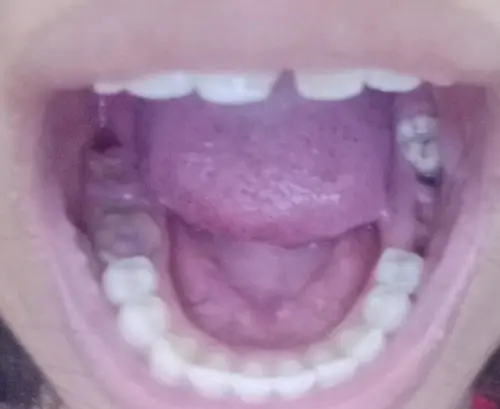
Image: Severity: CriticalTeeth Problems: Periodontal casesI enlarged the image and examined the visible teeth individually. This is not a definitive diagnosis because the photo is blurred and does not show X-rays, tooth surfaces from all angles, or the child’s symptoms/age. A dentist needs an in-person examination and likely radiographs before deciding whether teeth are restorable.
What stands out
Area
Visual finding
Concern
Lower right posterior
A dark/gray posterior tooth with an irregular chewing surface
High suspicion of significant caries/cavitation
Lower left posterior
Posterior tooth appears darker/structurally compromised
Possible caries
Upper posterior areas
At least one posterior tooth appears discolored/irregular
Possible decay or heavily restored/erupting tooth
Lower front teeth
Several teeth appear relatively intact and aligned
No obvious major cavitation visible from this view
Gums
Generally pink; no obvious large abscess or dramatic facial swelling visible
Does not rule out infection underneath a tooth
Overall
Posterior teeth are the principal concern
Needs a pediatric dental assessment rather than simply cleaning
Most likely clinical issue
The strongest visual concern is multiple posterior dental caries, with at least one tooth potentially having progressed substantially. I would classify this as needs prompt dental examination, rather than waiting for symptoms to become severe.
Untreated childhood caries can progress to pain, infection, difficulty eating and sleep disruption; once tooth structure is destroyed, it does not simply regenerate.
Important: I would not diagnose an abscess, pulp death, or gum disease from this photograph alone. Those require clinical testing and, when indicated, X-rays.
What could "scale up" if nothing is done for 14 days?
The concern is not that exactly 14 days will cause a predictable change—the rate varies by tooth and depth of decay.
A progression could look like:
Cavity → deeper dentin involvement → pulp inflammation → severe toothache → pulp necrosis/infection → abscess/swelling
If decay has already reached the pulp, simply waiting 14 days can allow symptoms or infection to develop. Pediatric dental guidance recognizes pain, infection and facial swelling as conditions requiring timely evaluation.
A reasonable 14-day plan
Day 0–2 — Examination
Pediatric dentist examination.
Determine whether the suspicious posterior teeth are primary or permanent teeth.
Bitewing/periapical X-rays if clinically indicated.
Assess whether each affected tooth is restorable.
Check for pulp involvement, abscess, eruption status and developing permanent teeth.
Days 1–7 — Control the active disease
Professional cleaning where appropriate.
Fluoride prevention.
Restore cavities that can be restored.
If a primary tooth has deep decay/pulp involvement, the dentist may consider appropriate pulp therapy or extraction depending on restorability and the developing successor. AAPD guidance recognizes pulp therapy or extraction among treatments for odontogenic infections in children.
Days 7–14 — Stabilization and prevention
Recheck painful/infected teeth.
Complete remaining urgent treatment.
Establish daily brushing with fluoride toothpaste and appropriate interdental cleaning.
Reduce frequent sugary snacks/drinks.
Establish regular pediatric dental follow-up.
Fourteen days is a reasonable stabilization window, not a guaranteed "healing time." A cavity that has lost tooth structure will generally require dental treatment; it cannot be expected to disappear through brushing alone.
When this becomes urgent
Don't wait 14 days if the child develops:
facial or cheek swelling
gum swelling or a pus-filled bump
fever or significant malaise
rapidly increasing tooth pain
difficulty swallowing
difficulty breathing
inability to eat/drink because of pain
Significant facial swelling, infection and severe dental pain are recognized pediatric dental emergencies/urgent conditions.
Antibiotics are not automatically the treatment for a cavity. For many dental infections, definitive dental treatment is the priority; antibiotics are generally reserved for situations such as systemic involvement or particular clinical circumstances determined by the dentist.
About the child's comment
“My mother works abroad when I was a child and my father is an alcoholic so he doesn't pay attention to me.”
That history is important context, but it should not be interpreted as proof that the child or parent is responsible for the dental condition. Limited supervision, disrupted caregiving, diet, access to dental care and many other factors can contribute to untreated childhood dental disease.
The most constructive approach is nonjudgmental care: stabilize the child's oral health first, then establish a reliable dental home and prevention routine.
Bottom line
Visual priority: HIGH — posterior teeth require professional assessment soon.
The image suggests multiple areas suspicious for dental decay, but the depth and whether the pulp is infected cannot be determined from this photograph.
Source: https://cebudentalimplants.com/child-dental-case-multiple-tooth-decay-concerns-%E2%80%94-100-zoom-analysis-14-day-treatment-plan-prevention
0 likes · 0 comments · 0 shares