Post by cebudentalimplants (@cebudentalimplants)
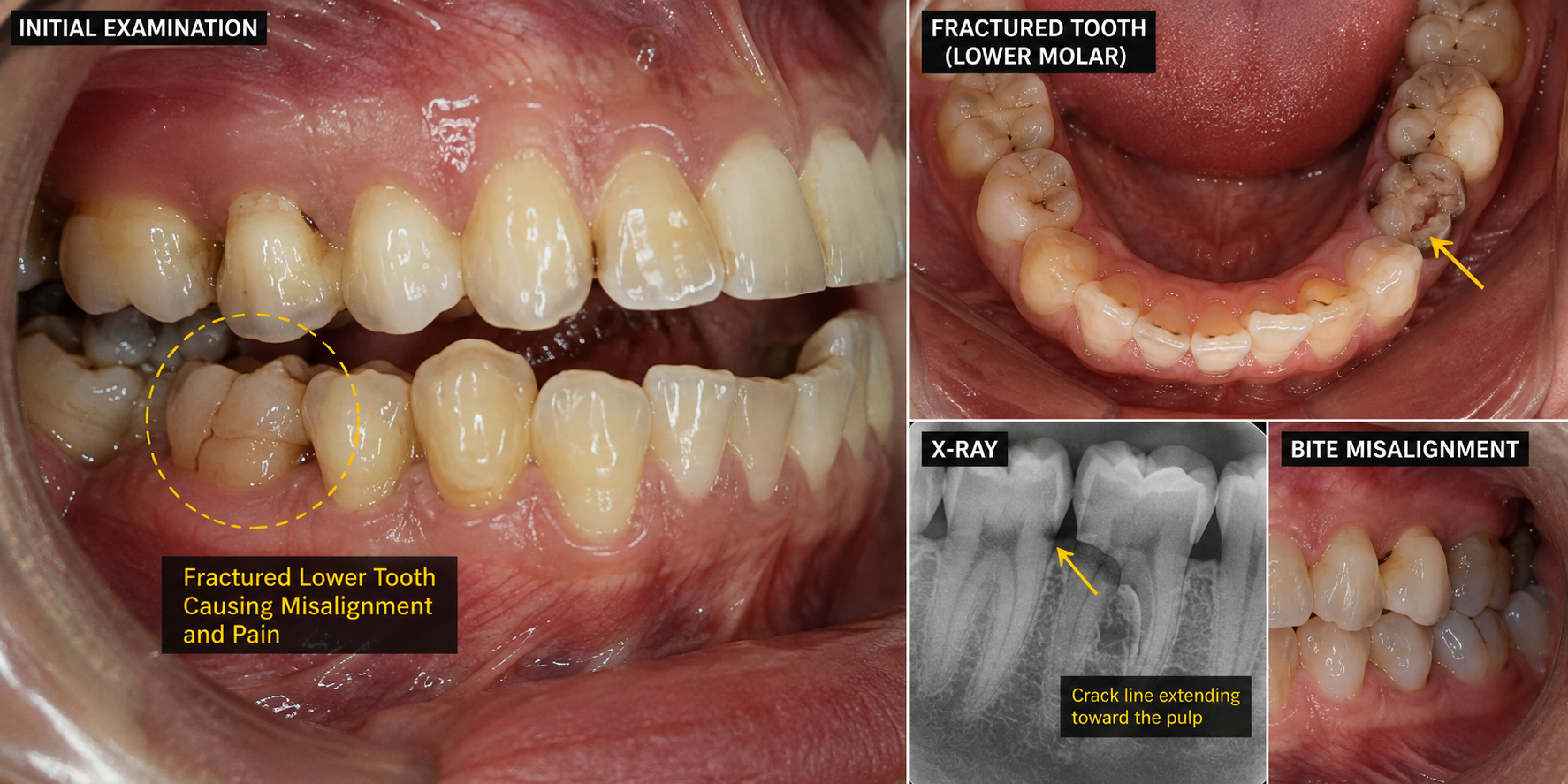
Image: Severity: CriticalTeeth Problems: Braces irritationGum infectionA middle-aged patient presented to our dental office complaining of persistent pain while chewing on the lower right side of the mouth. The patient explained that the discomfort had gradually increased over several weeks and was now affecting everyday activities such as eating meat, chewing bread, and drinking cold beverages.
The patient also noticed that the teeth no longer fit together properly. Every time the mouth closed, one lower tooth seemed to contact first, creating pressure and pain.
During the clinical examination, we observed a fractured lower molar with loss of tooth structure. The damaged tooth had altered the patient's bite, producing localized bite interference. Mild inflammation was present around the surrounding gum tissue, although there was no obvious facial swelling at the time of examination.
Radiographs were recommended to evaluate the depth of the fracture, assess the health of the dental pulp, and determine whether the crack extended into the root structure.
Clinical Findings
The examination revealed several important findings:
Large fracture involving the chewing surface of the lower molar
Bite interference caused by loss of normal tooth anatomy
Localized gum inflammation surrounding the damaged tooth
Pain during biting and release of pressure
Cold sensitivity reported by the patient
No evidence of uncontrolled bleeding
Tooth remained stable without obvious mobility during examination
Although the fracture was clearly visible clinically, additional imaging was necessary to determine whether the pulp had been compromised and whether the tooth remained restorable.
Expert Case Analysis
From a restorative dentist's perspective, this type of fracture is more than a cosmetic problem.
The chewing surfaces of the molars are designed to distribute biting forces evenly. Once a significant portion of the tooth fractures, that balance is lost. Instead of spreading force across the entire tooth, chewing pressure becomes concentrated on the remaining weakened structure.
Every bite places additional stress on the fracture.
This repeated flexing may allow the crack to propagate deeper into the dentin and, in some cases, toward the pulp chamber.
As the fracture enlarges, bacteria and food debris gain access to microscopic spaces inside the tooth. This often leads to inflammation of the dental pulp and increases the risk of infection.
Patients frequently report that the pain becomes progressively worse rather than improving.
Why Tooth Misalignment Develops
Many patients are surprised that a broken tooth can change the way their bite feels.
When part of the chewing surface fractures, the tooth may no longer contact the opposing teeth normally. The patient subconsciously shifts the jaw to avoid pain, placing additional stress on neighboring teeth and jaw muscles.
This may produce:
Uneven bite
Jaw muscle fatigue
Pain while chewing
Difficulty biting into food
Headaches
Tenderness near the temporomandibular joint (TMJ)
If the bite remains uncorrected, excessive forces may contribute to wear or fractures in adjacent teeth over time.
Expected 30-Day Progression Without Treatment
Week 1
The patient experiences intermittent sharp pain while chewing.
Cold sensitivity increases.
The fracture begins collecting food debris.
Inflammation develops around the damaged tooth.
Week 2
Repeated chewing causes the crack to widen.
Pain becomes more frequent.
The dental pulp may begin showing signs of irreversible inflammation.
Some patients notice lingering pain after hot or cold foods.
Week 3
Bacteria may penetrate deeper into the pulp chamber.
The patient may develop:
Throbbing pain
Nighttime discomfort
Increased sensitivity to pressure
Gum tenderness
At this stage, root canal treatment may become necessary if the pulp has been irreversibly damaged.
Week 4
Without professional treatment, complications become more likely.
Possible progression includes:
Dental abscess
Localized facial swelling
Bone infection around the root tip
Pus drainage
Persistent severe pain
Tooth becoming non-restorable
If the fracture extends below the gum line or into the root, extraction may be the only predictable long-term treatment.
Recommended Diagnostic Evaluation
An accurate diagnosis should include:
Comprehensive oral examination
Bite analysis
Percussion testing
Cold vitality testing
Periodontal probing
Periapical dental X-rays
Bitewing radiographs
Cone Beam CT (CBCT) when a root fracture or complex crack is suspected
These findings help determine whether the fracture is confined to the crown or extends into the root.
Treatment Options
Treatment depends on the location and extent of the fracture.
Possible options include:
Composite restoration for small fractures
Onlay restoration when cusps require reinforcement
Full-coverage dental crown for significant structural loss
Root canal therapy if the pulp is irreversibly inflamed or infected
Crown placement following endodontic treatment
Tooth extraction if the fracture extends vertically into the root or cannot be predictably restored
Dental implant or fixed bridge to replace a non-restorable tooth
The earlier treatment begins, the greater the likelihood of preserving the natural tooth.
Expert Dentist's Opinion
In my clinical experience, patients often underestimate the seriousness of a fractured molar because the pain may initially come and go. Unfortunately, every day the tooth is used for chewing, additional stress is placed on an already weakened structure. What begins as a repairable fracture can progress into pulpal infection, abscess formation, or complete structural failure if treatment is delayed.
Patients who seek evaluation soon after noticing a cracked tooth or a change in their bite generally have more conservative treatment options and a better long-term prognosis. If you experience persistent pain while chewing, increased sensitivity, or the feeling that your bite has changed, schedule a dental examination promptly. Early diagnosis allows us to stabilize the tooth before irreversible damage occurs and gives us the best opportunity to preserve your natural smile.
Frequently Asked Questions (FAQ)
1. What is tooth misalignment after a lower molar fracture?
A fractured lower molar can shift slightly out of its normal position, causing your bite to feel uneven. Even a small change in tooth alignment can make chewing painful and place extra stress on nearby teeth.
2. Why does a fractured lower molar hurt when I bite down?
When a tooth cracks, pressure from chewing causes the fractured segments to move slightly. This movement can irritate the dental pulp (nerve) and surrounding tissues, resulting in sharp pain when biting or releasing pressure.
3. Can a cracked lower molar become infected?
Yes. Cracks allow bacteria to enter the inner portion of the tooth. Without treatment, the infection may spread to the root, jawbone, or surrounding gum tissue, increasing the risk of an abscess.
4. What symptoms suggest the fracture is becoming infected?
Watch for:
Persistent or worsening tooth pain
Swollen or bleeding gums
Facial swelling
Bad taste or pus around the tooth
Pain when chewing
Sensitivity to hot or cold
Fever in severe cases
5. Why does my bite suddenly feel different?
A fractured tooth may shift under chewing pressure or become loose because of infection and inflammation. Swelling around the tooth can also temporarily change how your upper and lower teeth fit together.
6. Can the fractured tooth still be saved?
In many cases, yes. If the crack has not extended below the gum line or split the root, treatments such as a dental crown or root canal therapy may preserve the tooth. Early treatment offers the best chance of saving it.
7. When is tooth extraction necessary?
Extraction may be recommended if:
The fracture extends deep into the root.
The tooth cannot support a crown.
Severe infection has destroyed surrounding bone.
The tooth has split into separate pieces.
Your dentist will evaluate the tooth using a clinical examination and dental X-rays.
8. What treatments are available for a fractured lower molar?
Treatment depends on the severity of the damage and may include:
Dental filling for minor fractures
Dental crown
Root canal treatment
Tooth extraction
Dental implant or bridge to replace a missing tooth
9. Can antibiotics alone fix the problem?
No. Antibiotics may help reduce bacterial infection, but they cannot repair a cracked tooth. Definitive dental treatment is usually required to eliminate the source of infection.
10. How quickly should I see a dentist?
As soon as possible. A small crack can worsen over time with normal chewing, allowing bacteria to enter deeper into the tooth and increasing the risk of infection or tooth loss.
11. Is it safe to continue chewing on the fractured tooth?
No. Chewing on a cracked tooth can enlarge the fracture, increase pain, and reduce the likelihood that the tooth can be saved. Until you are evaluated, chew on the opposite side whenever possible.
12. What happens if I ignore a fractured lower molar?
Untreated fractures can lead to:
Chronic pain
Tooth infection
Dental abscess
Bone loss around the tooth
Facial swelling
Tooth loss
More complex and costly dental treatment
13. How is this condition diagnosed?
Your dentist may use:
Clinical examination
Bite testing
Dental X-rays
3D CBCT scan (when indicated)
Pulp vitality testing
These tests help determine the extent of the fracture and whether the tooth can be saved.
14. What are the warning signs of a dental emergency?
Seek immediate dental care if you develop:
Rapid facial swelling
Difficulty swallowing or breathing
Fever with severe tooth pain
Pus draining from the gums
Severe pain that does not improve with medication
These symptoms may indicate a spreading dental infection requiring urgent treatment.
15. How can I prevent lower molar fractures?
To reduce your risk:
Avoid chewing ice, hard candy, or hard bones.
Wear a mouthguard during sports.
Treat cavities before they weaken the tooth.
Avoid grinding or clenching your teeth.
Visit your dentist regularly for examinations and early detection of cracks.
Source: https://cebudentalimplants.com/painful-tooth-misalignment-fractured-lower-molar-expert-clinical-case-analysis-diagnosis-treatment
0 likes · 0 comments · 0 shares