Post by cebudentalimplants (@cebudentalimplants)
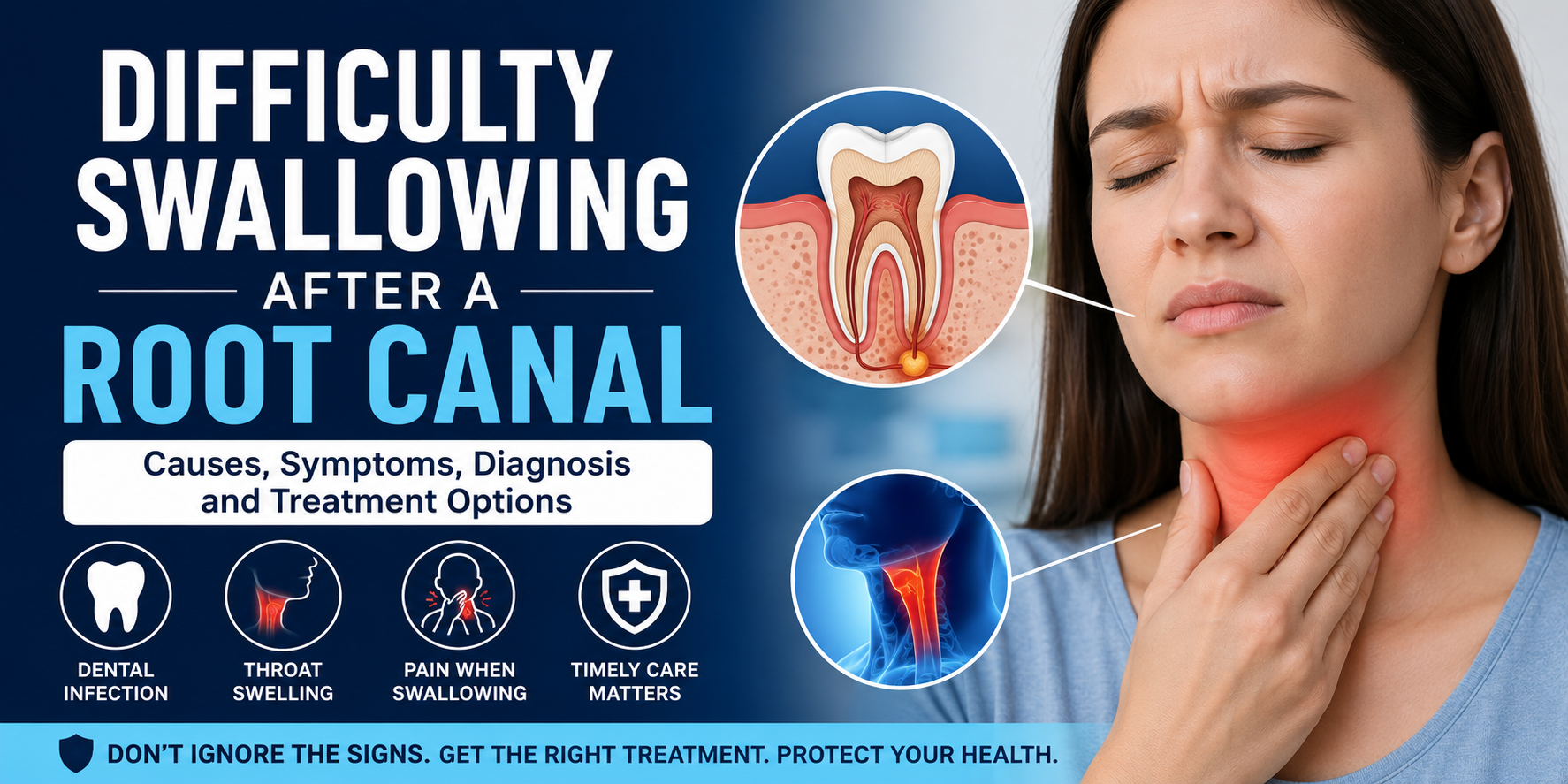
Language : EnglishTopics: Post-root canal painRoot canal infectionAs a practicing USA dentist, one of the most concerning symptoms a patient can experience after a root canal treatment is difficulty swallowing. While mild soreness around the treated tooth can be expected during healing, trouble swallowing is never a symptom that should be ignored.
In San Bernardino, California, patients frequently contact emergency dental offices after noticing throat discomfort, swelling, or pain when swallowing following a root canal procedure. In many situations, the cause is minor inflammation. However, in some cases, difficulty swallowing may indicate that an infection is spreading beyond the tooth into the surrounding tissues of the jaw, floor of the mouth, throat, or neck. Such situations require immediate evaluation because severe dental infections can become life-threatening if they compromise the airway.
This comprehensive guide explains:
Why swallowing difficulties can occur after a root canal
How dentists diagnose the problem
Common and uncommon causes
Warning signs of a dental emergency
Treatment options
Recovery expectations
Worst-case complications
A real-world success story
Understanding the Relationship Between Root Canals and Swallowing Problems
A root canal procedure removes infected or inflamed pulp tissue from inside a tooth. Once the canals are cleaned and sealed, the infection source is typically eliminated.
However, patients occasionally develop symptoms that extend beyond the tooth itself. One of these symptoms is dysphagia, the medical term for difficulty swallowing. Dysphagia may result from inflammation, swelling, infection, or pressure affecting the tissues involved in swallowing.
The swallowing process requires the coordination of numerous muscles, nerves, and soft tissues. When an infection spreads from a tooth to nearby structures, even minor swelling can interfere with normal swallowing function.
Is Difficulty Swallowing Normal After a Root Canal?
The answer depends on severity.
Mild Symptoms That May Be Normal
Some patients experience:
Slight throat irritation
Mild jaw soreness
Tenderness while chewing
Temporary discomfort opening the mouth
These symptoms generally improve within a few days.
Symptoms That Are Not Normal
Seek immediate dental or medical evaluation if you experience:
Difficulty swallowing saliva
Painful swallowing
Increasing throat swelling
Neck swelling
Difficulty breathing
Fever
Drooling
Inability to open the mouth normally
These symptoms may indicate a spreading infection requiring urgent treatment.
Common Causes of Difficulty Swallowing After a Root Canal
1. Residual Infection
Sometimes bacteria remain inside complex root canal anatomy.
Teeth can contain:
Accessory canals
Lateral canals
Hidden canals
Curved root systems
Even with excellent treatment, bacteria occasionally survive in microscopic spaces. Persistent infection can cause swelling that affects nearby tissues and swallowing muscles.
Symptoms
Continued tooth pain
Swelling
Tender gums
Bad taste
Difficulty swallowing
2. Dental Abscess Formation
A dental abscess develops when pus accumulates around the root of a tooth.
Pressure builds within surrounding tissues and can spread into:
Jaw spaces
Floor of mouth
Facial spaces
Neck tissues
As swelling increases, swallowing may become painful or difficult.
Signs
Facial swelling
Severe pain
Fever
Difficulty swallowing
Swollen lymph nodes
3. Inflammation Following Treatment
Root canal instruments extend close to the root tip.
This can cause temporary inflammation in surrounding tissues.
Most inflammation is mild and resolves naturally. However, patients with pre-existing infection may experience exaggerated inflammatory responses.
Symptoms
Mild swallowing discomfort
Jaw soreness
Temporary tenderness
These symptoms usually improve within several days.
4. Spread of Infection into Deep Neck Spaces
This is one of the most serious complications.
Untreated or persistent dental infections can spread into fascial spaces of the neck.
When this occurs, patients may develop:
Neck swelling
Severe throat pain
Difficulty swallowing
Breathing problems
Deep neck infections are considered medical emergencies.
5. Ludwig's Angina
One of the most feared complications of dental infections is a condition called:
Ludwig's angina
Ludwig's angina is a rapidly spreading infection involving the floor of the mouth and tissues beneath the tongue.
Symptoms include:
Tongue elevation
Neck swelling
Trouble swallowing
Drooling
Speech difficulties
Airway compromise
Dental infections are among the most common causes.
Risk Factors
Patients are more likely to develop complications when they have:
Diabetes
Smoking history
Weakened immune systems
Delayed dental treatment
Severe pre-existing infection
Large abscesses
Previous failed root canals
These factors can make infection harder to control and increase the likelihood of spreading beyond the tooth.
Diagnostic Process
When a patient visits my office in San Bernardino with swallowing difficulties after a root canal, diagnosis begins immediately.
Step 1: Medical History
Questions include:
When did symptoms begin?
Is swallowing painful?
Is breathing affected?
Is there fever?
Has swelling increased?
The timeline often reveals whether the issue is inflammatory or infectious.
Step 2: Clinical Examination
I evaluate:
Facial swelling
Gum swelling
Mouth opening
Tongue position
Neck tenderness
Lymph node enlargement
Any signs of airway involvement receive urgent attention.
Step 3: Dental Imaging
Digital radiographs may reveal:
Persistent infection
Missed canals
Bone loss
Abscess formation
In some situations, cone beam CT scans are necessary for detailed visualization.
Step 4: Airway Assessment
If swallowing is severely impaired, airway evaluation becomes the highest priority.
Red flags include:
Drooling
Voice changes
Difficulty breathing
Inability to swallow liquids
These symptoms may require hospital referral.
Conditions That Can Mimic a Dental Problem
Not every swallowing issue is caused by the root canal.
Other possibilities include:
Acid Reflux
Gastroesophageal reflux disease can cause:
Throat irritation
Painful swallowing
Chronic cough
Sometimes patients mistakenly assume the root canal caused the symptom.
Tonsillitis
Throat infections can occur independently of dental treatment.
Symptoms include:
Fever
Sore throat
Swollen tonsils
Pain when swallowing
Muscle Strain
Keeping the mouth open during lengthy dental procedures may cause temporary muscle soreness.
Patients sometimes interpret this discomfort as a swallowing disorder.
Temporomandibular Joint Problems
TMJ inflammation can radiate discomfort into the throat and jaw region.
Signs of a Dental Emergency
Patients in San Bernardino should seek emergency care if they experience:
Rapidly worsening swelling
Difficulty swallowing saliva
Trouble breathing
Fever over 101°F
Neck swelling
Voice changes
Severe pain
Persistent drainage of pus
These symptoms may indicate a spreading infection requiring immediate treatment.
Treatment Options
Treatment depends on the underlying diagnosis.
Antibiotics
If infection is present, antibiotics may be prescribed.
The goal is to:
Reduce bacterial load
Prevent spread
Control swelling
However, antibiotics alone do not eliminate the source of infection.
Root Canal Retreatment
If a missed canal or persistent infection is discovered, retreatment may be necessary.
This involves:
Removing old filling material
Re-cleaning canals
Disinfecting hidden anatomy
Resealing the tooth
Drainage Procedures
Large abscesses may require drainage.
Removing accumulated pus often produces rapid relief.
Patients frequently notice improvement in swallowing within days.
Surgical Endodontics
Some infections persist despite conventional treatment.
An apicoectomy may be recommended.
This procedure removes:
Infected tissue
Root tip
Persistent bacterial reservoirs
Extraction
When the tooth cannot be saved, extraction may be the safest option.
Reasons include:
Vertical root fracture
Extensive bone destruction
Repeated treatment failure
Hospital Management
Severe infections spreading into the neck may require:
IV antibiotics
Airway monitoring
Surgical drainage
Hospitalization may be necessary in advanced cases.
Recovery Timeline
First 24 Hours
Patients may notice:
Mild soreness
Minor swelling
Slight discomfort swallowing
These symptoms are often normal.
Days 2–5
Inflammation should begin decreasing.
Most patients report:
Improved chewing
Reduced swelling
Easier swallowing
One Week
The majority of uncomplicated cases show substantial improvement.
Persistent symptoms warrant reevaluation.
Worst-Case Scenarios
Although uncommon, serious complications can occur.
Airway Obstruction
Swelling can interfere with normal breathing.
This is a medical emergency requiring immediate treatment.
Deep Neck Space Infection
Bacteria can spread through tissue planes of the neck.
Potential consequences include:
Hospitalization
Surgery
Airway compromise
Systemic Infection
Untreated infection may enter the bloodstream.
Potential symptoms include:
Fever
Chills
Fatigue
Sepsis
Prompt intervention dramatically reduces these risks.
Prevention Tips
Patients can reduce complications by:
Seeking treatment early
Completing prescribed medications
Attending follow-up visits
Maintaining excellent oral hygiene
Reporting swelling immediately
Avoiding smoking during recovery
A San Bernardino Success Story
A 47-year-old San Bernardino resident visited our office three days after a root canal.
Initially, he experienced normal post-treatment soreness.
However, by day three he developed:
Increasing swelling
Pain when swallowing
Mild fever
A CBCT scan revealed a persistent infection associated with an untreated accessory canal.
We performed root canal retreatment and prescribed antibiotics.
Within 48 hours:
Swelling decreased
Swallowing improved
Fever resolved
Three months later:
Bone healing was evident
The tooth remained functional
No further symptoms occurred
The patient avoided extraction and returned to normal activities.
Final Thoughts From a USA Dentist
Difficulty swallowing after a root canal should never be ignored. While minor discomfort can occur during normal healing, significant swallowing problems may indicate infection, abscess formation, or spread into surrounding tissues.
For residents of San Bernardino, California, prompt evaluation is the key to preventing serious complications. Most cases can be successfully treated when diagnosed early. Delaying treatment, however, may allow infection to spread into the neck or airway, creating a potentially life-threatening emergency.
If you develop difficulty swallowing, fever, facial swelling, neck swelling, or breathing problems after a root canal, contact a dentist or emergency medical provider immediately. Early intervention can save both your tooth and your health.
Can tooth extraction cause infection? Mild inflammation is normal, but increasing swelling, fever, or severe pain may indicate infection. Learn more about post-extraction infection warning signs in this detailed guide.
Book a consultation with our Cebu dental specialists for proper evaluation and care.
Ready to get expert guidance?
If you’re experiencing severe pain or delayed healing, book a consultation with our Cebu dental specialists to get proper evaluation and care.
Consultation or contact page .
Book a Consultation
For severe discomfort or delayed healing, book a consultation with our Cebu dental specialists today.
Looking for a dentist? Browse our Cebu dental directory to find trusted clinics near you.
Medical Review and Clinical Basis
This article is based on clinical dental guidelines and real patient recovery patterns observed after tooth extraction procedures. The information reflects common post-extraction healing stages, including normal clot formation, gum tissue repair, and signs of possible complications such as dry socket or infection.
While mild discomfort is expected after a dental extraction, worsening pain after Day 3, bad odor, exposed bone, or spreading pain may require professional evaluation. These symptoms are consistent with known post-extraction complications described in standard dental practice.
About Cebu Dental Implants
Cebu Dental Implants provides comprehensive tooth extraction, surgical procedures, and dental implant services in the Philippines. Our team evaluates post-extraction healing, manages complications such as dry socket, and advises patients on proper aftercare to prevent infection and delayed healing.
If you experience severe pain or unusual symptoms after extraction, early professional assessment is recommended to prevent further complications.
Important Medical Disclaimer
This content is for educational purposes only and does not replace professional dental diagnosis. Every patient heals differently. If symptoms worsen or do not improve within a few days, consult a licensed dentist for proper evaluation and treatment.
Author
This article was prepared by the Cebu Dental Implants content team in consultation with licensed dental professionals experienced in tooth extraction and implant procedures.
Source: https://cebudentalimplants.com/difficulty-swallowing-root-canal-san-bernardino-california
0 likes · 0 comments · 0 shares