Post by cebudentalimplants (@cebudentalimplants)
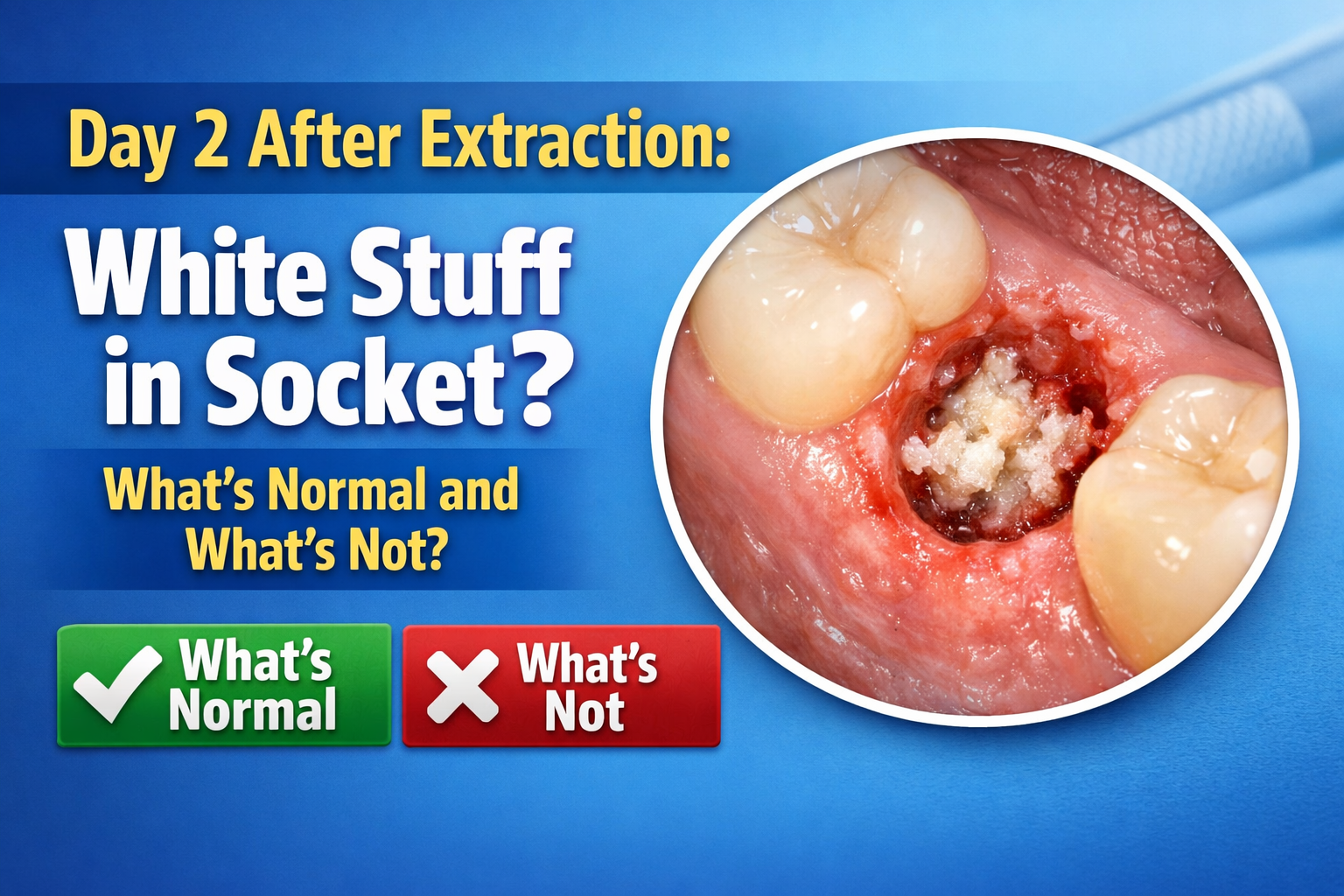
Language : EnglishTopics: Dry socket (alveolar osteitis)Socket infectionAfter a tooth extraction, many patients panic when they see white or yellowish material inside the socket on Day 2.
The good news?
In most cases, this is completely normal healing.
But sometimes, it can signal a problem like dry socket.
If you’re a busy worker who can’t afford complications, here’s what you need to know.
What Is the White Stuff in the Tooth Socket?
On Day 1–3 after extraction, your body forms a protective healing layer.
The white material you see is usually:
Fibrin (Healing Tissue)
This is the most common cause.
Fibrin is part of your natural blood clot healing process. It looks:
White or off-white
Slightly yellow
Soft or jelly-like
This is NOT pus.
This means your body is healing properly.
2. Granulation Tissue
By Day 2–4, new tissue begins forming. It may look white or creamy but is part of healthy healing.
What Is Normal on Day 2?
Here’s what most patients experience:
Mild to moderate pain
Slight swelling
White or yellow layer in socket
Mild bad taste
Small blood traces in saliva
This is part of the normal tooth extraction healing stages.
Pain should slowly improve, not worsen.
When Is White Stuff NOT Normal?
Sometimes, white material can indicate infection or dry socket.
Warning Signs of Dry Socket
Dry socket usually happens 2–4 days after extraction.
Symptoms include:
Severe throbbing pain that radiates to ear or jaw
Pain getting worse instead of better
Bad smell from mouth
Empty-looking socket (no blood clot)
Exposed bone visible
If you see white bone and feel strong pain, that is NOT normal healing.
Dry Socket vs Normal Healing
Normal Healing:
White fibrin layer
Pain decreasing daily
No severe bad odor
Dry Socket:
Severe increasing pain
Visible bone
Strong bad breath
Pain spreads to ear or temple
If unsure, always get checked early. Delaying treatment can extend healing by 7–14 days.
Why Busy Workers Often Ignore Early Signs
Many working professionals:
Take only 1–2 days off
Ignore increasing pain
Continue smoking or drinking
Skip saltwater rinsing
These habits increase risk of dry socket and infection.
If pain increases on Day 2 or 3, do not wait.
How to Protect Your Healing Socket
Follow these instructions:
Do not spit forcefully
Avoid smoking for at least 72 hours
Eat soft food only
Rinse gently with warm salt water after 24 hours
Avoid using straws
Protecting the clot protects your healing.
When to Visit a Dentist
Visit your dentist immediately if:
Pain becomes severe
Swelling increases after Day 3
Fever develops
There is pus discharge
You see exposed bone
Early treatment can prevent complications and reduce recovery time.
If you are unsure, visit your nearest clinic for evaluation.
Final Thoughts: Should You Worry?
On Day 2, white stuff in the socket is usually a sign of healing.
Do not panic immediately.
But monitor your pain level carefully.
If pain decreases daily, healing is on track.
If pain increases sharply, seek dental care immediately.
Early action saves time, money, and missed workdays.
Can tooth extraction cause infection? Mild inflammation is normal, but increasing swelling, fever, or severe pain may indicate infection. Learn more about post-extraction infection warning signs in this detailed guide.
Book a consultation with our Cebu dental specialists for proper evaluation and care.
Ready to get expert guidance?
If you’re experiencing severe pain or delayed healing, book a consultation with our Cebu dental specialists to get proper evaluation and care.
Consultation or contact page .
Book a Consultation
For severe discomfort or delayed healing, book a consultation with our Cebu dental specialists today.
Looking for a dentist? Browse our Cebu dental directory to find trusted clinics near you.
Medical Review and Clinical Basis
This article is based on clinical dental guidelines and real patient recovery patterns observed after tooth extraction procedures. The information reflects common post-extraction healing stages, including normal clot formation, gum tissue repair, and signs of possible complications such as dry socket or infection.
While mild discomfort is expected after a dental extraction, worsening pain after Day 3, bad odor, exposed bone, or spreading pain may require professional evaluation. These symptoms are consistent with known post-extraction complications described in standard dental practice.
About Cebu Dental Implants
Cebu Dental Implants provides comprehensive tooth extraction, surgical procedures, and dental implant services in the Philippines. Our team evaluates post-extraction healing, manages complications such as dry socket, and advises patients on proper aftercare to prevent infection and delayed healing.
If you experience severe pain or unusual symptoms after extraction, early professional assessment is recommended to prevent further complications.
Important Medical Disclaimer
This content is for educational purposes only and does not replace professional dental diagnosis. Every patient heals differently. If symptoms worsen or do not improve within a few days, consult a licensed dentist for proper evaluation and treatment.
Author
This article was prepared by the Cebu Dental Implants content team in consultation with licensed dental professionals experienced in tooth extraction and implant procedures.
Source: https://cebudentalimplants.com/day-2-after-extraction-white-stuff-in-socket
0 likes · 0 comments · 0 shares