Post by cebudentalimplants (@cebudentalimplants)
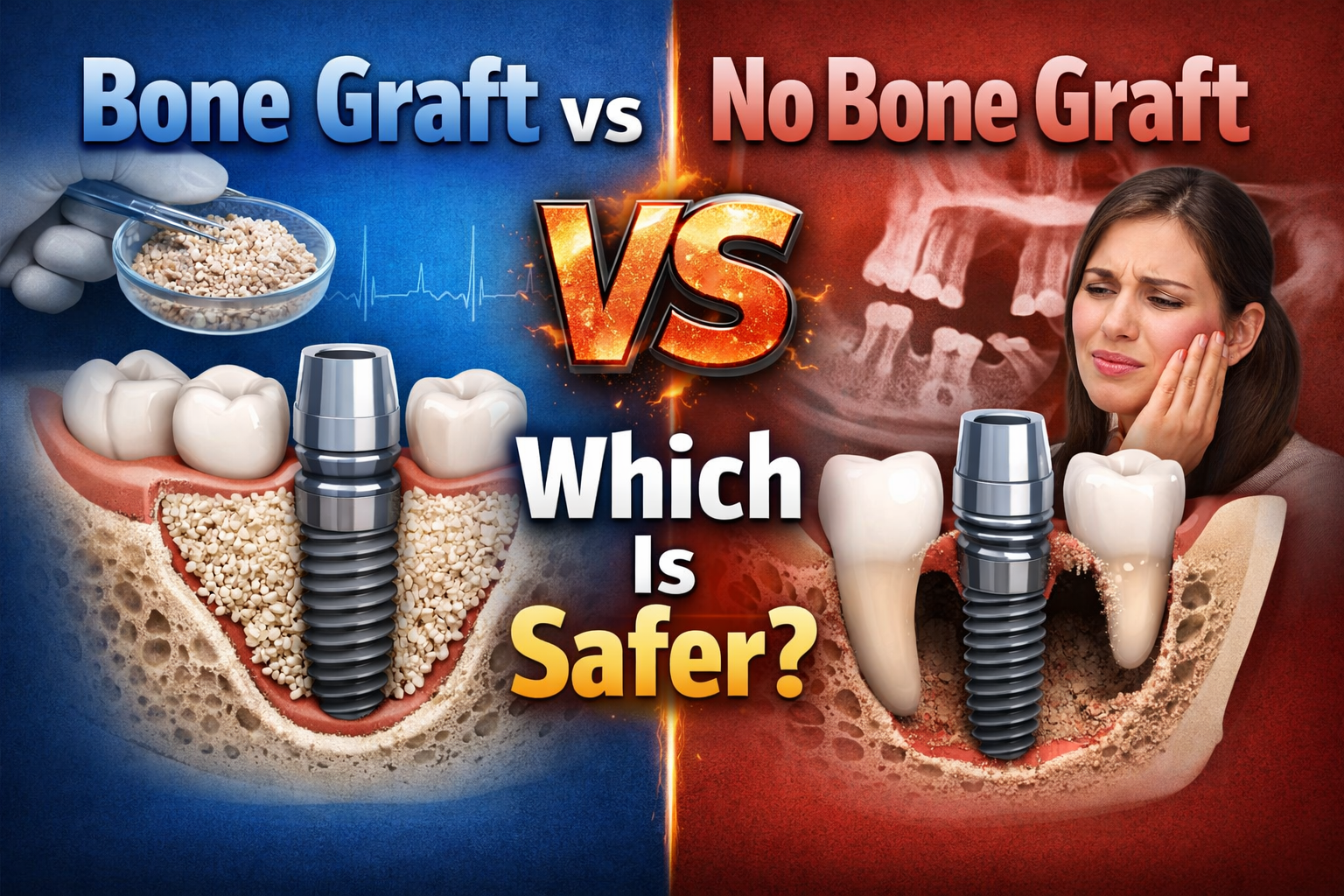
Language : EnglishTopics: Bone graftBone Graft vs No Bone Graft: Which Is Safer?
Dental implant success depends on one critical factor: bone support. Many patients rush into treatment without understanding whether they need a bone graft or not. Some skip grafting to save money and time. Others are advised to do grafting without clear explanation. The result? Failed implants, wasted money, stress, and sometimes legal disputes.
This guide will help you understand the difference between bone graft vs no bone graft, which is safer, and how to avoid becoming part of the 5%–10% failure cases.
What Is a Bone Graft in Dental Implants?
A bone graft is a procedure where new bone material is added to the jaw to create a strong foundation for a dental implant.
When teeth are missing for a long time, the jawbone shrinks (bone resorption). If the bone becomes too thin or too soft, an implant cannot safely anchor without additional support.
Types of Bone Grafts:
Autograft (your own bone)
Allograft (donor bone)
Xenograft (animal source, commonly bovine)
Synthetic bone substitutes
Healing time: 3 to 6 months depending on the case.
What Happens If You Skip Bone Grafting?
Skipping a necessary graft may lead to:
Implant loosening
Infection
Poor integration (implant not fusing to bone)
Bone loss around implant
Complete implant failure
Some clinics promise “immediate implant” even when bone volume is not ideal. While immediate implants are possible in selected cases, not all patients qualify.
This is where many failures begin.
Bone Graft vs No Bone Graft: Safety Comparison
Factor
With Bone Graft
Without Bone Graft
Stability
Higher long-term stability
Risky if bone is thin
Healing Time
Longer
Faster
Cost
Higher initial cost
Lower initial cost
Failure Risk
Lower when properly indicated
Higher if bone inadequate
Long-term Success
90–95%+
Depends on bone quality
Conclusion:
If bone volume is insufficient, grafting is safer long-term. Skipping graft for speed or savings may lead to bigger losses later.
Why Do 5%–10% Dental Implants Fail?
Studies globally show that dental implant failure ranges between 5% to 10% depending on patient health, technique, and aftercare.
Common causes:
Poor diagnosis and treatment planning
Inadequate bone assessment (no CBCT scan)
Rushing surgery
Infection control problems
Smoking or uncontrolled diabetes
Overloading the implant too early
Inexperienced practitioner
Not all failures are malpractice. However, poor communication and aggressive sales tactics can contribute to poor decisions.
The Problem: Rushed Decisions and Misleading Advice
Some patients:
Choose cheapest offer without reviewing credentials
Skip diagnostic scans
Travel without checking post-op care
Trust marketing over clinical evaluation
Some unethical practices may include:
Pushing unnecessary grafting for higher profit
Promising “guaranteed success”
Downplaying risks
Avoiding full disclosure of complications
A trustworthy dentist will:
Show your X-rays and CBCT results
Explain why graft is needed (or not needed)
Provide written treatment plan
Discuss risks honestly
Give realistic timeline
When You MAY NOT Need Bone Graft
You may avoid grafting if:
Tooth was recently extracted
Bone height and width are adequate
No infection or severe bone loss
Implant is placed immediately after extraction
A CBCT scan is the safest way to confirm this.
Financial Reality: Short-Term Savings vs Long-Term Cost
Skipping a $500–$1,500 graft may lead to:
Implant removal
Infection treatment
New graft procedure
Replacement implant
Additional months of healing
Total cost may double or triple.
Time lost can be 6–12 months.
Legal Considerations
If implant failure occurs:
You may have grounds for legal action only if:
There is clear negligence
No proper diagnosis was done
No informed consent
Standard procedure was ignored
However, failure alone does not automatically mean malpractice. Medicine is not 100% guaranteed.
Always request:
Treatment records
X-rays before and after
Written consent forms
How to Carefully Choose a Trusted Dentist
Before proceeding:
Check years of implant experience
Ask how many implants placed annually
Verify use of CBCT technology
Review before-and-after cases
Read verified patient reviews
Ask about complication protocol
Confirm sterilization standards
Get second opinion if unsure
If a dentist pressures you to decide immediately, that is a red flag.
The Real Answer: Which Is Safer?
There is no one-size-fits-all answer.
Bone graft is safer:
When bone is insufficient
When long-term stability is priority
When aesthetic zone is involved
No graft is safe:
When bone volume is confirmed adequate
When immediate placement criteria are met
The key is accurate diagnosis, not speed or sales pressure.
Final Advice
Dental implants can last 20 years or more when done properly.
Do not:
Rush because of promo price
Skip diagnostic imaging
Hide medical conditions
Choose based on lowest cost alone
Do:
Invest in proper planning
Choose ethical and experienced provider
Understand your treatment fully
Prioritize long-term success over short-term savings
Remember:
It is better to wait 3 months for proper bone healing than to lose 1 year correcting a failed implant.
Looking for dentist : Visit directory list
Source: https://cebudentalimplants.com/bone-graft-vs-no-bone-graft-which-is-safer-dental-implant
0 likes · 0 comments · 0 shares