Post by Inemesit Friday Umoh (@Inemesit-Umoh)
𝗣𝗔𝗥𝗧 𝗜𝗜: 𝗪𝗵𝗲𝗻 “𝗕𝗲𝘁𝘁𝗲𝗿” 𝗠𝗲𝗮𝗻𝘀 “𝗢𝘂𝗿𝘀”
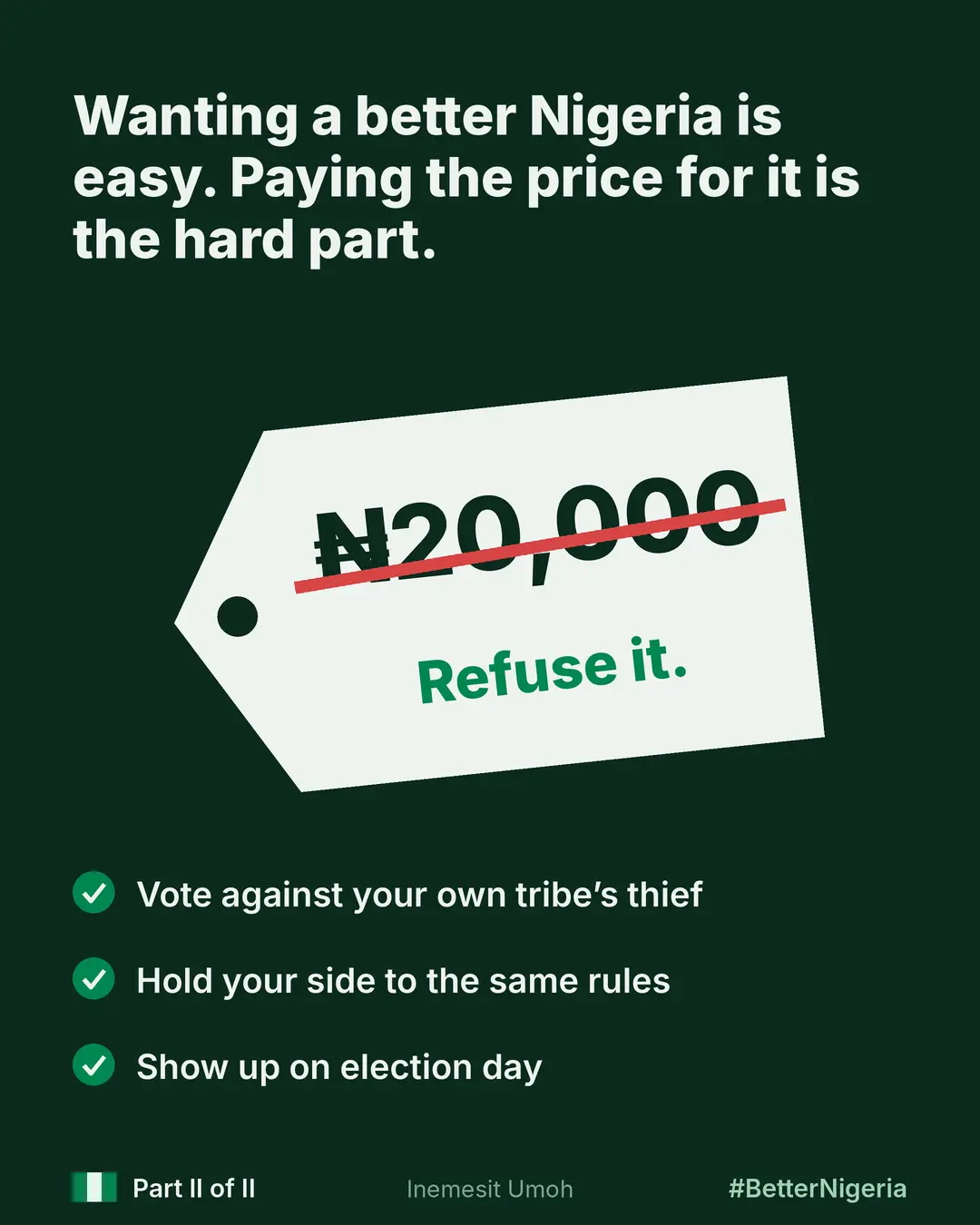
𝑊𝑎𝑛𝑡𝑖𝑛𝑔 𝑎 𝑏𝑒𝑡𝑡𝑒𝑟 𝑁𝑖𝑔𝑒𝑟𝑖𝑎 𝑖𝑠 𝑒𝑎𝑠𝑦. 𝑃𝑎𝑦𝑖𝑛𝑔 𝑡ℎ𝑒 𝑝𝑟𝑖𝑐𝑒 𝑓𝑜𝑟 𝑖𝑡 𝑖𝑠 𝑡ℎ𝑒 ℎ𝑎𝑟𝑑 𝑝𝑎𝑟𝑡.
For some, a better Nigeria means my tribe, my faith, my party in charge.
Look at the row over election dates. INEC first set the presidential election for February 20, 2027, and Atiku objected that it fell within Ramadan. INEC revised the date to January 16, 2027. That was a fair concern, handled the way institutions should handle one. Yet some online voices claimed the “Christian INEC chairman” had shown his hand. A scheduling problem became a religious plot. Afrobarometer finds that nine in 10 Nigerians are tolerant of people from other religions, ethnic groups and parties, yet only about half say they trust members of other faiths. Tolerance is not trust. Where trust is thin, “our person” feels safer than “the best person.”
Then there is the habit of defending our own side’s advantage while attacking the other side’s. In February 2026, the Senate voted down a proposal to compel real-time upload of polling unit results, and the opposition condemned it. After weeks of protests outside the National Assembly, the Senate reversed itself, approving electronic transmission with manual collation as a fallback. Critics still argued that permission without obligation does little to restore confidence. The episode cuts both ways: citizens who truly want better can force change, and the fight over the rules of counting is real.
And then there are those who stay at home. Ekiti’s turnout was about 36%, and in Osun 57% of registered voters did not vote. Staying home is often despair rather than opposition to change. But the effect is the same: the votes that count belong to those who show up, including the paid and the loyal. Osun shows what a bigger crowd can do. Economist Atedo Peterside noted that high turnout is among the strongest safeguards against malpractice, and the incumbent won with 511,067 votes to the APC candidate’s 444,815.
To be fair, the evidence does not say most Nigerians reject reform. In Afrobarometer’s 2024 survey, 80% said corruption had increased over the past year. People want it fixed. What they disagree on is the price.
Wanting a better Nigeria means refusing the ₦20,000. It means voting against your own tribe’s thief. It means holding your side to the rules you demand of the other, and showing up. Those who will not pay that price are not just “on the other side.” They are in every party, every tribe, every church and mosque, and perhaps in our own families.
Presidential and National Assembly elections hold on January 16, and governorship polls on February 6, 2027. The question is not who we say we want. It is whether we would still want a better Nigeria if it cost our candidate the seat.
#BetterNigeria #Nigeria2027 #NigeriaDecides #Accountability #LekeeLekee
0 likes · 0 comments · 0 shares