Post by Dr Esther Nsa Akachukwu (@dr_esther_nsa_akachukwu)
SICKLE CELL AWARENESS
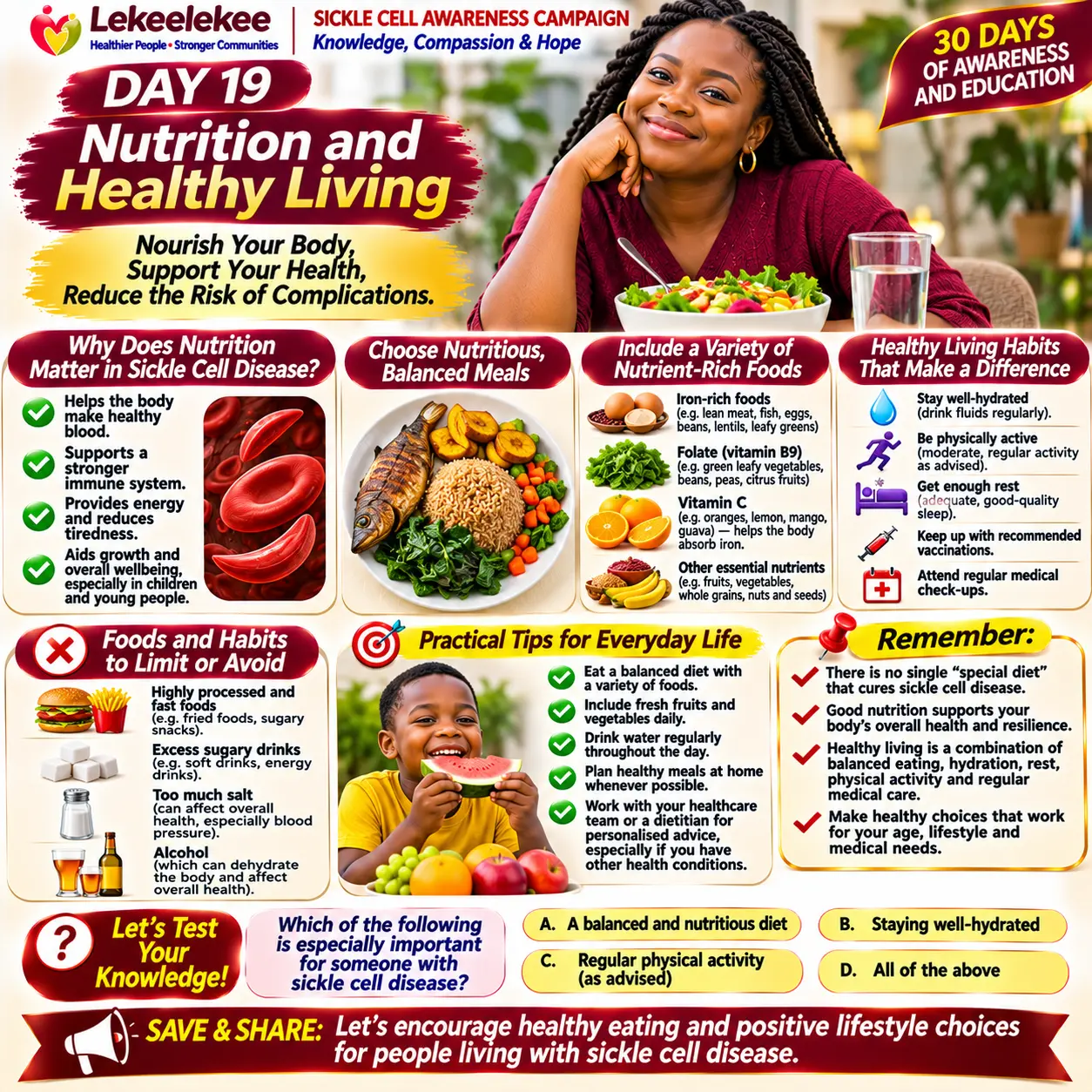
DAY 19 — NUTRITION AND HEALTHY LIVING
Eating Well, Living Well: Supporting the Body with Sickle Cell Disease.
Food is more than something that satisfies hunger. It provides nutrients that help the body grow, repair tissues, produce healthy blood cells and maintain energy.
For people living with sickle cell disease, a balanced diet is an important part of everyday care. ❤️
🥗 1. Why is good nutrition important?
People living with sickle cell disease may have increased nutritional needs because their bodies work harder to replace red blood cells and maintain normal body functions.
Good nutrition can help to:
- Support normal growth and development in children.
- Maintain energy and general wellbeing.
- Support the immune system.
- Provide nutrients needed for healthy blood-cell production.
- Maintain healthy bones, muscles and body tissues.
🍲 2. What should a healthy diet include?
A balanced diet should include a variety of foods from different food groups.
1. Fruits and vegetables 🍊🥬
Examples:
- Oranges and tangerines.
- Pawpaw and watermelon.
- Ugu, spinach and other leafy vegetables.
- Carrots and tomatoes.
They provide vitamins, minerals, fibre and other protective nutrients.
2. Protein-rich foods 🥚🐟
Examples:
- Fish and chicken.
- Eggs.
- Beans and lentils.
- Milk and yoghurt.
Protein supports growth, tissue repair and general body functions.
3. Energy-giving foods 🍠🍚
Examples:
- Rice.
- Yam.
- Sweet potatoes.
- Oats and whole grains.
- Garri and other suitable staple foods.
These provide energy for daily activities.
4. Healthy fats 🥑🥜
Examples:
- Avocado.
- Groundnuts.
- Seeds.
- Vegetable oils in moderate amounts.
These provide energy and support normal body functions.
💧 3. Remember hydration!
Drinking enough fluids is an important part of sickle cell self-care.
- Drink water regularly throughout the day.
- Pay attention to fluid loss during hot weather and physical activity.
- Follow your healthcare team's advice about how much fluid is appropriate for you.
💊 4. Do vitamins and supplements help?
Some people living with sickle cell disease may need specific supplements, such as folic acid, depending on their individual health needs and medical advice.
However:
- Supplements should not replace a balanced diet.
- Iron supplements should not be taken routinely unless iron deficiency has been confirmed and a healthcare professional recommends them.
- Avoid unprescribed herbal mixtures and products claiming to cure sickle cell disease.
🚶 5. Healthy living goes beyond food
Good nutrition works best alongside other healthy habits:
1. Attend regular medical appointments.
2. Take prescribed medicines as directed.
3. Get adequate sleep and rest.
4. Engage in suitable physical activity without overexertion.
5. Maintain good personal hygiene and follow vaccination advice.
6. Manage stress and seek emotional support when needed.
❤️ 6. Five important reminders
- No food can cure sickle cell disease.
- A balanced diet supports general health but does not guarantee that pain crises will not occur.
- Nutritional needs differ from person to person.
- Children need appropriate nutrition for growth and development.
- Ask a qualified healthcare professional before starting supplements.
Healthy eating is not about expensive meals. It is about making balanced, thoughtful choices with the foods available to you.
🧠 LET'S TEST YOUR KNOWLEDGE!
Which of the following is a healthy nutrition practice for someone living with sickle cell disease?
A. Depending only on herbal mixtures.
B. Avoiding all protein-rich foods.
C. Eating a balanced variety of foods and following professional advice about supplements.
D. Taking iron supplements without testing.
Drop your answer in the comments! 👇
📌 SAVE & SHARE: Help families understand how good nutrition can support the health of people living with sickle cell disease.
Lekeelekee — Healthier People, Stronger Communities.
Knowledge, Compassion & Hope. ❤️
0 likes · 0 comments · 0 shares
Comments
Thank you for sharing ma