Post by Inemesit Friday Umoh (@Inemesit-Umoh)
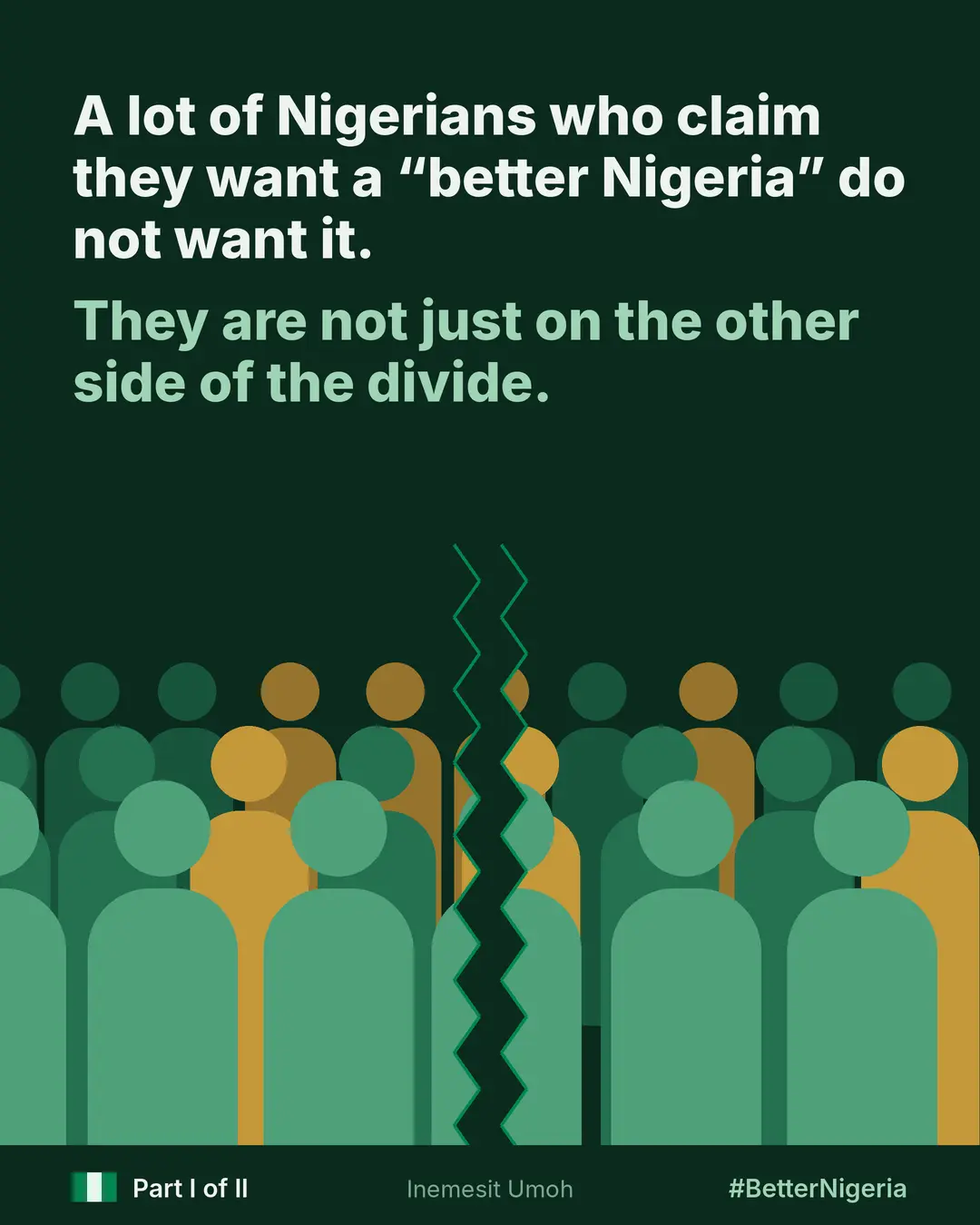
𝗡𝗼𝘁 𝗘𝘃𝗲𝗿𝘆𝗼𝗻𝗲 𝗪𝗵𝗼 𝗦𝗮𝘆𝘀 “𝗔 𝗕𝗲𝘁𝘁𝗲𝗿 𝗡𝗶𝗴𝗲𝗿𝗶𝗮” 𝗪𝗮𝗻𝘁𝘀 𝗢𝗻𝗲
𝗣𝗔𝗥𝗧 𝗜: 𝗧𝗵𝗲 𝗕𝗮𝗹𝗹𝗼𝘁 𝗛𝗮𝘀 𝗮 𝗣𝗿𝗶𝗰𝗲
𝐸𝑣𝑒𝑟𝑦𝑜𝑛𝑒 𝑠𝑎𝑦𝑠 𝑡ℎ𝑒𝑦 𝑤𝑎𝑛𝑡 𝑎 𝑏𝑒𝑡𝑡𝑒𝑟 𝑁𝑖𝑔𝑒𝑟𝑖𝑎. 𝑇ℎ𝑒𝑛 𝑒𝑙𝑒𝑐𝑡𝑖𝑜𝑛 𝑑𝑎𝑦 𝑐𝑜𝑚𝑒𝑠, 𝑎𝑛𝑑 𝑡ℎ𝑒 𝑝𝑟𝑖𝑐𝑒 𝑡𝑎𝑔 𝑎𝑝𝑝𝑒𝑎𝑟𝑠.
Every election season, “a better Nigeria” is on billboards, campaign jingles and WhatsApp bios. We tell ourselves a simple story: the good people want change, and a few bad leaders block it.
But watch how we actually behave, and the story gets uncomfortable. A lot of Nigerians (not all, and not even most) do not want a better Nigeria. They want a Nigeria that is better for them. That difference is where the real divide lies. It does not run neatly between ruler and ruled, or between APC and the opposition. It runs through the middle of the ruled too.
Start with the ballot, the one place where wanting change costs you something. In June’s Ekiti governorship election, observers from the Centre for Journalism Innovation and Development reported vote buying and other irregularities, and the Accord Party candidate alleged vote buying at about ₦20,000 a head, with security agents allowing it. In August’s Osun election, APC and Accord were reported to be offering voters up to ₦20,000, with many recipients calling the money a welcome gift rather than an inducement. In one local government, some were reportedly asked to swear an oath to the deity Ogun to vote as promised. A person who swears an oath to honour a transaction is not a deceived victim. They are a participant in a market with its own enforcement.
The law is not silent. The Electoral Act 2026 punishes vote trading with a fine of at least ₦5 million, up to two years in prison, and a 10-year ban from contesting elections. Yet after Ekiti, one analysis noted no confirmed arrests despite multiple reports of vote buying and selling.
The numbers show why this is hard to police. The National Bureau of Statistics found that 22% of Nigerians were personally offered money for their vote in 2023. Of those offered, 40% said they voted for the giver precisely because of the offer, though 55% said it did not influence them. Most of us are not for sale. But in a tight race, a minority that sells is enough, and a minority willing to buy keeps the market open.
Hunger explains much of this, and it deserves compassion, not a sermon. Someone who takes ₦20,000 may want a better Nigeria desperately and simply cannot wait four years for it. But explanation is not exoneration. That money lasts days, while the bad roads, weak hospitals and failing schools it helps leave in place last years. And the politicians paying, and the agents accused of looking away, are not hungry.
So the ballot is not the only place we fail to want better. In 𝗣𝗮𝗿𝘁 𝗜𝗜, I will show where else. 👇
#BetterNigeria #Nigeria2027 #VoteBuying #NigeriaDecides #ElectionIntegrity #LekeeLekee
0 likes · 0 comments · 1 shares