Post by Always be kind (@Udochukwuu)
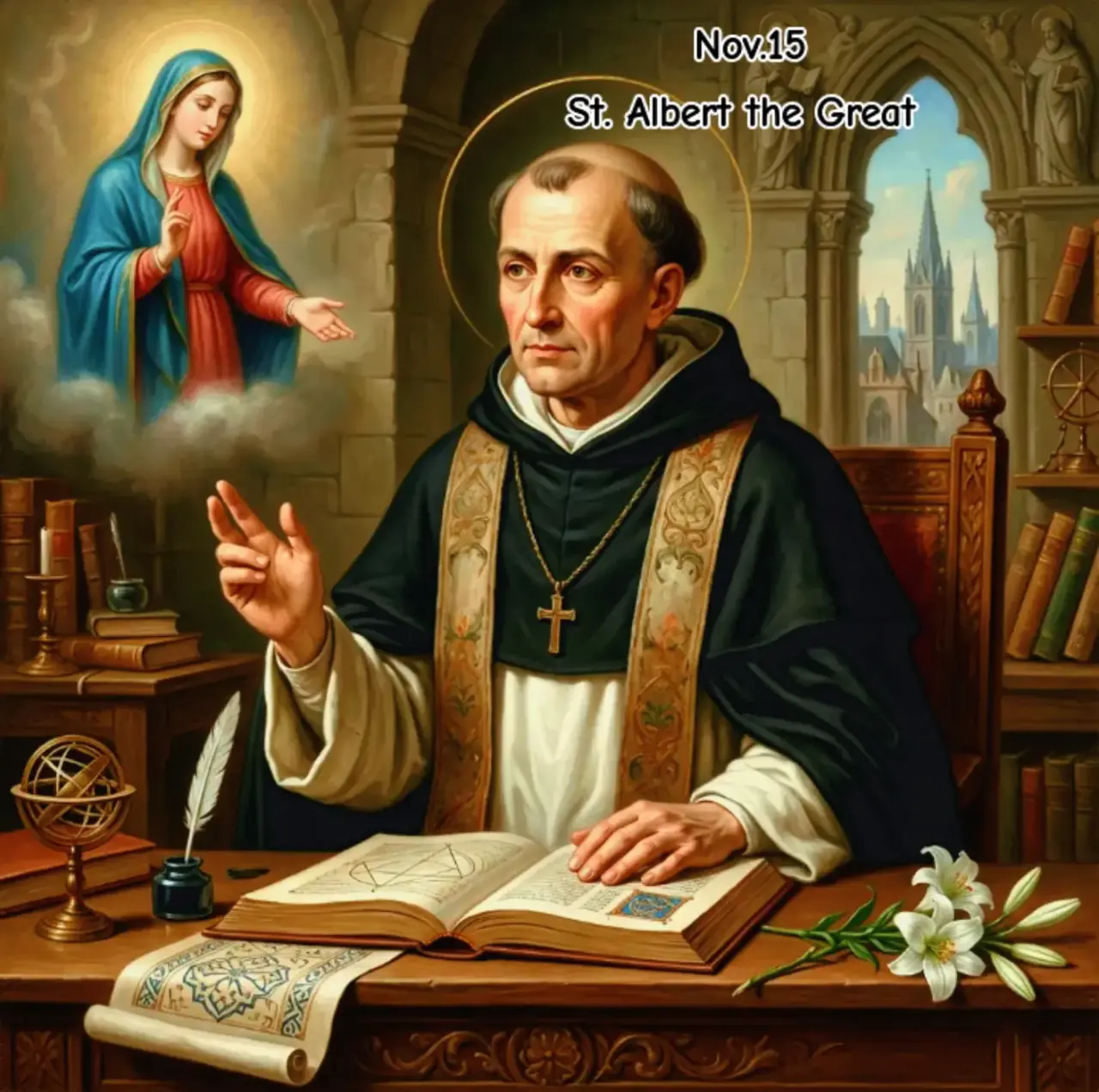
St. Albert the Great, born before 1200 in Lauingen, Bavaria, was a key leader in the Catholic Church. He studied philosophy at the University of Padua, which set the stage for his future intellectual work. A life-changing encounter with the Blessed Virgin Mary inspired him to join the Dominican Order around 1223.
Albert became a prominent teacher in Cologne and was known for his scholarly writings, such as 'Summa de Bono.' As the first German Dominican master of theology, he taught at the University of Paris and led the theology department at the College of St. James, mentoring notable students like Thomas Aquinas.
He earned fame for his comprehensive commentaries on Aristotle and his interest in Islamic scholarship, contributing significantly to academic thought when Islamic societies were leading in science and learning. In 1254, Albert skillfully served as the provincial of the Dominican Order and played a key role in founding a study program that eventually became the Pontifical University of Saint Thomas Aquinas, known as the 'Angelicum.'
In 1260, Pope Alexander IV appointed him as the bishop of Regensburg. Albert demonstrated his humility by refusing to ride a horse, following his Order's strict rules. He stepped down in 1263, feeling disillusioned with his role as bishop, and was reassigned to preach during the Eighth Crusade.
In his later years, Albert acted as a mediator and founded Germany's oldest university in Cologne, showcasing his wide-ranging talents. After Thomas Aquinas passed away, Albert spent his remaining years defending his student's teachings. He died on November 15, 1280, leaving behind extensive writings on philosophy, geography, and more.
Recognized as a saint in 1622 and declared a Doctor of the Church in 1931, St. Albert the Great is the patron saint of scientists and is honored on November 15. His relics are housed in St. Andreas Church in Cologne, preserving his lasting legacy.
0 likes · 0 comments · 0 shares