Post by Always be kind (@Udochukwuu)
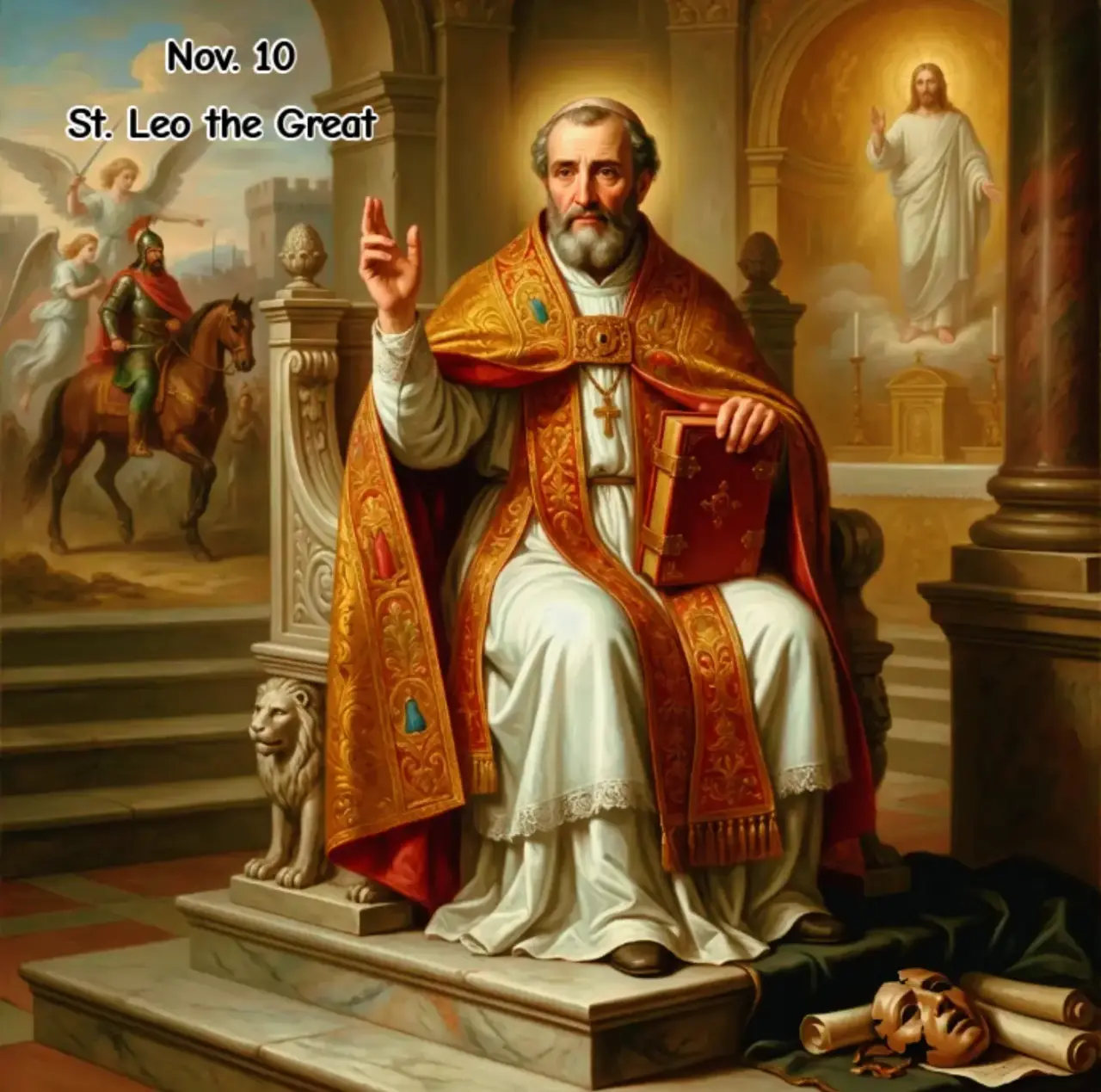
St. Leo the Great, remembered as Pope Leo I, was the first pope to be called "the Great." He hailed from a noble Roman family, likely with Tuscan origins, and served as a deacon by the year 431 under Pope Celestine I. Leo was celebrated for his sharp intellect, deep devotion to God, and his talent for uniting Christians by resolving both worldly and theological disagreements.
In 440, following the death of Pope Sixtus III, Leo was elected pope. His time as pope was defined by his commitment and wisdom. He worked tirelessly to maintain the unity of the church, uphold the faith, and safeguard his people from invasions.
A significant part of his leadership involved fighting against heresies like Pelagianism, which denied original sin and the need for divine grace, and Manichaeism, which dismissed the inherent goodness of creation and the human body.
Leo's expertise in theology was evident in a famous letter he wrote to clarify the nature of Jesus Christ, affirming both His humanity and divinity. This letter remains a respected document for its clear and accurate theological insights. Additionally, Leo was known as a peacekeeper, most notably when he confronted Attila the Hun in 452 to defend Rome.
His sermons demonstrated a profound spirituality and a genuine connection with the people's concerns. Pope Leo I's leadership, from defending orthodox beliefs to providing pastoral guidance, made a lasting impression on the church. He died on November 10, 461, and was later declared a Doctor of the Church. Today, his feast day is celebrated annually on November 10.
0 likes · 0 comments · 0 shares