Post by Dr Esther Nsa Akachukwu (@dr_esther_nsa_akachukwu)
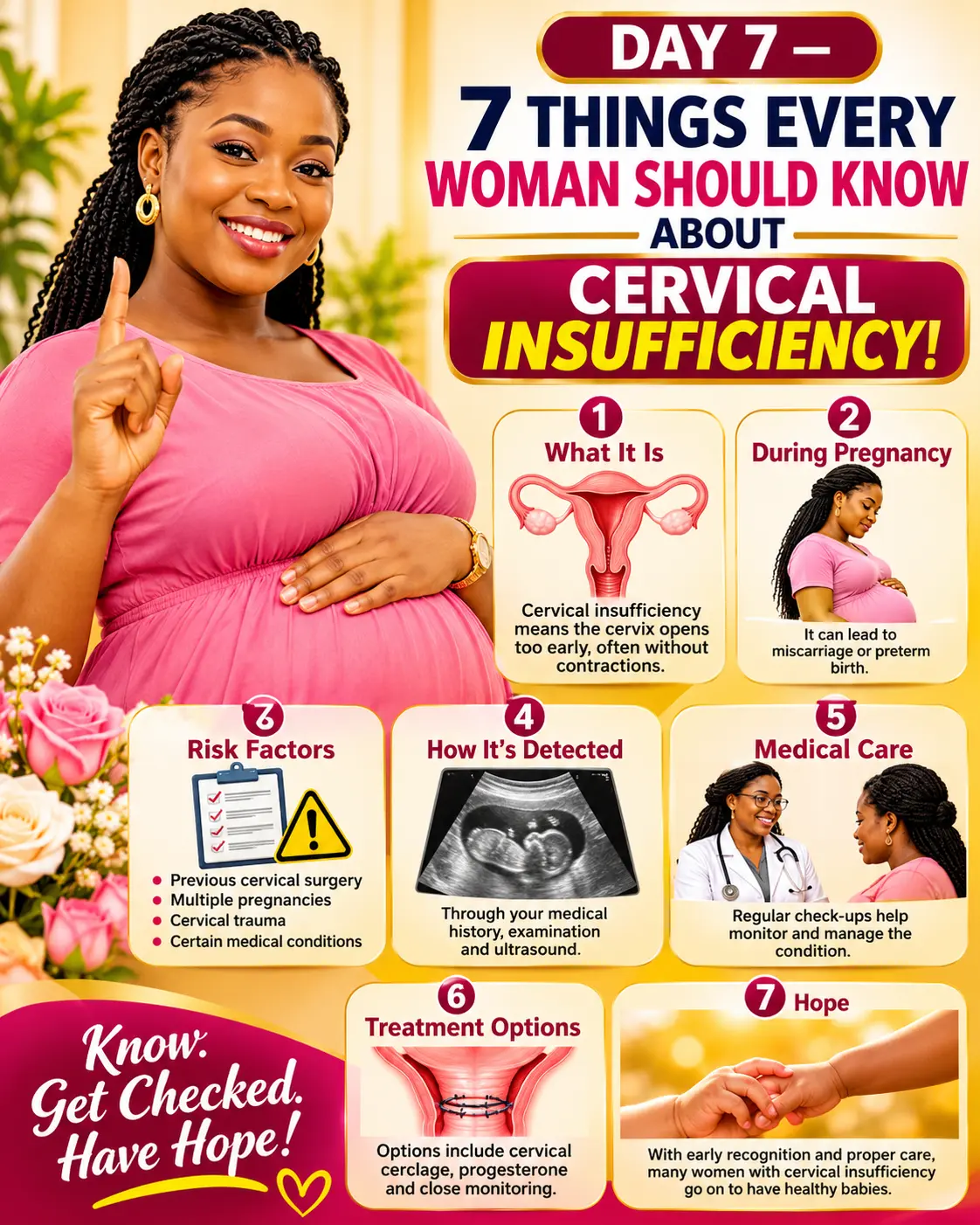
🌷 DAY 7 — 7 THINGS EVERY WOMAN SHOULD KNOW ABOUT CERVICAL INSUFFICIENCY
Knowledge is Power. Awareness Can Make a Difference!
Welcome to Day 7 of our Cervical Insufficiency Health Education Journey!
How much do you really know about cervical insufficiency?
Cervical insufficiency, sometimes called an incompetent cervix, is a condition in which the cervix opens or shortens too early during pregnancy, potentially increasing the risk of pregnancy loss in the second trimester or premature birth.
Here are 7 important things every woman should know:
1️⃣ THE CERVIX PLAYS AN IMPORTANT ROLE IN PREGNANCY.
The cervix is the lower, narrow part of the uterus (womb). During much of pregnancy, it normally stays closed to help support the growing pregnancy.
2️⃣ IT CAN HAPPEN WITHOUT NOTICEABLE CONTRACTIONS.
Unlike typical labour, cervical insufficiency may involve early cervical opening without regular painful contractions. This is why awareness and appropriate medical monitoring matter.
3️⃣ CERTAIN PREGNANCY HISTORIES MAY INCREASE THE RISK.
A previous second-trimester pregnancy loss, certain early preterm births, previous cervical procedures or cervical injuries may be important risk factors to discuss with a healthcare professional.
4️⃣ A SHORT CERVIX DOES NOT AUTOMATICALLY MEAN CERVICAL INSUFFICIENCY.
A short cervix can be identified during pregnancy, often through ultrasound. However, its significance depends on factors such as pregnancy history, gestational age and clinical findings.
5️⃣ MEDICAL ASSESSMENT IS IMPORTANT.
A healthcare professional may consider your pregnancy history, physical examination and ultrasound findings when assessing your risk. Do not rely on symptoms or social media information to diagnose yourself.
6️⃣ DIFFERENT WOMEN MAY NEED DIFFERENT TREATMENTS.
Depending on individual circumstances, care may involve cervical-length monitoring, progesterone or a cervical stitch (cerclage). Not every woman needs the same treatment.
7️⃣ HOPE AND SUPPORT MATTER!
A history of cervical insufficiency does not mean that a woman cannot have a successful pregnancy in the future. Early discussion, individualised care and appropriate monitoring can help healthcare professionals plan for a subsequent pregnancy.
🚨 WHEN SHOULD YOU SEEK MEDICAL HELP?
During pregnancy, contact your maternity care provider promptly if you experience unusual pelvic pressure, persistent cramps, vaginal bleeding or fluid leakage. Severe or worrying symptoms require urgent medical assessment.
❤️ A MESSAGE TO EVERY WOMAN
Your pregnancy journey deserves care, attention and compassion.
Do not ignore your medical history. Do not blame yourself for complications. And never feel ashamed to ask questions about your health.
Remember: Awareness is the first step towards informed decisions and better care.
💬 LET'S INTERACT!
Which of these 7 facts did you find most surprising or helpful?
A. Cervical insufficiency can happen without noticeable contractions.
B. A short cervix does not automatically mean cervical insufficiency.
C. Different women may need different treatments.
D. All seven facts were helpful!
👇 Share your answer in the comment section. Let's learn and grow together!
📌 SAVE & SHARE THIS POST! Someone in your family, among your friends or within your community may need this information.
🌷 LEKEELEKEE FAMILY — Together, We Educate, Encourage and Empower Lives!
#Lekeelekee #CervicalInsufficiency #CervicalIncompetence #MaternalHealth #PregnancyEducation #WomensHealth #AntenatalCare #PregnancyAwareness
Health Disclaimer: This post is for educational purposes only and does not replace professional medical advice, diagnosis or treatment. Please consult a qualified healthcare professional for individual assessment and care.
0 likes · 0 comments · 0 shares