Post by Dr Esther Nsa Akachukwu (@dr_esther_nsa_akachukwu)
❤️ LEKEELEKEE HEALTH EDUCATION JOURNEY — DAY 5 ❤️
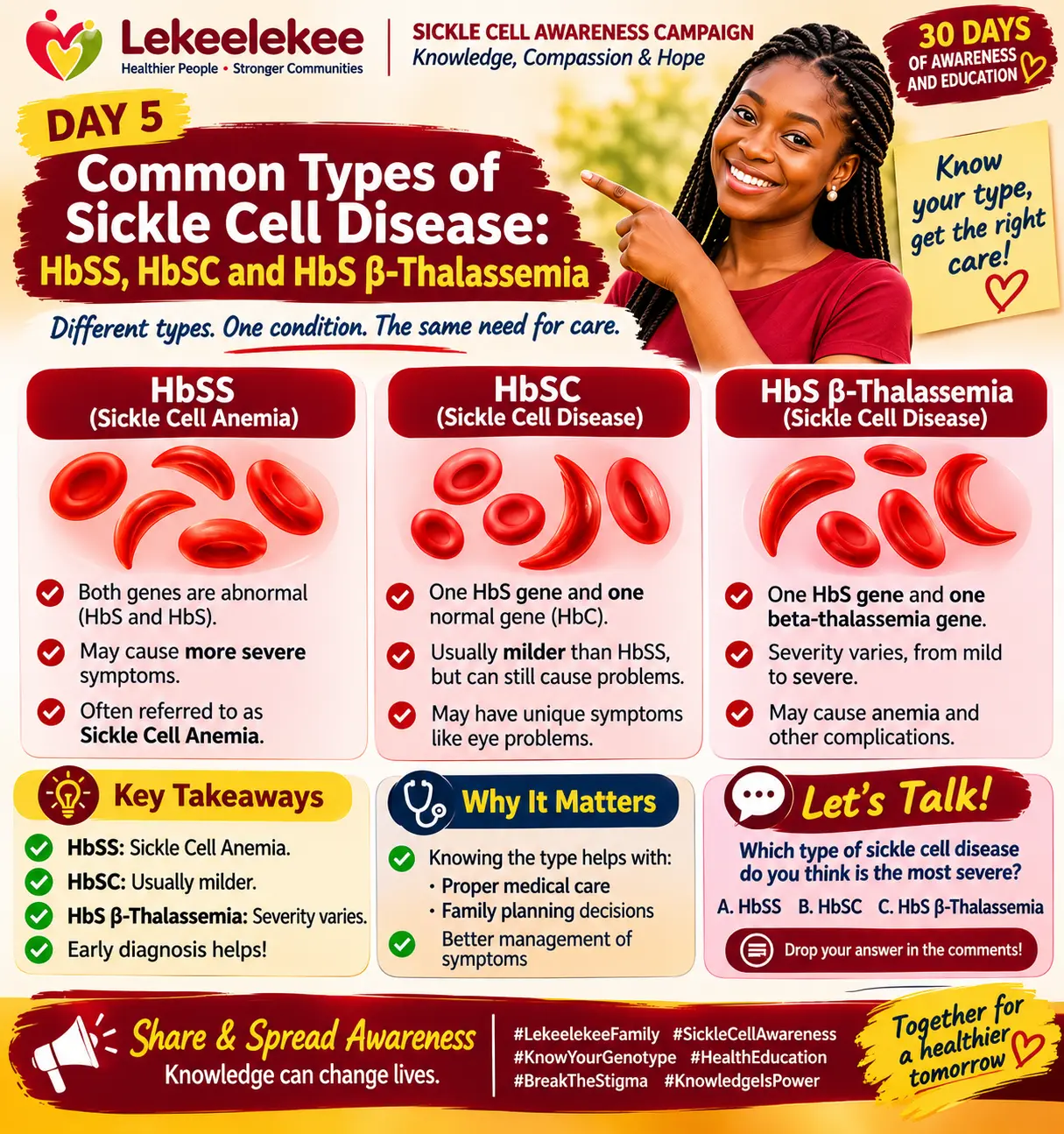
🩸 COMMON TYPES OF SICKLE CELL DISEASE: HbSS, HbSC AND HbS BETA-THALASSEMIA
30 Days of Awareness, Knowledge, Compassion & Hope.
Hello, Lekeelekee Family! ❤️
Did you know that there are different types of sickle cell disease?
Many people are familiar with the SS genotype, but sickle cell disease can occur in other forms too.
Today, let's explore three important types in simple language.
🔴 1. HbSS — SICKLE CELL ANEMIA
HbSS occurs when a person inherits two sickle haemoglobin genes (one from each biological parent).
It is one of the most common and often more severe forms of sickle cell disease.
People with HbSS may experience:
- Chronic anemia.
- Recurrent painful episodes.
- Increased risk of infections.
- Other complications affecting different organs.
🔴 2. HbSC — SICKLE CELL DISEASE
HbSC occurs when a person inherits one sickle haemoglobin gene (HbS) and one haemoglobin C gene (HbC).
Although HbSC is often considered milder than HbSS, it can still cause serious health complications.
Possible problems include:
- Painful episodes.
- Anemia.
- Eye complications.
- Other organ-related complications.
Remember: HbSC should never be regarded as harmless simply because it may be milder in some people.
🔴 3. HbS BETA-THALASSEMIA
This type occurs when a person inherits one sickle haemoglobin gene (HbS) and one beta-thalassemia gene.
There are two main forms:
HbS beta-zero (β⁰) thalassemia: Usually produces a more severe sickle cell disease pattern.
HbS beta-plus (β⁺) thalassemia: Often produces a milder pattern, although complications can still occur.
The severity varies from person to person.
💡 4. WHAT SHOULD WE REMEMBER?
✅ HbSS is commonly called sickle cell anemia.
✅ HbSC is another form of sickle cell disease.
✅ HbS beta-thalassemia is also a form of sickle cell disease.
✅ Different types can have different health effects.
✅ Every person living with sickle cell disease deserves appropriate medical care and support.
❤️ 5. WHY IS KNOWING YOUR TYPE IMPORTANT?
Knowing your haemoglobin type helps healthcare professionals understand your condition, assess possible complications and recommend appropriate treatment and follow-up.
It also supports informed family-planning decisions and genetic counselling.
🌍 LET'S INTERACT, LEKEELEKEE FAMILY!
Before today, which of these sickle cell disease types had you heard about?
A. HbSS
B. HbSC
C. HbS beta-thalassemia
D. All three are new to me!
👇 Drop your answer in the comment section.
📌 SAVE • SHARE • SPREAD AWARENESS
Share this post with your friends, family members, students and intending couples.
Let's make sickle cell awareness everyone's responsibility!
❤️ Knowledge brings understanding. Understanding encourages compassion.
#LekeelekeeFamily #SickleCellAwareness #SickleCellDisease #HbSS #HbSC #BetaThalassemia #KnowYourGenotype #HealthEducation #BreakTheStigma #KnowledgeIsPower
Health education note: This information is for awareness and does not replace professional medical advice. Laboratory testing and specialist interpretation are important for confirming the specific haemoglobin type.
❤️ Lekeelekee — Learn | Share | Support
0 likes · 0 comments · 0 shares