Post by Dr Esther Nsa Akachukwu (@dr_esther_nsa_akachukwu)
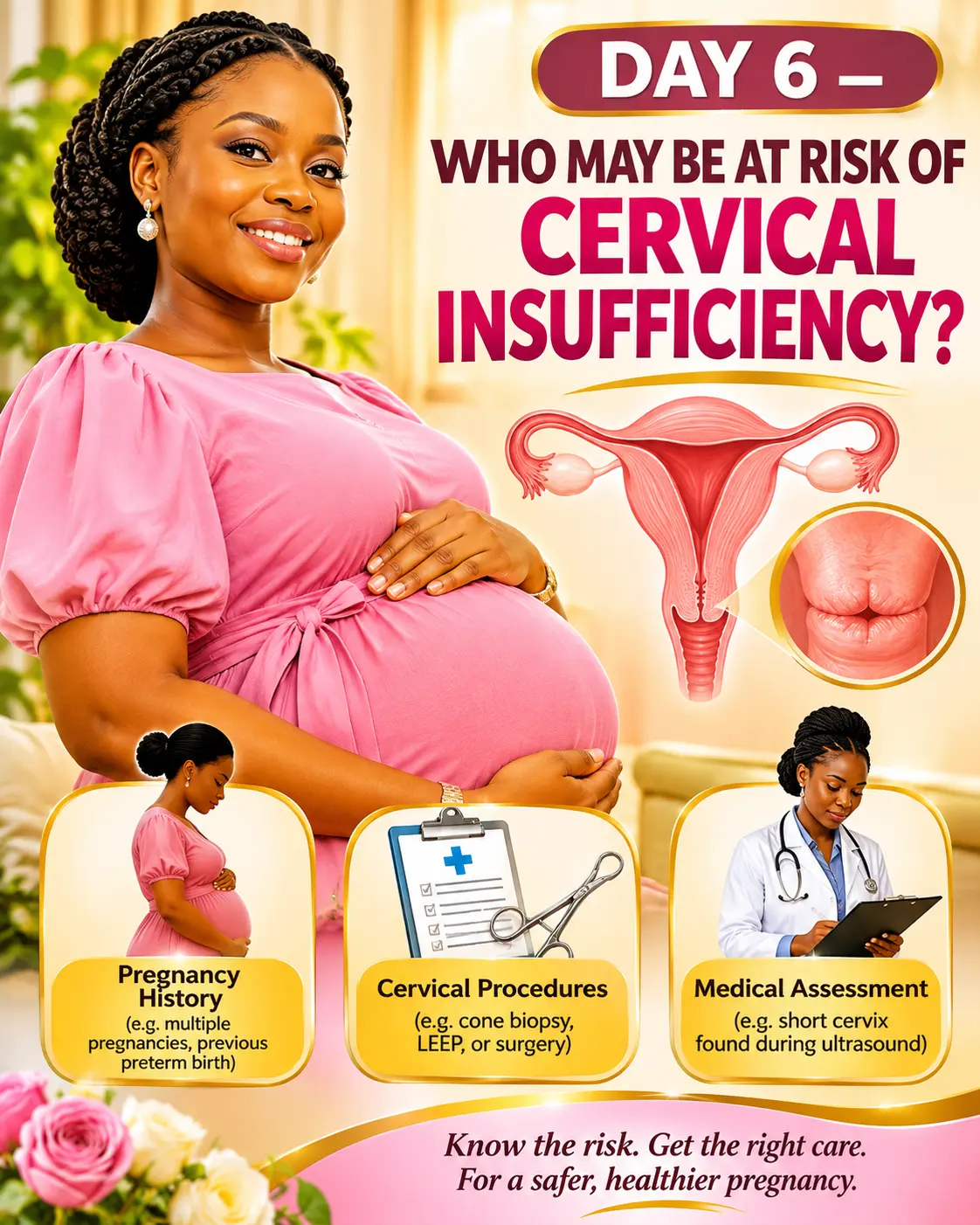
🌷 DAY 6 — WHO MAY BE AT RISK OF CERVICAL INSUFFICIENCY?
Understanding the Risk Factors
Welcome to Day 6 of our Cervical Insufficiency Health Education Journey!
Did you know that certain medical and pregnancy histories may increase a woman's risk of cervical insufficiency?
Cervical insufficiency occurs when the cervix (the neck of the womb) shortens or opens too early during pregnancy, sometimes without noticeable contractions.
Although it can happen without an identifiable cause, certain factors may increase the risk.
🔍 WHO MAY BE AT RISK?
A woman may have an increased risk if she has:
1. A Previous Second-Trimester Pregnancy Loss
A previous pregnancy loss during the second trimester, particularly one involving painless cervical opening, may be an important clue for medical assessment.
2. A History of Early Preterm Birth
Some women who have experienced an early preterm birth may need closer cervical monitoring in a subsequent pregnancy.
3. Previous Cervical Surgery or Procedures
Certain procedures involving the cervix, such as treatment for abnormal cervical cells or removal of cervical tissue, may affect cervical strength.
4. Previous Cervical Injury
Injury to the cervix during childbirth or certain medical procedures may sometimes contribute to cervical weakness.
5. Certain Anatomical Differences
Some women may naturally have differences in the structure of the cervix or uterus that can increase their risk.
6. An Unexplained Pregnancy History
Sometimes, cervical insufficiency occurs even when there is no obvious risk factor or previous medical history.
❤️ IMPORTANT TO REMEMBER!
Having one or more of these risk factors does NOT automatically mean that you will develop cervical insufficiency.
Likewise, not every pregnancy loss or premature birth is caused by cervical insufficiency.
The most important steps are to:
- Share your previous pregnancy history with your healthcare professional.
- Attend antenatal appointments regularly.
- Ask whether cervical assessment or monitoring is appropriate.
- Seek prompt medical advice if you experience unusual pelvic pressure, persistent cramps, bleeding or fluid leakage during pregnancy.
Early awareness can help healthcare professionals identify possible risks and discuss appropriate care.
💬 LET'S INTERACT!
Did you know that previous cervical procedures or certain pregnancy experiences could increase the risk of cervical insufficiency?
A. Yes, I knew.
B. No, I am learning this for the first time.
C. I would love to learn more about the risk factors.
Drop your answer in the comment section. Let's learn together!
📌 SAVE & SHARE: This information may help a woman recognise the importance of discussing her pregnancy history with her healthcare provider.
🌷 Remember: Awareness is not fear. Knowledge is not a diagnosis. And no woman should be blamed for a pregnancy complication.
Lekeelekee Family — Educating, Encouraging and Empowering Lives!
#Lekeelekee #CervicalInsufficiency #CervicalIncompetence #MaternalHealth #PregnancyEducation #WomensHealth #AntenatalCare #PregnancyAwareness
Health Disclaimer: This post is for educational purposes only. Risk factors do not confirm a diagnosis. Please consult a qualified healthcare professional for individual assessment and advice.
0 likes · 0 comments · 0 shares