Post by Inemesit Friday Umoh (@Inemesit-Umoh)
𝗧𝗵𝗲 𝗙𝗹𝗮𝗴𝘀 𝗖𝗮𝗺𝗲 𝗗𝗼𝘄𝗻. 𝗧𝗵𝗲 𝗦𝘆𝘀𝘁𝗲𝗺 𝗦𝘁𝗮𝘆𝗲𝗱.
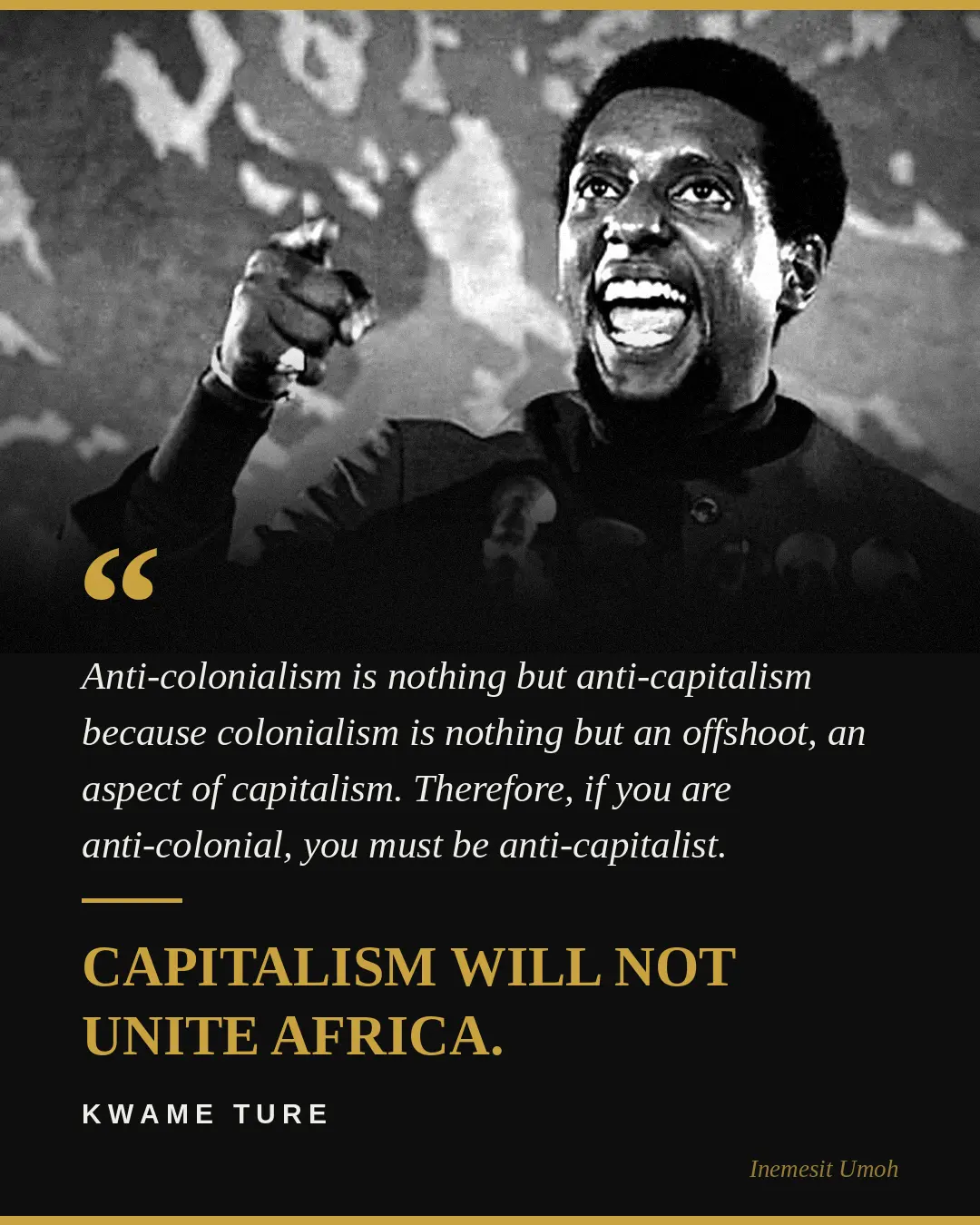
"𝘈𝘯𝘵𝘪-𝘤𝘰𝘭𝘰𝘯𝘪𝘢𝘭𝘪𝘴𝘮 𝘪𝘴 𝘯𝘰𝘵𝘩𝘪𝘯𝘨 𝘣𝘶𝘵 𝘢𝘯𝘵𝘪-𝘤𝘢𝘱𝘪𝘵𝘢𝘭𝘪𝘴𝘮 𝘣𝘦𝘤𝘢𝘶𝘴𝘦 𝘤𝘰𝘭𝘰𝘯𝘪𝘢𝘭𝘪𝘴𝘮 𝘪𝘴 𝘯𝘰𝘵𝘩𝘪𝘯𝘨 𝘣𝘶𝘵 𝘢𝘯 𝘰𝘧𝘧𝘴𝘩𝘰𝘰𝘵, 𝘢𝘯 𝘢𝘴𝘱𝘦𝘤𝘵 𝘰𝘧 𝘤𝘢𝘱𝘪𝘵𝘢𝘭𝘪𝘴𝘮. 𝘛𝘩𝘦𝘳𝘦𝘧𝘰𝘳𝘦, 𝘪𝘧 𝘺𝘰𝘶 𝘢𝘳𝘦 𝘢𝘯𝘵𝘪-𝘤𝘰𝘭𝘰𝘯𝘪𝘢𝘭, 𝘺𝘰𝘶 𝘮𝘶𝘴𝘵 𝘣𝘦 𝘢𝘯𝘵𝘪-𝘤𝘢𝘱𝘪𝘵𝘢𝘭𝘪𝘴𝘵. 𝘊𝘈𝘗𝘐𝘛𝘈𝘓𝘐𝘚𝘔 𝘞𝘐𝘓𝘓 𝘕𝘖𝘛 𝘜𝘕𝘐𝘛𝘌 𝘈𝘍𝘙𝘐𝘊𝘈."
~ Kwame Ture
Ture starts with what capitalism wants: cheap raw materials and open markets to sell into. Colonialism was how Europe secured both by force. The Berlin Conference of 1884–85 was called to settle free trade and shipping on the Congo and Niger rivers, and no African representative was consulted.
When the flags came down, the same demand continued through loans and trade rules. Nigeria shows how. In 1985, Nigerians rejected an IMF loan in a public debate, refusing conditions that included trade liberalisation and devaluing the naira. A year later, the 1986 Structural Adjustment Programme liberalised trade and exchange, and creditors in the Paris and London Clubs approved it. Nigeria had 167 textile mills employing over 500,000 workers by the 1980s. Fewer than 24 remain. Imported and smuggled cloth flooded the market. Open the market, and the local factory dies.
Now see what happens when Africa tries to protect its factories. In 2016, Kenya, Tanzania, Rwanda and Uganda raised duties on used clothing to nurture local textile industries. A US used-clothing trade group petitioned Washington, arguing the move clashed with the AGOA trade deal's requirement that beneficiaries run market-based economies and remove barriers to US trade. Kenya, Tanzania and Uganda backed down. Rwanda held firm and was suspended from AGOA. Protect your factory, and you are punished.
Without factories, the raw material leaves and the value goes with it. Ghana and Côte d'Ivoire grow about 65% of the world's cocoa, yet their farmers earn less than 6% of the chocolate industry's revenue.
Put it together and you see Ture's point. Economies kept as suppliers face outward, toward the buyers, not toward each other. Trade between African countries is only about 15–18% of the continent's total, against more than 60% in Europe.
A system that profits from Africa as a supplier will not build Africa as a union.
#PanAfricanism
#Decolonization
#AfricanUnity
#LekeeLekee
#Trending
0 likes · 0 comments · 0 shares