Post by AI With Karis (@aiwithkaris)
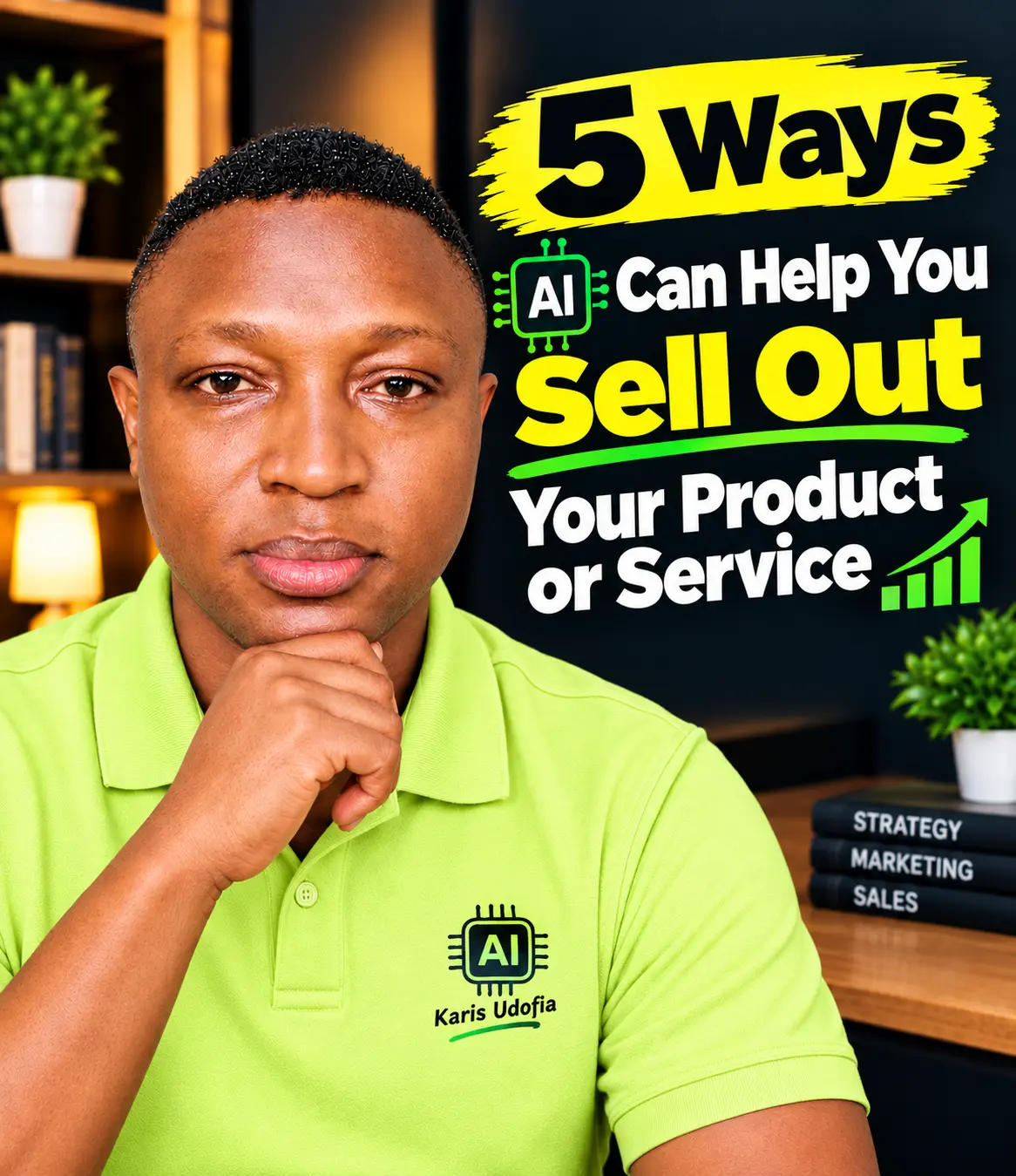
5 Ways AI Can Help You Sell Out Your Product or Service (That Most Business Owners Are Ignoring)🧵
🚨 Most marketers and product owners use AI to write captions, generate flyers, and create videos.
But what if I told you that some of AI's biggest sales opportunities have nothing to do with creating content?
Research involving millions of online shopping interactions found that AI-powered improvements increased sales by as much as 16.3% in some tested workflows.
Here are 5 smarter ways to use AI to turn more prospects into paying customers. 👇
1️⃣ Use AI to discover the REAL reason people refuse to buy from you.
Your customers may not tell you directly why they aren't buying. But their comments, WhatsApp conversations, product reviews, and unanswered questions can reveal patterns.
AI can analyse these conversations to identify recurring objections, such as:
• "How do I know this product works?"
• "Why is yours more expensive?"
• "What if I pay and don't get results?"
• "Can I achieve this without prior experience?"
Instead of guessing what your next advert should say, use those objections to build your sales message.
👉 The smart move:
Don't ask AI to invent customer problems. Give it real customer feedback and ask it to identify the three biggest barriers preventing people from buying.
When your marketing answers genuine concerns, your offer becomes easier to trust.
2️⃣ Use AI to create different sales messages for different buyers.
Two people can look at the same product and want it for completely different reasons.
A business owner may want to save time.
A beginner may want something easy to use.
A busy professional may want convenience.
One generic advert cannot address all these motivations equally well.
AI can help you group customers by their needs and create a different message for each group, without changing the actual product.
For example, if you sell an online course:
• For beginners: Focus on the first steps and ease of learning.
• For business owners: Focus on saving time and improving their workflow.
• For experienced creators: Focus on advanced techniques and efficiency.
👉 The smart move:
Sell the same product through different relevant benefits, not the same generic message to everybody.
3️⃣ Turn AI into a salesperson that handles objections before you arrive.
Imagine a potential customer visiting your product page at midnight.
They want to buy, but they have three unanswered questions. You are asleep, so they leave.
An AI assistant can answer common questions about your product, explain who it is suitable for, clarify delivery or payment processes, and guide customers towards the right next step.
PS: In large-scale retail experiments, an AI-powered pre-sale chatbot was associated with a 16.3% sales increase and a 21.7% increase in conversion rates.
👉 The smart move:
Build your assistant around your real FAQs, prices, policies, product details, and customer objections. Make it clear when a question needs a human response.
Don't let AI invent promises just to close a sale.
4️⃣ Use AI to find the customers who are closest to buying.
Not every person who likes your post is ready to pay.
Some are just browsing.
Some are comparing alternatives.
Others have already asked about payment but haven't completed their orders.
AI can help you organise customer enquiries and identify buying signals, such as repeated questions about pricing, delivery, availability, or how to get started.
You can then prioritise follow-ups based on the customer's actual level of interest.
For example:
A person who asks, "How much is it?" may need pricing information.
Someone who asks, "Can I pay now and receive it today?" may need help completing the purchase.
Both deserve a response, but not necessarily the same response.
👉 The smart move:
Use AI to sort and summarise your enquiries, then follow up with relevant information and permission-based reminders.
Never treat an AI prediction as proof that someone is ready to buy.
5️⃣ Use AI to run small sales experiments instead of arguing over what works.
This is where many business owners leave money on the table.
They create one advert, post it, get poor results, and conclude that the product isn't selling.
But perhaps the problem is the headline.
Perhaps the offer is unclear.
Perhaps customers don't understand the benefit.
Or perhaps the call to action is weak.
AI can help you develop controlled variations of your sales message.
For example, test:
• Headline A: Focuses on the problem.
• Headline B: Focuses on the desired result.
Keep the audience, offer, and other conditions as consistent as possible.
Track clicks, enquiries, completed purchases, and the cost of acquiring each customer.
Then use the results to decide what to improve next.
👉 The smart move:
Test one major change at a time and judge success by actual sales, not likes or comments.
0 likes · 0 comments · 0 shares
Comments
But it can help you understand buyers, answer their questions, personalise your message, prioritise follow-ups, and improve your sales process.
The real opportunity isn...
💬 Comment your thoughts 💭
↪️ And follow for more content like this.