Post by Dr Esther Nsa Akachukwu (@dr_esther_nsa_akachukwu)
Knock knock!! I don come again ooo, how una dey oooo. Yes oooo still on the matter of Hydrocephalus awareness.
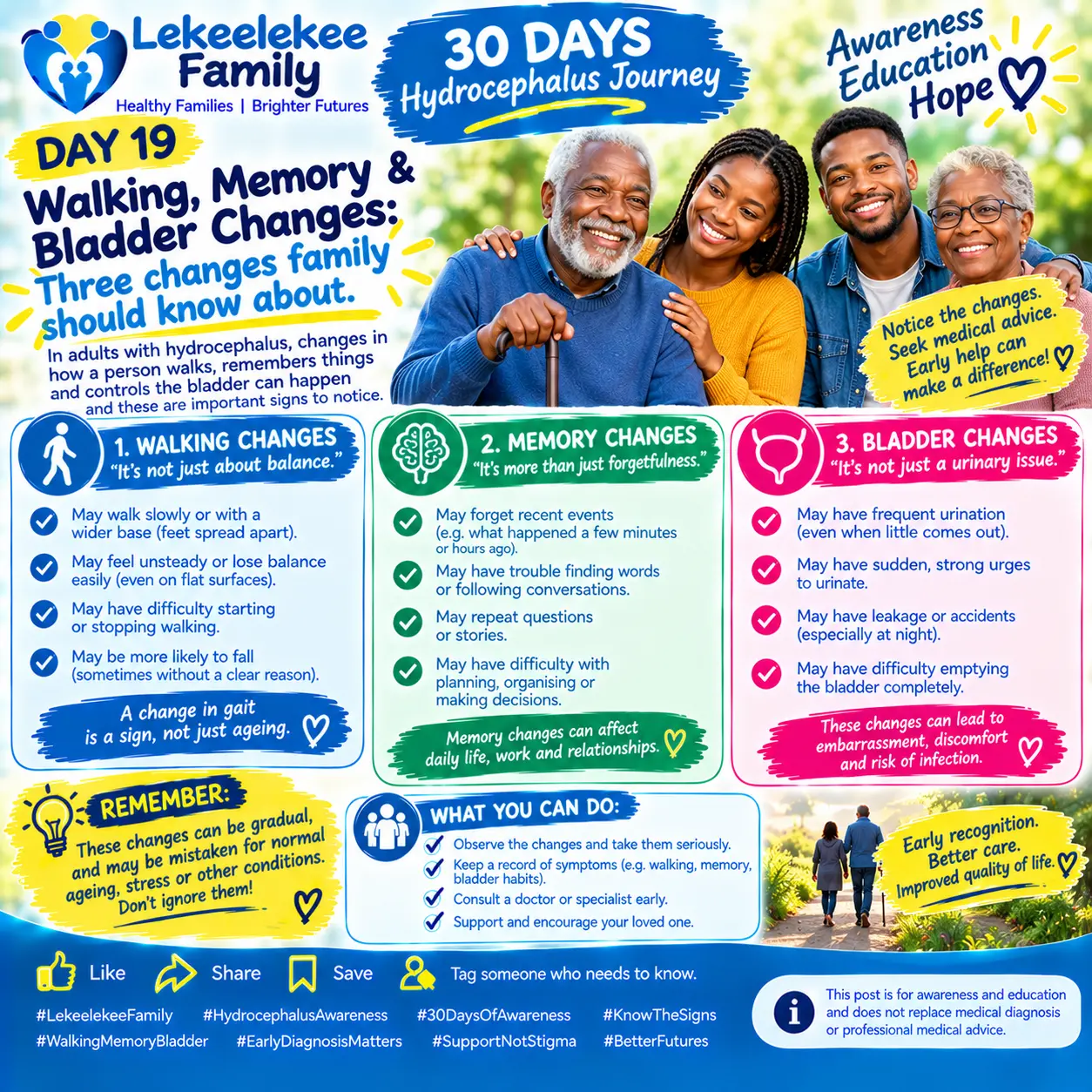
DAY 19 — WALKING, MEMORY & BLADDER CHANGES
🚶🏽🧠🚽 THREE CHANGES FAMILIES SHOULD KNOW ABOUT
In NPH, changes in walking may appear as difficulty walking, slower movement or balance problems.
Cognitive changes may include problems with thinking or memory.
Bladder symptoms may also occur.
But here's the important part:
These symptoms need professional assessment because several conditions can cause similar problems.
💬 QUESTION:
Why do you think older adults sometimes have their symptoms mistaken for “normal ageing”?
Let's discuss respectfully. ❤️
#LekeelekeeFamily
#HydrocephalusAwareness
#30DaysOfAwareness
#KnowTheSigns
#EarlyDiagnosisMatters
#HydrocephalusJourney
#HealthAwareness
0 likes · 0 comments · 0 shares
Comments
Comment