Post by Dr Esther Nsa Akachukwu (@dr_esther_nsa_akachukwu)
🩸 LEKEELEKEE FAMILY — RHESUS FACTOR JOURNEY ❤️
DAY 19 OF 30
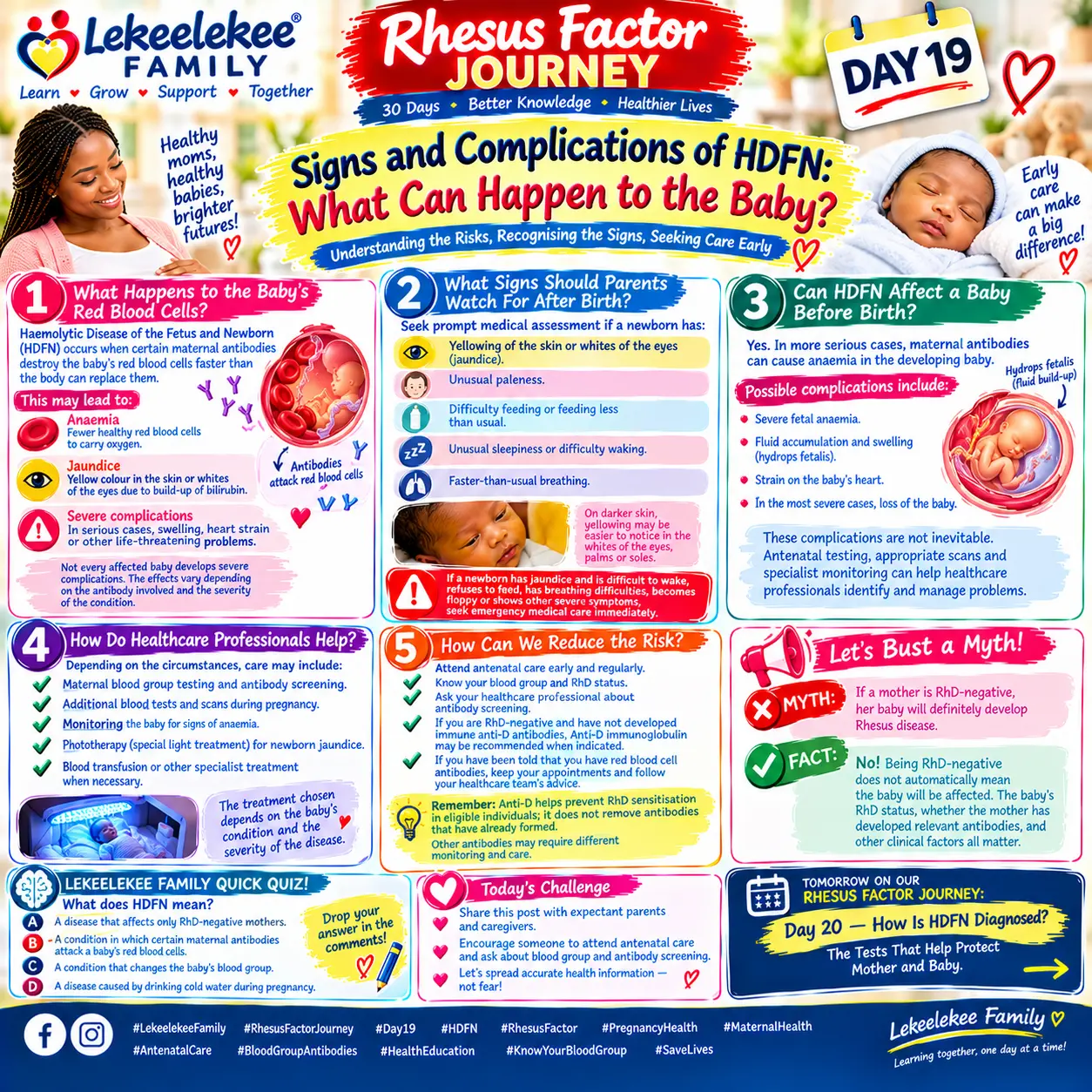
🚨 SIGNS AND COMPLICATIONS OF HDFN: WHAT CAN HAPPEN TO THE BABY?
Hello, my wonderful Lekeelekee Family! ❤️🤗
Welcome to Day 19 of our journey!
The other day, we learnt that certain blood group antibodies can cross the placenta and attack a baby's red blood cells. Today, let’s understand the possible effects and the warning signs every parent and caregiver should know.
Knowledge is not meant to create fear—it helps us recognise concerns and seek care early. ❤️
🩸 1. WHAT HAPPENS TO THE BABY’S RED BLOOD CELLS?
Haemolytic Disease of the Fetus and Newborn (HDFN) occurs when certain maternal antibodies destroy the baby’s red blood cells faster than the body can replace them.
This may lead to:
🔴 Anaemia: The baby has fewer healthy red blood cells to carry oxygen around the body.
🟡 Jaundice: A yellow colour develops in the skin or whites of the eyes because bilirubin builds up as red blood cells break down.
⚠️ Severe complications: In serious cases, the baby may develop significant swelling caused by fluid accumulation, heart strain or other life-threatening problems.
Not every affected baby develops severe complications. The effects vary depending on the antibody involved and the severity of the condition.
👶 2. WHAT SIGNS SHOULD PARENTS WATCH FOR AFTER BIRTH?
Seek prompt medical assessment if a newborn has:
- Yellowing of the skin or whites of the eyes.
- Unusual paleness.
- Difficulty feeding or feeding less than usual.
- Unusual sleepiness or difficulty waking.
- Faster-than-usual breathing.
On darker skin, yellowing may be easier to notice in the whites of the eyes, palms or soles.
🚨 IMPORTANT: If a newborn has jaundice and is difficult to wake, refuses to feed, has breathing difficulties, becomes floppy or develops other severe symptoms, seek emergency medical care immediately. Do not wait for the symptoms to disappear.
🤰 3. CAN HDFN AFFECT A BABY BEFORE BIRTH?
Yes. In more serious cases, maternal antibodies can cause anaemia in the developing baby before birth.
Possible complications include:
- Severe fetal anaemia.
- Fluid accumulation and swelling, sometimes called hydrops fetalis.
- Strain on the baby's heart.
- In the most severe cases, loss of the baby.
These complications are not inevitable. Antenatal testing, appropriate scans and specialist monitoring can help healthcare professionals identify and manage problems.
🧪 4. HOW DO HEALTHCARE PROFESSIONALS HELP?
Depending on the circumstances, care may include:
✅ Maternal blood group testing and antibody screening.
✅ Additional blood tests and scans during pregnancy.
✅ Monitoring the baby for signs of anaemia.
✅ Phototherapy (special light treatment) for newborn jaundice.
✅ Blood transfusion or other specialist treatment when necessary.
The treatment chosen depends on the baby's condition and the severity of the disease.
💡 5. HOW CAN WE REDUCE THE RISK?
❤️ Attend antenatal care early and regularly.
❤️ Know your blood group and RhD status.
❤️ Ask your healthcare professional about antibody screening.
❤️ If you are RhD-negative and have not developed immune anti-D antibodies, Anti-D immunoglobulin may be recommended when indicated.
❤️ If you have been told that you have red blood cell antibodies, keep your appointments and follow your healthcare team's advice.
Remember: Anti-D helps prevent RhD sensitisation in eligible individuals; it does not remove antibodies that have already formed. Other antibodies may require different monitoring and care.
📢 LET’S BUST A MYTH!
❌ MYTH: If a mother is RhD-negative, her baby will definitely develop Rhesus disease.
✅ FACT: Being RhD-negative does not automatically mean the baby will be affected. The baby's RhD status, whether the mother has developed relevant antibodies, and other clinical factors all matter.
🧠 LEKEELEKEE FAMILY QUICK QUIZ!
Which of the following can be a sign of HDFN in a newborn?
A. Yellowing of the skin or whites of the eyes
B. A naturally curly hair texture
C. The baby having a particular eye colour
D. The baby being born on a Friday
👇 Drop your answer in the comments!
🎯 TODAY’S CHALLENGE
💗 Share this post with expectant parents and caregivers.
💗 Encourage pregnant women to attend antenatal appointments and ask about blood group and antibody screening.
💗 Remember: when a newborn appears unwell, prompt medical assessment can make a difference.
🔔 TOMORROW — DAY 20: We’ll discuss How Is HDFN Diagnosed? The Tests That Help Protect Mother and Baby.
Thank you for learning with us, Lekeelekee Family. Let’s keep spreading accurate information, encouraging early care and supporting healthy families! ❤️🙏
Lekeelekee Family — learning together, one day at a time!
#LekeelekeeFamily #RhesusFactorJourney #Day19 #HDFN #RhesusFactor #NewbornHealth #PregnancyHealth #AntenatalCare #MaternalHealth #HealthEducation #KnowYourBloodGroup
0 likes · 0 comments · 0 shares