Post by Ndubuisi Raphael Agua (@nura23tech)
Good evening, tribe and welcome to:.
🤖 𝗟𝗘𝗞𝗘𝗘𝗟𝗘𝗞𝗘𝗘 𝗦𝗞𝗜𝗟𝗟 𝗟𝗔𝗕
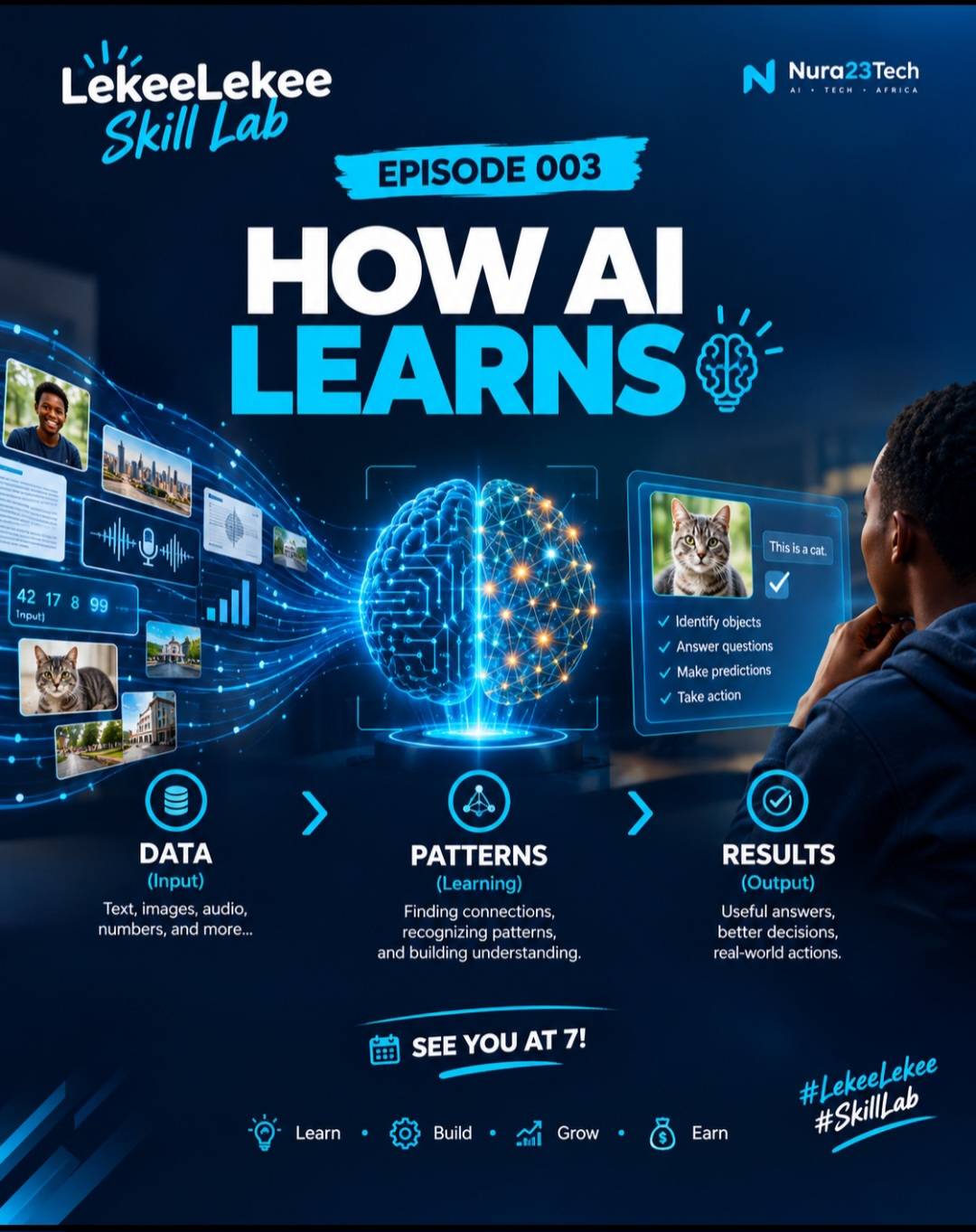
𝗘𝗣𝗜𝗦𝗢𝗗𝗘 𝟬𝟬𝟯 — 𝗛𝗢𝗪 𝗔𝗜 𝗟𝗘𝗔𝗥𝗡𝗦 🧠
In the previous episodes, we have talked about what AI is and some of the things AI can do, but here’s a very important question:
𝗛𝗢𝗪 𝗗𝗢𝗘𝗦 𝗔𝗜 𝗟𝗘𝗔𝗥𝗡?
Let’s keep it very simple. AI learns from data. Data can be pictures, text, numbers, sounds, videos, or other information.
For example, if we want an AI to recognize a cat, we can show it many pictures of cats. As it studies these examples, it starts to notice patterns. It may learn that cats often have certain shapes, ears, eyes, fur, and other features. Then, when it sees a new picture, it can use those patterns to make a prediction.
🐱 “This is a cat.”
AI predictions can be very accurate, but they are not always correct because their accuracy depends on the quality of the data and how well the AI was trained.
So, the basic idea is this:
𝗗𝗔𝗧𝗔 → 𝗣𝗔𝗧𝗧𝗘𝗥𝗡𝗦 → 𝗟𝗘𝗔𝗥𝗡𝗜𝗡𝗚 → 𝗥𝗘𝗦𝗨𝗟𝗧𝗦
But there’s more to it. AI doesn’t just magically “know” things. In using data, it is a way to learn from that data and a way to improve when its results are not good enough. This then this leads us to the next big question:
𝗪𝗛𝗔𝗧 𝗔𝗥𝗘 𝗧𝗛𝗘 𝗗𝗜𝗙𝗙𝗘𝗥𝗘𝗡𝗧 𝗪𝗔𝗬𝗦 𝗔𝗜 𝗟𝗘𝗔𝗥𝗡𝗦?
That’s where we’re going next. 👀
𝗘𝗣𝗜𝗦𝗢𝗗𝗘 𝟬𝟬𝟰 — 𝗧𝗛𝗘 𝗗𝗜𝗙𝗙𝗘𝗥𝗘𝗡𝗧 𝗪𝗔𝗬𝗦 𝗔𝗜 𝗟𝗘𝗔𝗥𝗡𝗦. 🤖
Learn • Build • Grow • Earn
#LekeeLekee
#SkillLab
#Nura23Tech
0 likes · 0 comments · 0 shares