Post by Oturohweroro Andrew (@andyjero)
Yesterday I started the analysis of Nigeria’s persistent crisis of maladministration engineered, sustained, and tolerated by the actions and inactions of the country’s dominant groups. Today, I will discuss the roles of two major groups. The other two will be done tomorrow.
1.How the Major Tribes in Nigeria treat the Nation?
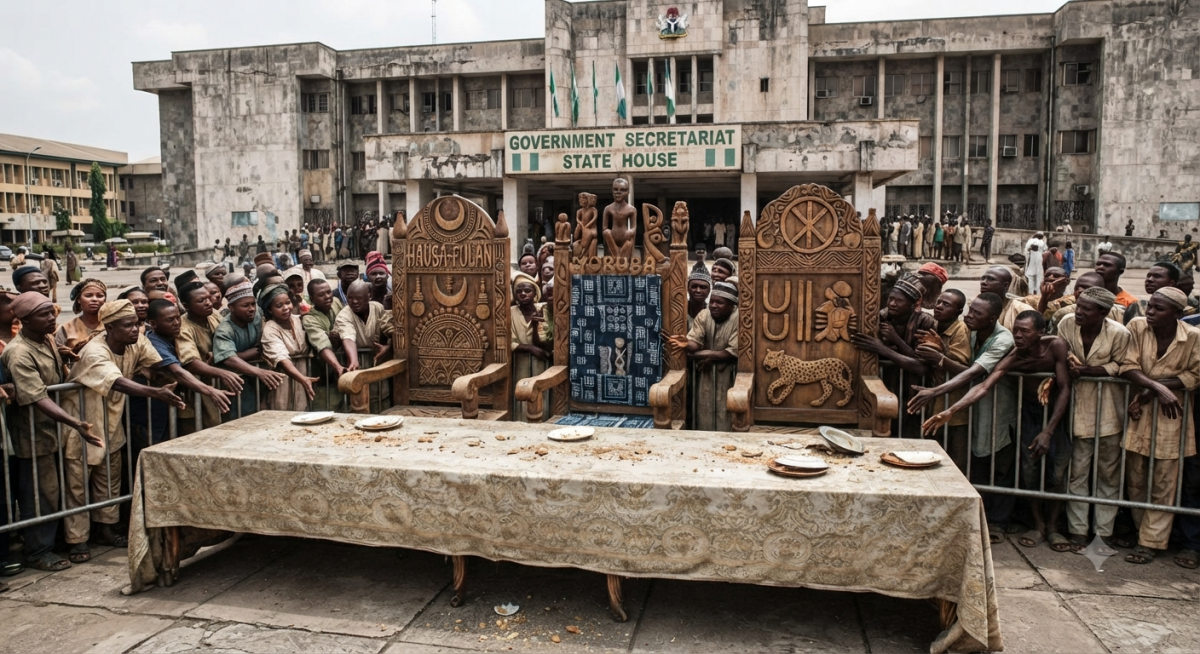
Nigeria’s three major ethnic groups (Hausa-Fulani, Yoruba, Igbo) have historically treated the state as an ethnic trophy that has to be captured and milked, rather than an institution to be built.
The dominant ethnic groups have dominated the apparatuses of security, civil service, and political office. This has fostered deep-seated institutional nepotism, where public offices are distributed via ethnic loyalty rather than merit. By their actions, they created an elite hegemony and exclusion.
The elites from the major ethnic groups always turn a blind eye to the incompetence and corruption of leaders as long as they belong to their ethnic stock.
These ethnic monopolizations have stifled national productivity. Contracts, appointments, and interventions are awarded based on tribal alignment, relegating competent economic management to the back seat. The result is institutional rot, which ensures that public funds meant for development are looted with ethnic protection. This cascades into rural-urban migration, food shortage, and widespread poverty.
2.The Roles of the Two Major Religious Groups (Islam and Christianity)
The two major imported faiths (Islam and Christianity) command the loyalty of the vast majority of the population. They have been coerced by the political elites to polish the bad governance, often for monetary reward or recognition.
Religious dogmatism is deployed during electoral cycles to manipulate the populace. Politicians employ religious sentiments to deflect accountability. When a leader of a particular faith is in power, religious bodies through their leaders often rationalize systemic failure out of fear of "losing turn" to the other faith.
Religious bodies—which wield massive moral authority, tax exemptions, and vast wealth—have largely abdicated their prophetic roles. Instead of challenging the ruling class over mass starvation, corruption, and systemic injustice, many resort to celebrating dubious donors and politicians.
The division of the poor along religious lines has prevented the formation of a group of consciousness. Hungry peasants on both sides are conditioned to view each other as enemies rather than joint victims of an elite maladministration. Leadership accountability is consequently spiritualized.
0 likes · 0 comments · 1 shares