Post by Student_Nurse Eno Wellington (@eno_wellington)
🌸 Causes & Risk Factors of Pelvic Inflammatory Disease (PID)
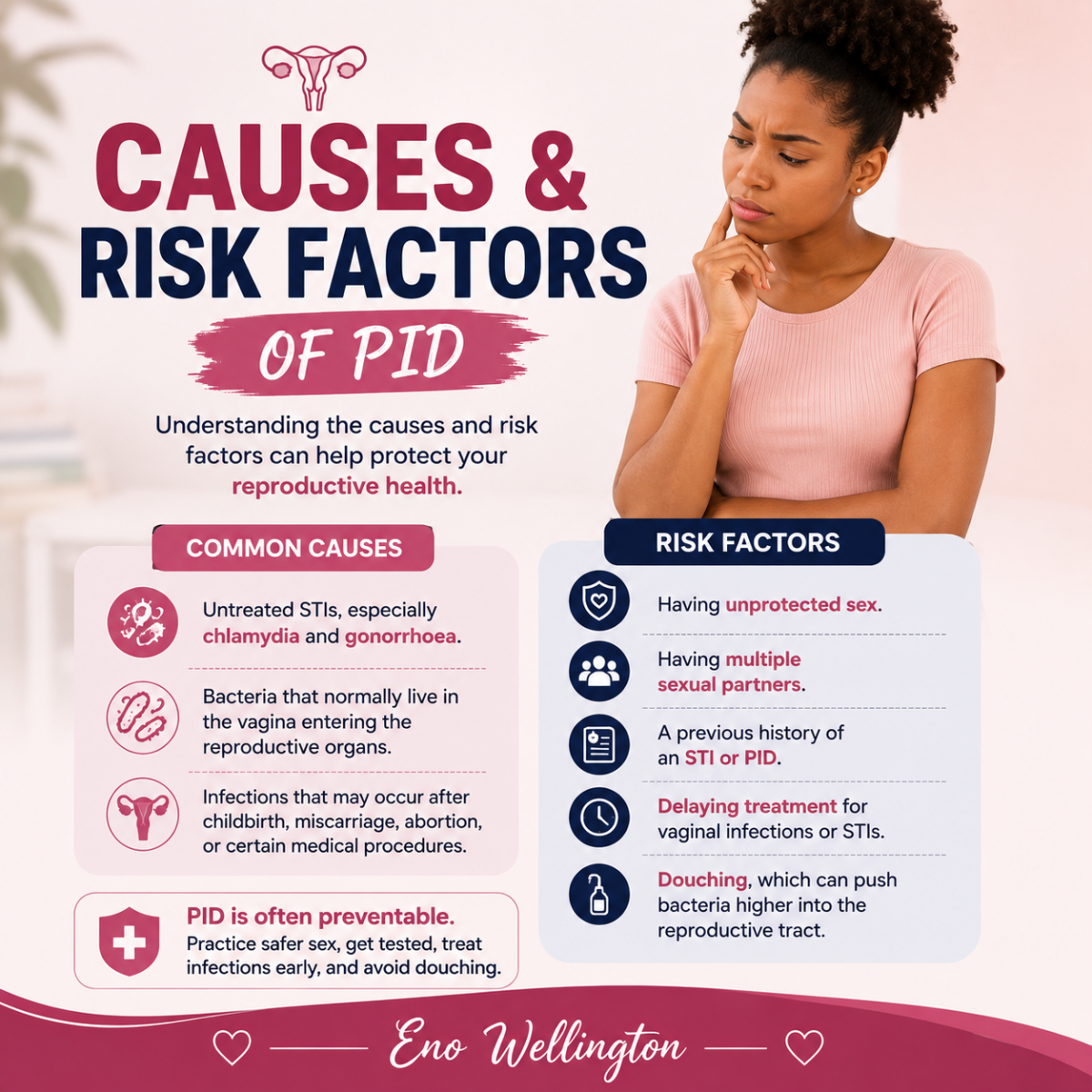
Pelvic Inflammatory Disease (PID) doesn't happen overnight. It usually develops when bacteria travel from the vagina or cervix into the uterus, fallopian tubes, or ovaries, causing an infection.
One of the most common causes is untreated sexually transmitted infections (STIs), especially chlamydia and gonorrhoea. However, PID can also occur when other bacteria enter the reproductive organs, such as after childbirth, a miscarriage, an abortion, or certain medical procedures.
Some factors can increase the risk of developing PID. These include having unprotected sex, having multiple sexual partners, a previous history of PID or an STI, delaying treatment for infections, and frequent vaginal douching, which can upset the natural balance of bacteria and push harmful germs further into the reproductive tract.
The good news is that PID is often preventable. Practising safer sex, treating infections early, attending regular health check-ups when necessary, and avoiding douching can help protect your reproductive health.
Remember, early treatment doesn't just treat the infection—it can also help prevent complications like infertility and chronic pelvic pain. Don't ignore persistent symptoms. Your reproductive health matters.
#PID
0 likes · 0 comments · 0 shares