Post by Udeze Nestor (@Nesmoore1)
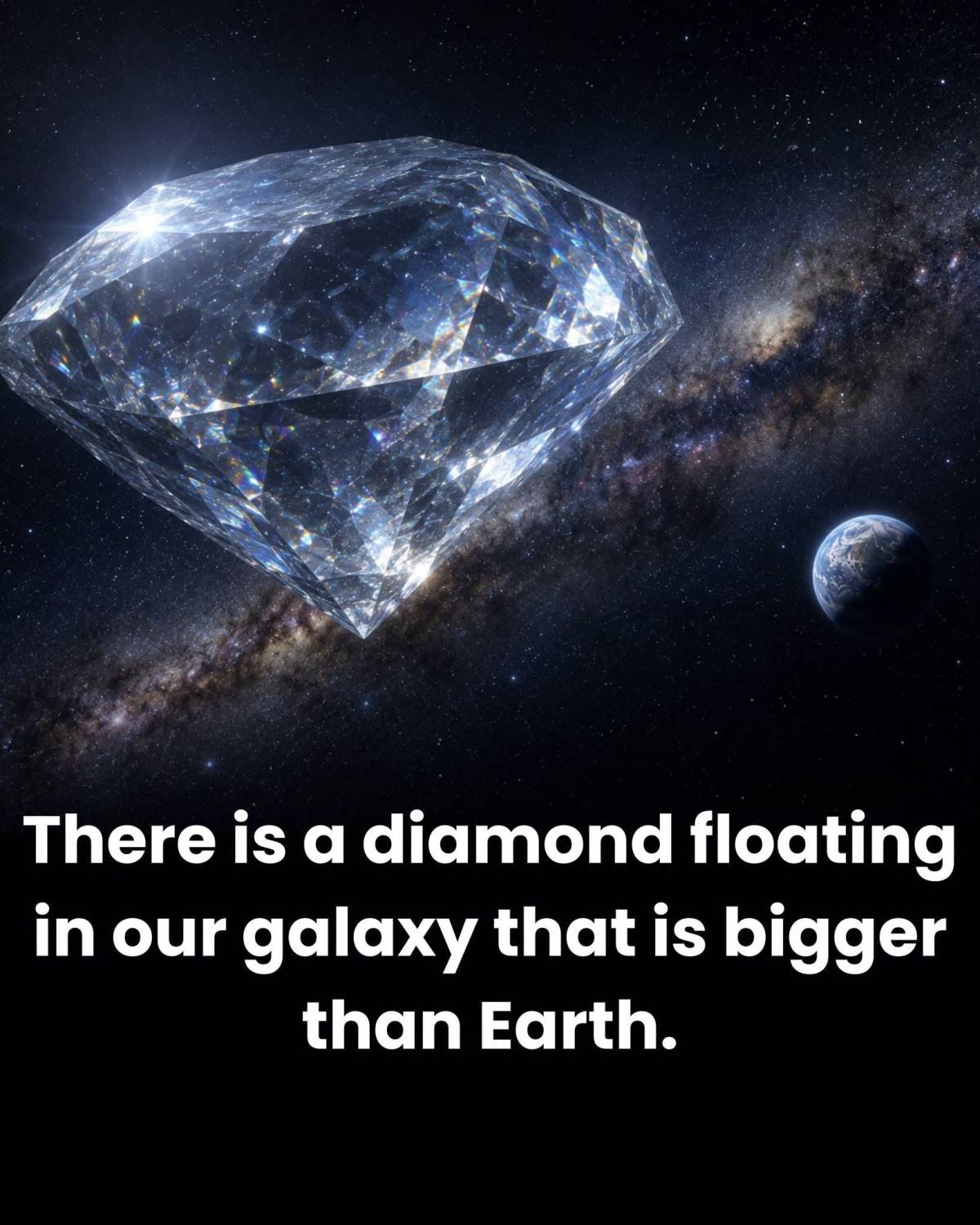
Fifty light-years away in the constellation Centaurus sits BPM 37093, a white dwarf star nicknamed Lucy, after the Beatles song "Lucy in the Sky with Diamonds." It's the collapsed remnant of a star that once looked much like our sun, and its core has crystallized into solid carbon, essentially one enormous diamond. Astronomers estimate its weight at roughly 10 billion trillion trillion carats, a number so large it stops meaning anything as a jewelry comparison and starts meaning something else entirely.
Lucy measures about 4,000 kilometers across, smaller than Earth's roughly 12,700-kilometer diameter. What makes it staggering isn't its size, it's its density. All that mass, comparable to our entire sun, is packed into a ball smaller than our planet, the signature trait of a white dwarf: gravity crushing stellar material into an almost unimaginably compact, heavy state.
The physics behind the "diamond" label is real, not poetic license. As the star cooled over billions of years, its carbon interior didn't just harden, it crystallized into an actual lattice structure, the same atomic arrangement that makes a diamond a diamond here on Earth, just formed by unimaginable pressure and cooling time rather than volcanic geology. Astronomers even expect our own sun to follow a similar path one day, collapsing into a white dwarf and slowly crystallizing over the following few billion years, essentially becoming a smaller, quieter version of Lucy.
Does "smaller than Earth but crushingly dense" change how impressive this feels to you, or does the sheer carat count still win either way?
Source: Harvard-Smithsonian Center for Astrophysics (Travis Metcalfe et al)
0 likes · 0 comments · 0 shares