Post by Ogba Heritage TV (@Heritagetv)
WHO IS WHO IN ALI-OGBA SERIES
(Episode 001 - Continues)
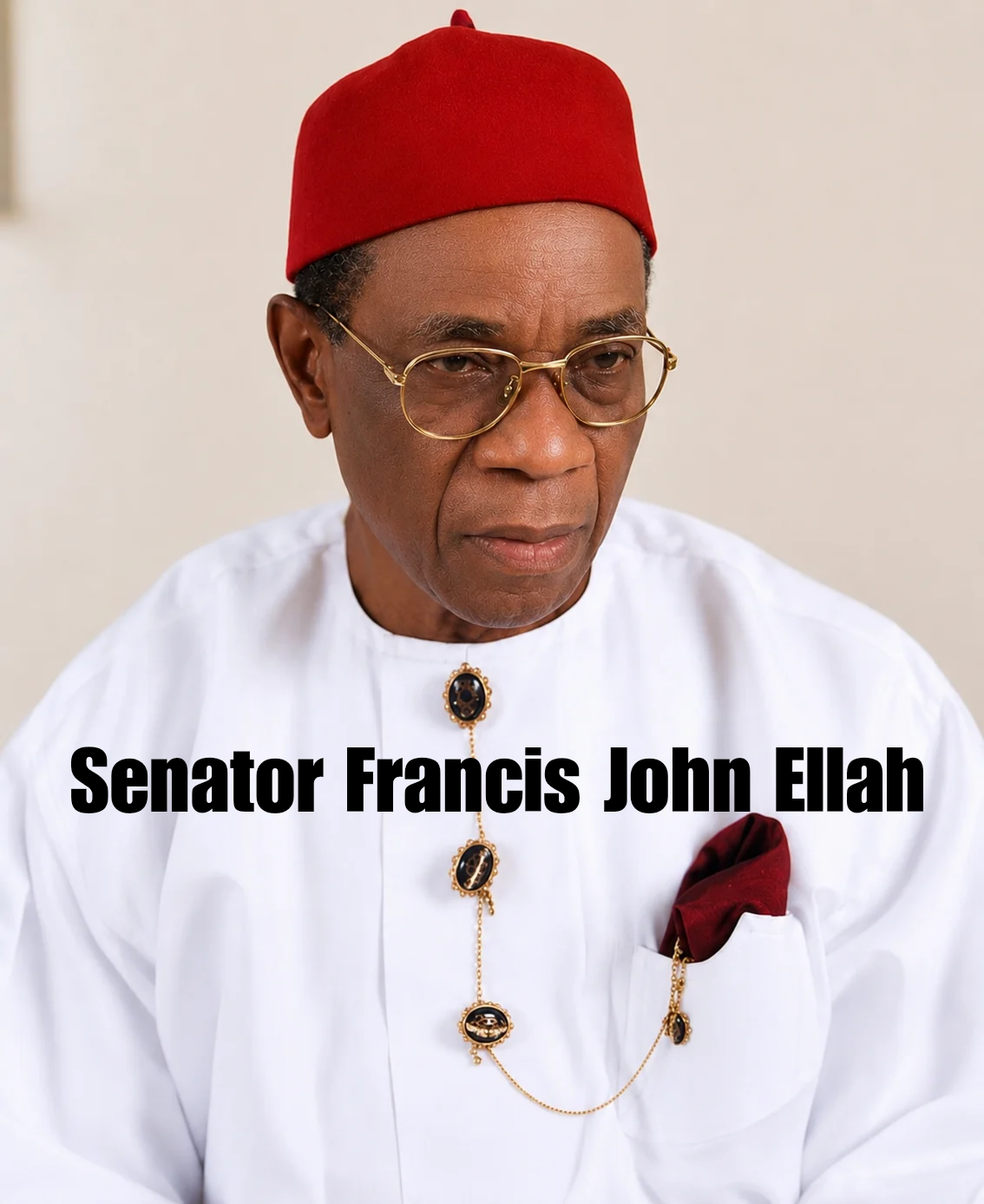
Senator Francis John Ellah
From Omoku to University College Ibadan: The Making of a Scholar
Early Life and Education
Francis John Ellah was born on 4 October 1927 in Omoku, the historic headquarters of the Ogba Kingdom in present-day Ogba/Egbema/Ndoni Local Government Area of Rivers State. At the time of his birth, Nigeria was under British colonial rule, and Western education was becoming an increasingly important pathway into public service. Like many gifted young Nigerians of his generation, Ellah embraced that opportunity with determination.
His early education took him through several mission schools across Eastern Nigeria, including St. John's School in Onitsha, St. John's School at Imo River, St. Mary's and St. Michael's School in Omoku, and Christ the King School in Aba between 1936 and 1942. These schools were known not only for academic instruction but also for discipline, moral formation, and leadership development. They produced many of the men and women who would later occupy prominent positions in government, the professions, and the church.
He continued his secondary education at Holy Family College, Abak, before transferring to St. Patrick's College, Ikot Ansa, Calabar, where he completed his studies in 1946. By then, his academic ability had become evident, placing him among the promising young scholars of his generation.
In 1948, Ellah gained admission to University College, Ibadan, then the foremost institution of higher learning in British West Africa and affiliated with the University of London. Admission was highly competitive, and those who succeeded were widely regarded as future leaders in government, education, and the professions.
He graduated in 1951 with a Bachelor of Arts degree, joining the first generation of university-educated Nigerians who would shape the country's political and administrative development after independence.
Recognising the importance of professional training in public administration, Ellah later pursued postgraduate studies at the Graduate School of Public Administration, New York University. The exposure he gained to international administrative systems broadened his outlook and strengthened the skills that would distinguish his career in the Nigerian civil service.
His education reflected a pattern that remained consistent throughout his life: a commitment to learning not as an end in itself, but as preparation for public service. That philosophy would define every stage of his remarkable career.
From the Classroom to the Colonial Service (1947-1967)
Before embarking on a distinguished career in public administration, Francis John Ellah began his professional life as an educator. Like many graduates of his generation, teaching was both a respected profession and a pathway to national service. It was also a period during which Nigeria was preparing for self-government and required educated men to train the next generation of leaders.
His first appointment came in 1947 at Ibibio State College, Ikot Ekpene. After graduating from University College, Ibadan in 1951, he returned to the classroom, teaching briefly at Holy Family College, Abak, before serving at Oriwu College, Ikorodu, and later at Oduduwa College, Ile-Ife between 1952 and 1954.
Although his teaching career was relatively short, it reflected a lifelong belief that education was central to nation-building. Throughout his later career, whether as a civil servant, university administrator, or author, Ellah remained committed to intellectual development and public enlightenment.
Entering the Colonial Administration
In 1955, Francis John Ellah joined the Eastern Nigeria Administrative Service as an Assistant District Officer, beginning what would become one of the most accomplished careers in Nigeria’s public service.
The Administrative Service represented the highest cadre of the colonial civil service. Its officers were responsible for maintaining law and order, supervising local administrations, implementing government policies, resolving disputes, and serving as the principal link between government and local communities. Entry into the service was highly competitive and reserved for individuals with exceptional academic qualifications and leadership potential.
Ellah’s early postings took him to Afikpo, Ikot Ekpene, Arochukwu and Umuahia. Each assignment exposed him to different communities, cultures and administrative challenges, providing practical experience that would later prove invaluable.
By 1958, he had been promoted to District Officer in Orlu Division, a position carrying significant administrative responsibility. His rapid progression reflected both competence and the confidence his superiors placed in his judgment.
#Ali-Ogba #Ogba-Heritage-TV
0 likes · 0 comments · 0 shares