Post by Stephen Onuh Uwodi (@Enefuojo)
WHEN A GOVERNMENT CHOOSES COMFORT OVER PREPAREDNESS, IT FAILS ITS PEOPLE
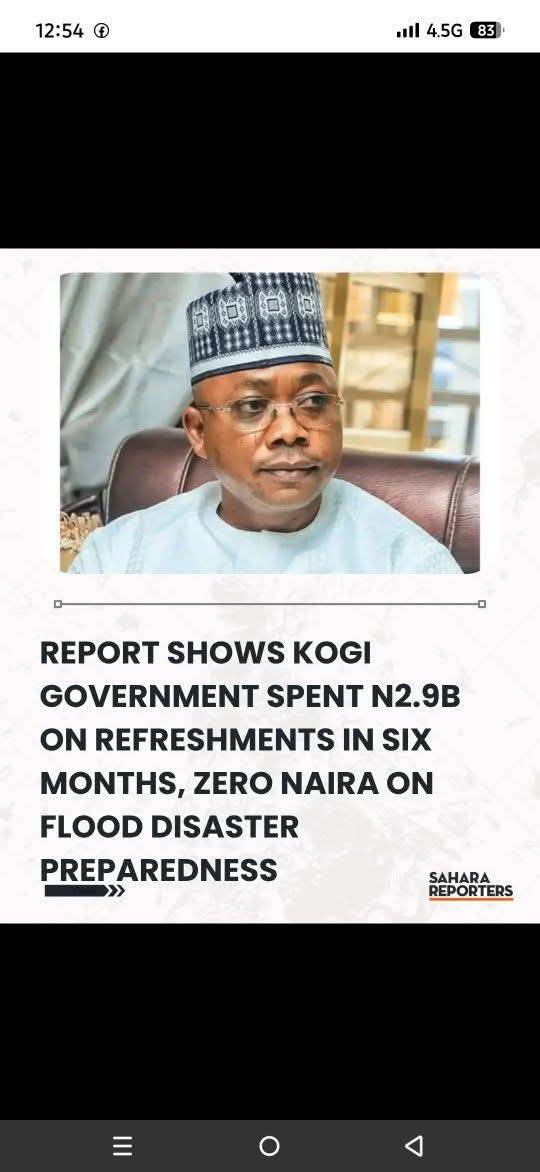
If reports are correct that the Kogi State Government spent ₦2.9 billion on refreshments within six months while allocating nothing to flood disaster preparedness, then this represents a profound failure of leadership and public responsibility.
Government exists first and foremost to protect lives and property—not to prioritize official comfort while citizens remain vulnerable to predictable disasters. Flooding is not an unforeseen event in Nigeria. It is a recurring threat that destroys homes, farms, businesses, schools, roads, and livelihoods. Ignoring disaster preparedness despite repeated warnings would be an inexcusable dereliction of duty.
Spending billions on refreshments while investing nothing in flood prevention sends a disturbing message: that the welfare of government officials is valued above the safety and security of ordinary citizens. Such priorities undermine public confidence and raise legitimate concerns about whether public resources are being managed in the public interest.
Every naira in the public treasury belongs to the people. Citizens have every right to demand transparency, prudent financial management, and clear justification for expenditures that appear excessive or misplaced—especially during periods of economic hardship.
Leadership is measured not by lavish spending but by foresight, accountability, and the protection of human life. If disaster strikes after preventive measures were neglected, the consequences cannot simply be dismissed as an act of nature; they would also reflect policy choices and budgetary priorities.
The people of Kogi deserve answers. They deserve a transparent explanation of the reported expenditure, a full public accounting of how state funds were used, and a comprehensive disaster preparedness strategy that places the safety of citizens above the comfort of public officials. Public office is a public trust, and that trust is sustained only through responsible stewardship, transparency, and accountability.
Stephen Onuh Uwodi
0 likes · 0 comments · 0 shares