Post by Udeze Nestor (@Nesmoore1)
Rocks from the Moon’s far side are rewriting lunar history
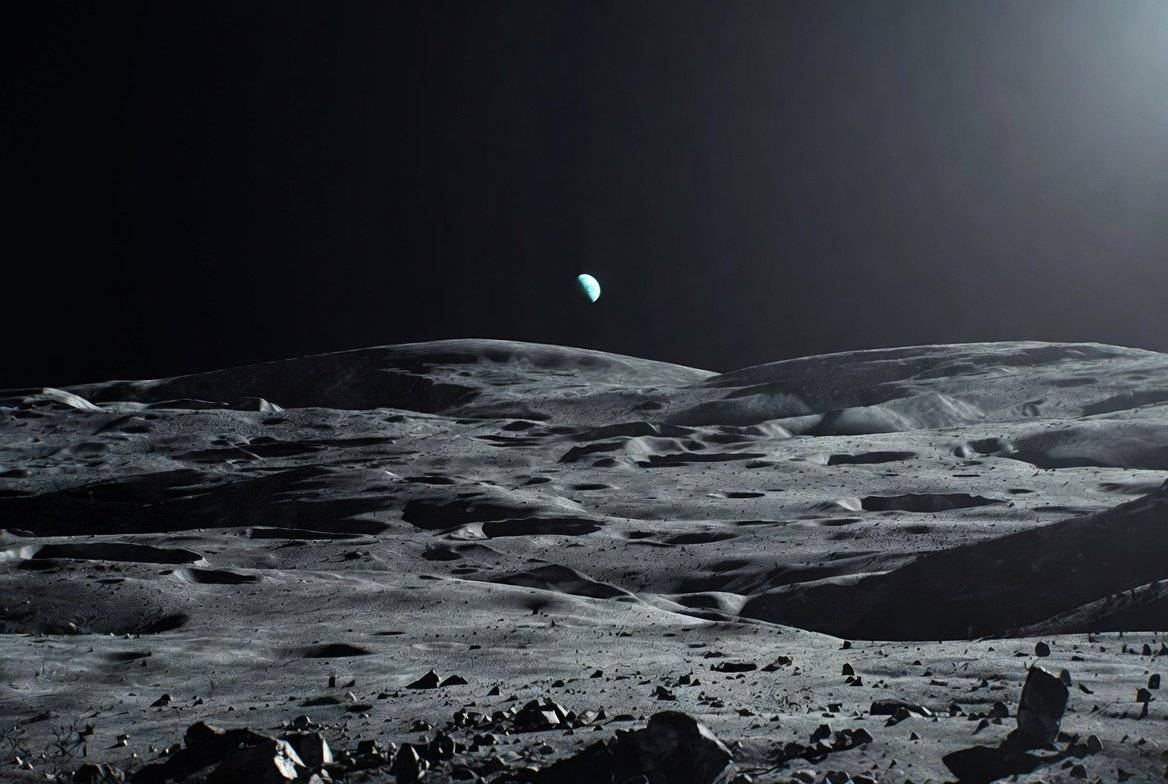
Ancient samples returned from the unexplored far side of the Moon are forcing scientists to rethink how asteroid impacts shaped the early Solar System. Instead of a single catastrophic bombardment, the new evidence points to a long, gradual decline in impacts lasting billions of years.
China’s Chang’e-6 mission brought back the first rocks ever collected from the lunar far side. Unlike the near side that always faces Earth, the far side has a thicker crust and was far less affected by later volcanic activity. That makes it a cleaner archive of the Solar System’s earliest violent chapter.
Researchers analysed tiny fragments of impact-melt rocks using precise argon-isotope dating. The results reveal a continuous record of asteroid strikes stretching from about 4.33 billion years ago to 1.13 billion years ago—more than three billion years of bombardment history preserved in stone.
“The Moon is like a time capsule,” said co-author Dr Fred Jourdan of Curtin University. “It has preserved a record of events that have been erased from Earth by erosion, plate tectonics and other geological processes. Until now, almost everything we knew came from the side facing Earth. These far-side samples let us compare two very different parts of the Moon for the first time.”
The findings challenge the long-standing idea of a short, intense “Late Heavy Bombardment.” Instead, the data suggest asteroid impacts tapered off slowly over an extended period. Because Earth and the Moon formed together, every major impact recorded on the Moon also tells us something about the conditions the young Earth endured—conditions that may have influenced the emergence of life.
In a new era of lunar exploration, these far-side rocks are already rewriting key chapters of the Moon’s story and offering fresh clues about the chaotic youth of our entire planetary neighbourhood.
0 likes · 0 comments · 0 shares