Post by Jeph Anne (@jephanne24)
Peter Obi's Political Language Through the Lens of Structural-Functional Analysis: Why His Quotes Continue to Shape Nigeria's Political Conversation
Political leadership is often remembered not only by policies but also by words. Across Nigeria's democratic history, few politicians have generated as much public discussion through their statements as Peter Gregory Obi. Whether one supports or opposes him, his speeches and memorable quotes have become recurring points of reference in political debates, campaign discussions, media interviews, and social media conversations.
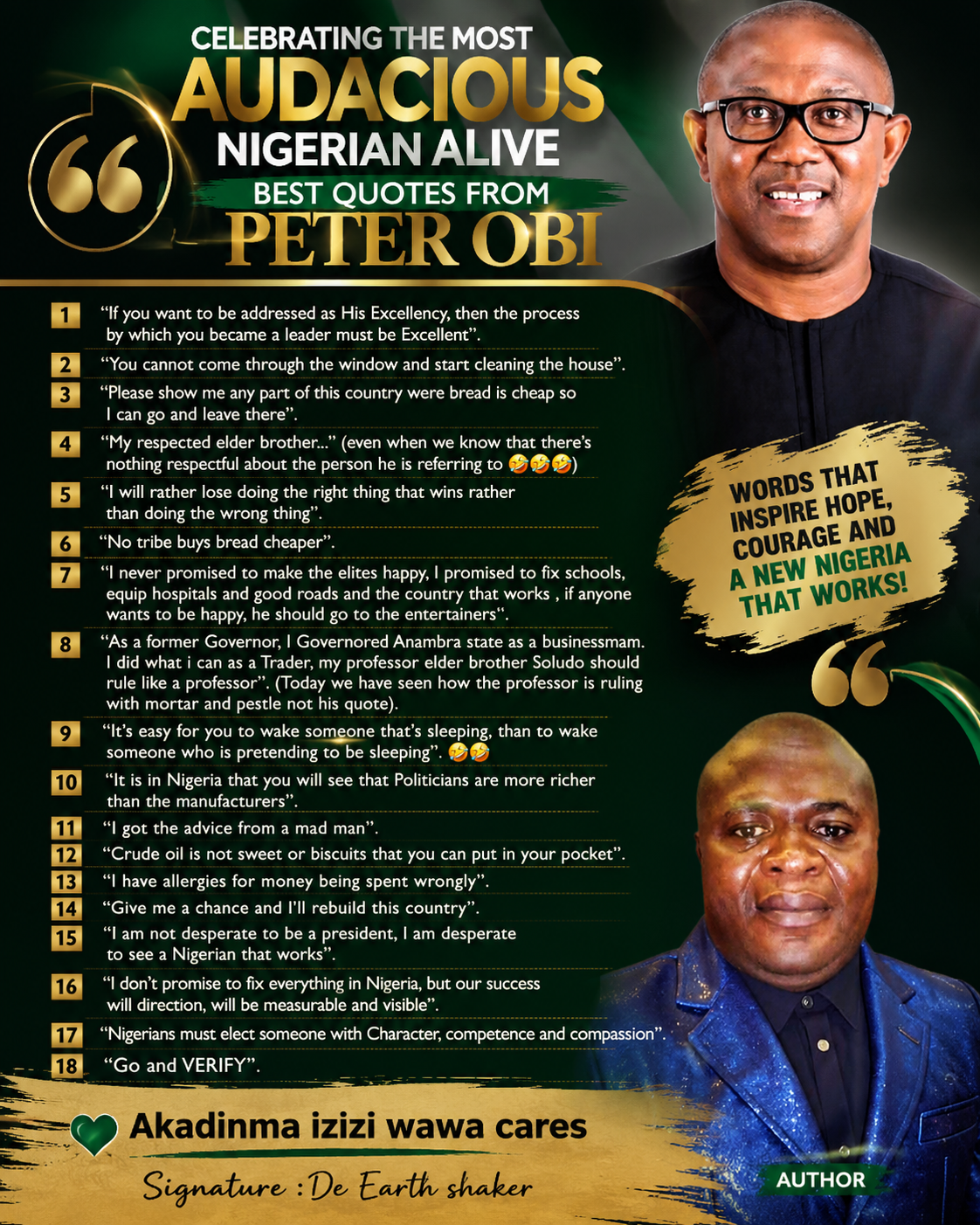
From "Go and verify" to "No tribe buys bread cheaper," his language has evolved into more than campaign slogans—it has become a political communication style that appeals to accountability, governance, and national identity.
Using the Structural-Functional Analysis Theory, we can examine why these statements continue to influence public discourse.
Structural-functionalism views society as a system of interconnected institutions—government, citizens, the economy, the media, education, and civil society. Every institution performs functions that help maintain order, stability, and development. When one institution fails, the effects are felt throughout the entire system.
Viewed through this framework, many of Peter Obi's statements can be interpreted as challenging institutions to perform their expected functions.
When he says, "If you want to be addressed as His Excellency, then the process by which you became a leader must be excellent," the statement highlights the importance of electoral credibility and democratic legitimacy. It suggests that the authority of leadership should be grounded in transparent and credible processes.
His famous line, "No tribe buys bread cheaper," shifts attention from ethnic politics to economic realities. It argues that inflation, unemployment, and the cost of living affect citizens regardless of ethnic or religious identity, encouraging policy-centred rather than identity-centred politics.
Similarly, "Politicians are richer than manufacturers" raises questions about the relationship between political power and productive economic activity. Within structural-functional thinking, sustainable national development depends on productive sectors creating wealth while public institutions enable growth.
His repeated phrase, "Go and verify," reflects an emphasis on evidence and accountability. Whether one agrees with his claims or not, the phrase encourages citizens to seek information rather than rely solely on political rhetoric.
Statements such as "I have allergies for money being spent wrongly" and "I am desperate to see a Nigeria that works" present public resources and effective governance as central responsibilities of government institutions.
Supporters see these quotes as expressions of accountability, fiscal discipline, and institutional reform. Critics argue that memorable statements alone are not substitutes for comprehensive policy implementation and measurable outcomes. Both perspectives contribute to democratic debate.
That is perhaps the broader significance of these quotations: they stimulate conversations about leadership standards, governance, economic management, and the role of citizens in holding public officials accountable.
In every democracy, political language can perform important social functions. It can mobilise voters, influence expectations, frame national debates, and shape public understanding of governance. Whether admired or criticised, words that consistently provoke discussion become part of a country's political culture.
Ultimately, the value of any political philosophy is measured not only by inspiring quotations but also by the effectiveness of institutions, the quality of public services, economic opportunities, respect for the rule of law, and improvements in citizens' daily lives.
As Nigeria continues its democratic journey, the enduring challenge remains the same: to build institutions that function effectively, leaders who govern responsibly, and citizens who demand accountability beyond slogans.
The debate will continue. The arguments will continue. The criticisms will continue. But perhaps that is one of democracy's greatest strengths—that ideas are tested openly, leaders are questioned continuously, and the future is shaped not only by powerful words, but by measurable actions.
0 likes · 0 comments · 0 shares