Post by Ugwumsinachi Nnadi (@ugwumsinachi_nnadi)
Building authentication for modern applications goes far beyond simply verifying a username and password. At Bondiary, I've designed our authentication flow with security, scalability, and user experience as first-class priorities.
Here's how it works:
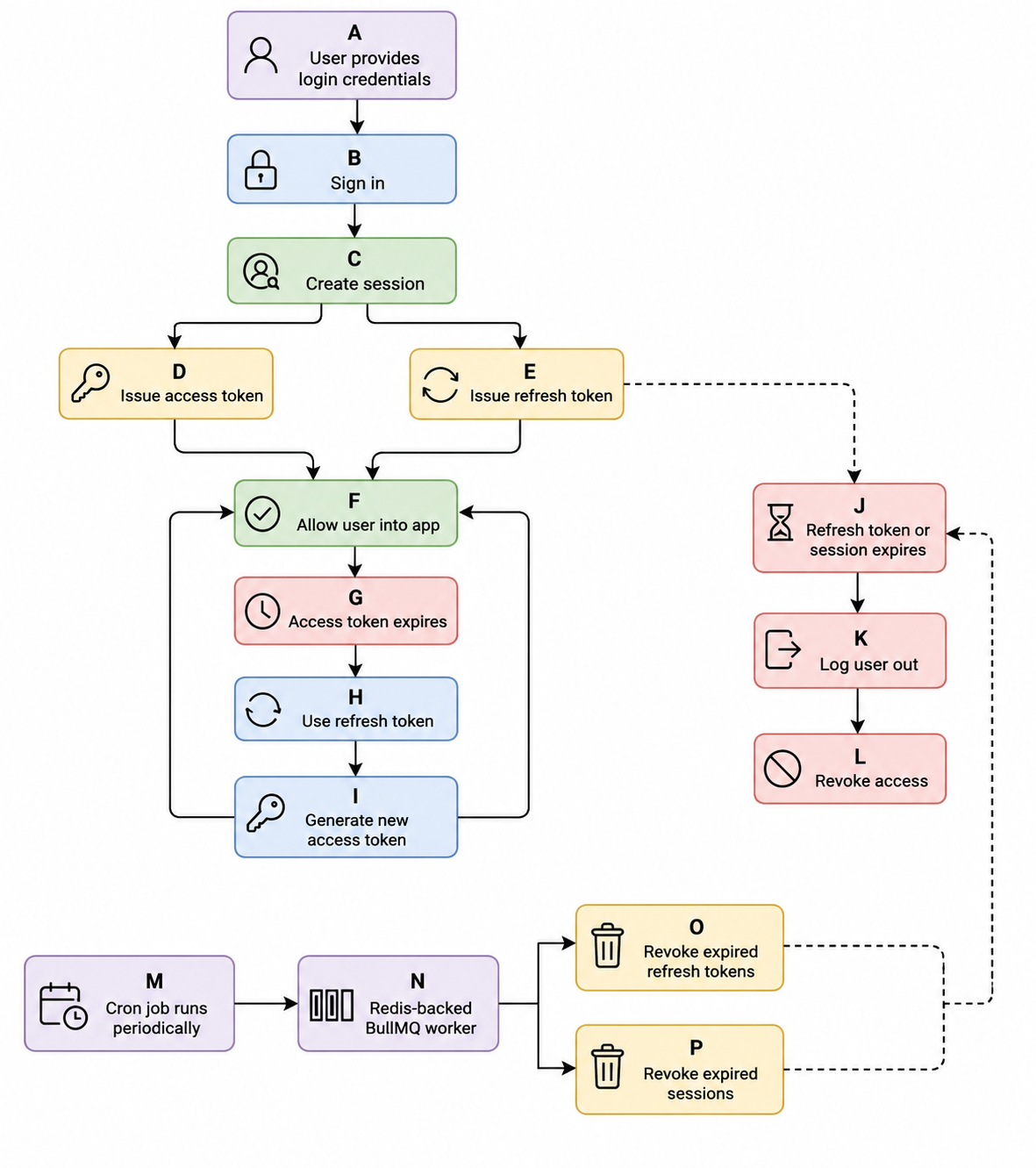
1. A user signs in with their credentials.
2. A secure session is created.
3. The server issues both an access token and a refresh token.
4. The access token grants immediate access to the application, while the refresh token remains securely stored for future token renewal.
When the access token expires, users don't have to sign in again. The application silently uses the refresh token to request a new access token, providing a seamless experience without compromising security.
However, sessions shouldn't live forever.
Once a refresh token expires or a session reaches its lifetime, the user is automatically logged out and access is revoked. This ensures that abandoned devices, stolen tokens, or inactive sessions cannot be exploited indefinitely.
To make this even more robust, Bondiary runs a scheduled cleanup process powered by Redis and BullMQ. A background worker periodically scans for expired refresh tokens and sessions, revoking them automatically. This keeps the authentication store clean, reduces unnecessary data, and strengthens the platform's overall security posture.
This architecture gives us:
• Short-lived access tokens that minimise risk.
• Long-lived refresh tokens for a frictionless user experience.
• Centralised session management.
• Automatic cleanup of expired authentication data.
• A scalable background processing system capable of handling millions of sessions efficiently.
Security isn't a feature you add later—it's part of the architecture from day one.
As I continue building Bondiary, we're investing in systems that are secure, scalable, and designed for the long term.
What does your authentication architecture look like? Do you rely on JWTs alone, or do you combine sessions, refresh tokens, and background workers like we do?
0 likes · 0 comments · 2 shares