Post by Ceejay Oji (@CeejayOji)
THE POLITICS OF GRATITUDE:
WHEN PUBLIC SERVICE IS MISTAKEN FOR CHARITY (CHAPTER I)
By: Ceejay Oji
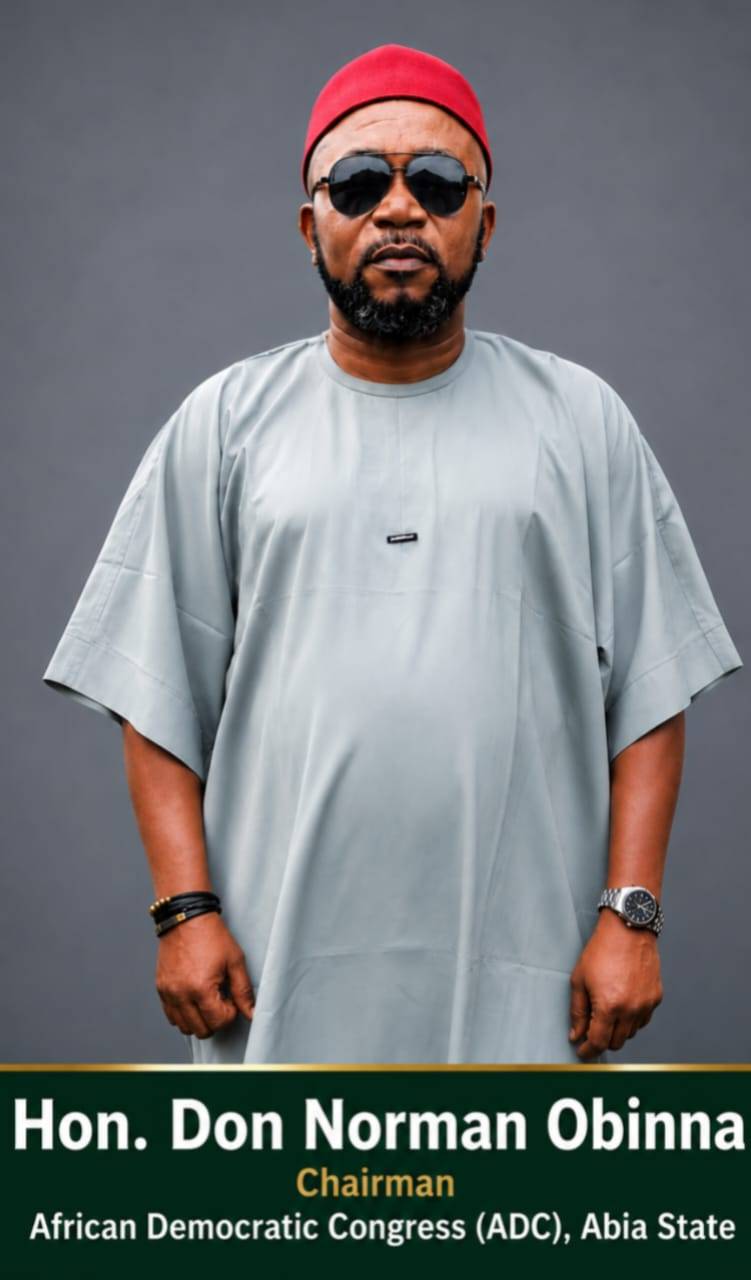
Media Aide to the Chairman, African Democratic Congress (ADC), Abia State
If you have not read my previous article, The Poverty of Expectations: How Societies Are Taught to Accept Less Than They Deserve, I encourage you to do so. While this article can stand on its own, it is connected to ideas explored in that piece and is best understood as part of the same conversation.
Read it here:
https://www.facebook.com/share/p/1c7HYTkmRU/
This time, I want to examine a different but related problem.
One of the most successful political scams in modern democracy is so widespread that many citizens no longer recognize it as a scam.
It is the belief that politicians deserve gratitude for carrying out the responsibilities they sought public office to perform.
At first glance, this may appear harmless. In reality, it is one of the most effective ways of weakening accountability without changing a single law. It alters the relationship between citizens and government, not through force, but through psychology. It teaches people to view public service as generosity and governance as an act of kindness rather than a constitutional obligation.
Consider how absurd this arrangement is.
Citizens create the wealth of a nation. Farmers produce food. Traders facilitate exchange. Workers provide labour. Entrepreneurs take risks. Businesses pay taxes. Government collects these resources, spends a portion of them on public projects, commissions those projects with ceremonies and publicity, and then waits for applause.
Not because extraordinary prosperity has been created, but because a fraction of public responsibility has finally been fulfilled.
Somewhere in this process, a dangerous illusion takes root. Public office stops being viewed as a position of responsibility and begins to resemble a platform for benevolence. The elected official becomes a benefactor. The citizen becomes a beneficiary. What should be a relationship founded on accountability is quietly transformed into one built on gratitude.
Imagine a bank manager calling a press conference to announce that customers will now be allowed access to their own money. Such an event would be greeted with ridicule because everyone understands that access to one's money is not a favour.
Yet politics routinely performs a similar trick.
Roads are built with public funds and citizens are expected to be grateful. Hospitals are renovated with public resources and citizens are expected to be grateful. Schools are repaired with taxpayers' money and citizens are expected to be grateful.
What should provoke evaluation often provokes celebration.
The real genius of the politics of gratitude is that it protects power from scrutiny. Once citizens begin to see politicians as benefactors, criticism becomes uncomfortable. Questions start to sound disrespectful. Scrutiny begins to look like hostility. Failure becomes easier to excuse because people are naturally reluctant to challenge those they believe have helped them.
Gratitude becomes a shield around power.
This is why mediocre leadership often flourishes where gratitude dominates political culture. A government that is constantly measured against its promises must produce results. A government that is constantly thanked merely has to produce appearances.
One environment rewards performance.
The other rewards perception.
Many citizens assume gratitude is a harmless civic virtue. They are mistaken. In politics, gratitude can become a powerful weapon. It can weaken vigilance, discourage scrutiny, and persuade citizens to surrender authority they do not even realize they possess.
The danger is not that people appreciate good governance.
The danger is that appreciation gradually replaces accountability.
When that happens, something even more troubling begins to unfold. Citizens slowly forget their true position in a democracy. They stop acting like owners and begin acting like petitioners. They stop demanding explanations and begin seeking favours. They stop seeing public resources as their collective property and begin treating them as gifts distributed at the discretion of those in power.
A society that sees government projects as gifts will celebrate what it should merely expect. A society that sees politicians as benefactors will defend them when it should question them. A society trained to be grateful for basic governance will gradually lower its standards until even the smallest act of public responsibility is treated as exceptional leadership.
That is how accountability dies.
Not through dictatorship. Not through military force. Not through the suspension of elections.
It dies when citizens become so accustomed to gratitude that they forget they are the employers and begin treating public servants as patrons.
That transformation is where the real story begins.
And it is far more dangerous than most people imagine.
0 likes · 0 comments · 1 shares
Comments
Providing dividends of democracy does not warrant a jamboree.
Unfortunately, it has been reduced to a habit of praise singing with taxpayer's accepting projects they deserve as gifts
It's time we wake up...