Post by Jeph Anne (@jephanne24)
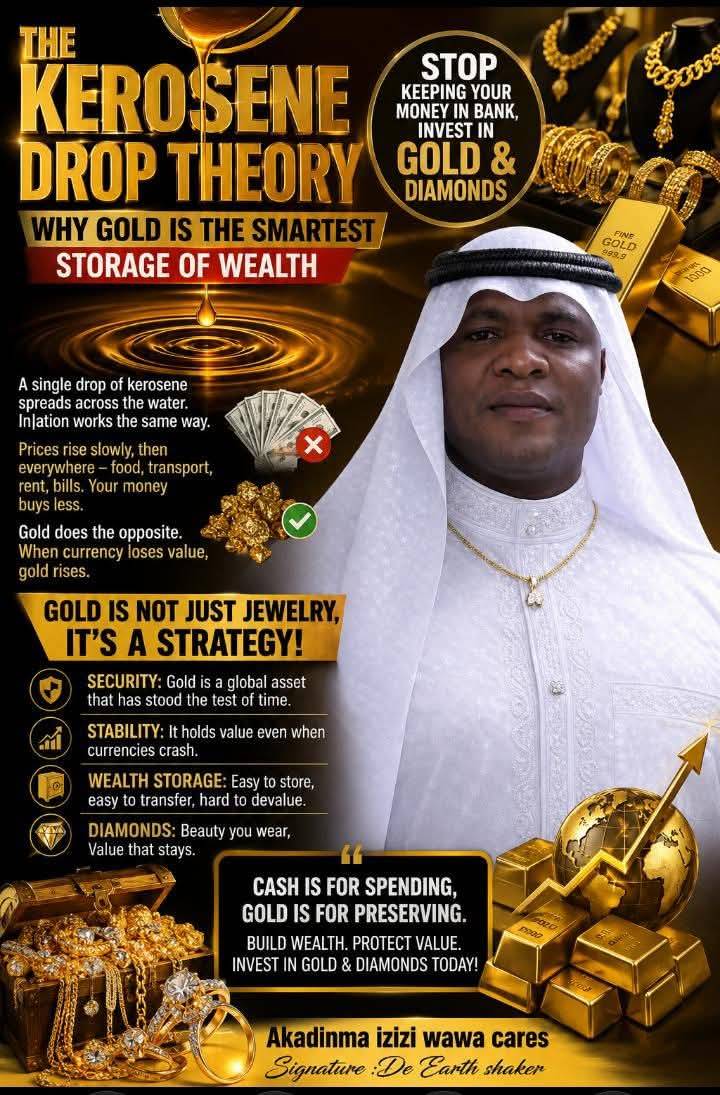
THE KEROSENE DROP THEORY: WHY SMART PEOPLE STORE WEALTH IN GOLD, NOT JUST CASH
Imagine a single drop of kerosene falling into a bucket of clean water. Within moments, the smell spreads everywhere. One tiny drop changes the entire bucket.
That is how inflation works.
A small rise in prices eventually spreads across an entire economy. The food you buy, the transport you pay for, the rent you owe, and the savings in your bank account all feel the impact. The purchasing power of cash gradually shrinks.
This is why many investors around the world do not rely only on holding cash. They also invest in assets such as gold, precious metals, real estate, businesses, and other investments that may better preserve value over time.
Cash is useful for daily transactions.
Gold has historically been viewed by many as a long-term store of value.
Throughout history, currencies have risen and fallen. Governments have changed monetary policies. Inflation has reduced the buying power of money in many countries. Yet gold has remained a globally recognized asset for generations.
The lesson is simple: money is for spending, but assets are for preserving wealth.
Many people proudly announce how much money they have in the bank, but fewer ask whether that money will buy the same amount five or ten years from now.
The wealthy often focus on acquiring assets before accumulating more cash.
Gold is not just jewelry. It is also an investment and a form of portfolio diversification. Central banks around the world hold gold reserves as part of their financial strategies, reflecting its role in the global financial system.
This does not mean everyone should withdraw all their money from the bank. Banks remain essential for payments, savings, business transactions, and emergency access to cash. Instead, the broader idea is to think beyond cash alone and consider building wealth through a balanced mix of assets that fits your financial goals and risk tolerance.
The real question is not:
"How much money do you have?"
The real question is:
"How much of your wealth is protected against inflation?"
Like a drop of kerosene spreading through water, inflation spreads quietly through an economy. Those who prepare for it may be better positioned than those who ignore it.
What do you think?
Would you rather keep all your wealth in cash, or would you diversify into assets such as gold and other long-term investments?
The debate begins.
0 likes · 0 comments · 0 shares