Post by Ibadan Watch (@Ibadanwatch)
OPINION: Obi-Kwankwaso Single-Term Deal Raises More Questions Than It Answers.
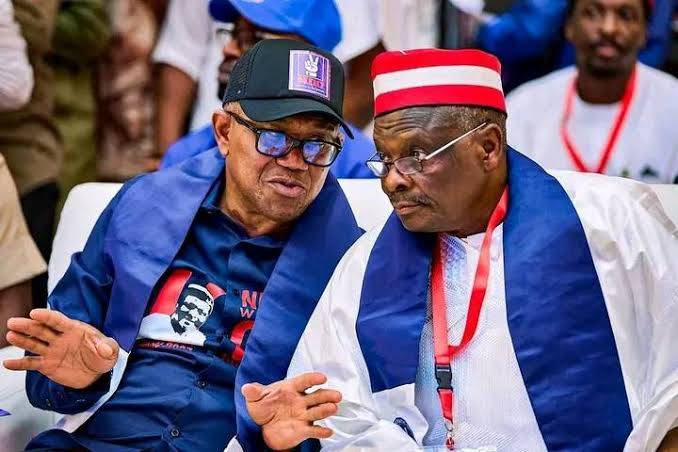
The decision by the Nigeria Democratic Congress (NDC) to field former Anambra State Governor Peter Obi as its presidential candidate alongside former Kano State Governor Rabiu Musa Kwankwaso as his running mate has reshaped the political landscape ahead of the 2027 general election.
Central to the alliance is the party's decision to zone its presidential ticket to the South for a single four-year term before power returns to the North in 2031, a formula designed to strengthen the coalition and balance regional interests.
While the arrangement has been celebrated by supporters as a demonstration of political compromise, questions continue to trail the practicality of a constitutionally permitted single-term presidency.
Nigeria's Constitution allows a president to seek a second term after completing an initial four-year tenure, meaning any commitment to serve only one term remains a political promise rather than a legally binding obligation.
Political analysts argue that such agreements have historically proved difficult to sustain in Nigeria's highly competitive political environment. Once in office, presidents often come under intense pressure from party loyalists, political allies, governors and interest groups to seek re-election, particularly if the administration records notable achievements or retains broad public support. These realities have frequently overridden earlier political understandings.
The arrangement could also create uncertainty within the coalition itself. While Kwankwaso has publicly endorsed the NDC's zoning formula and accepted the vice-presidential position, the success of the agreement ultimately depends on mutual trust and political discipline over a four-year period. Any disagreement over succession or shifting political calculations could test the unity that currently binds the coalition.
Beyond internal dynamics, the opposition ticket must still convince Nigerians that governance, rather than succession planning, remains its primary focus.
Critics contend that building a campaign around a one-term pledge risks making the 2031 presidential race part of the 2027 conversation before voters have even assessed the coalition's plans for economic recovery, security, infrastructure and institutional reforms.
Ultimately, the Obi-Kwankwaso alliance represents one of the most significant opposition realignments in recent political history. Whether the single-term understanding becomes a strength or a source of future political tension will depend less on campaign promises and more on the ability of both leaders to maintain cohesion, earn public confidence and navigate the realities of governing if entrusted with power.
For many observers, the real test is not whether such an agreement sounds appealing today, but whether it remains politically realistic once confronted by the demands and incentives of executive office.
0 likes · 0 comments · 0 shares