Post by Udeze Nestor (@Nesmoore1)
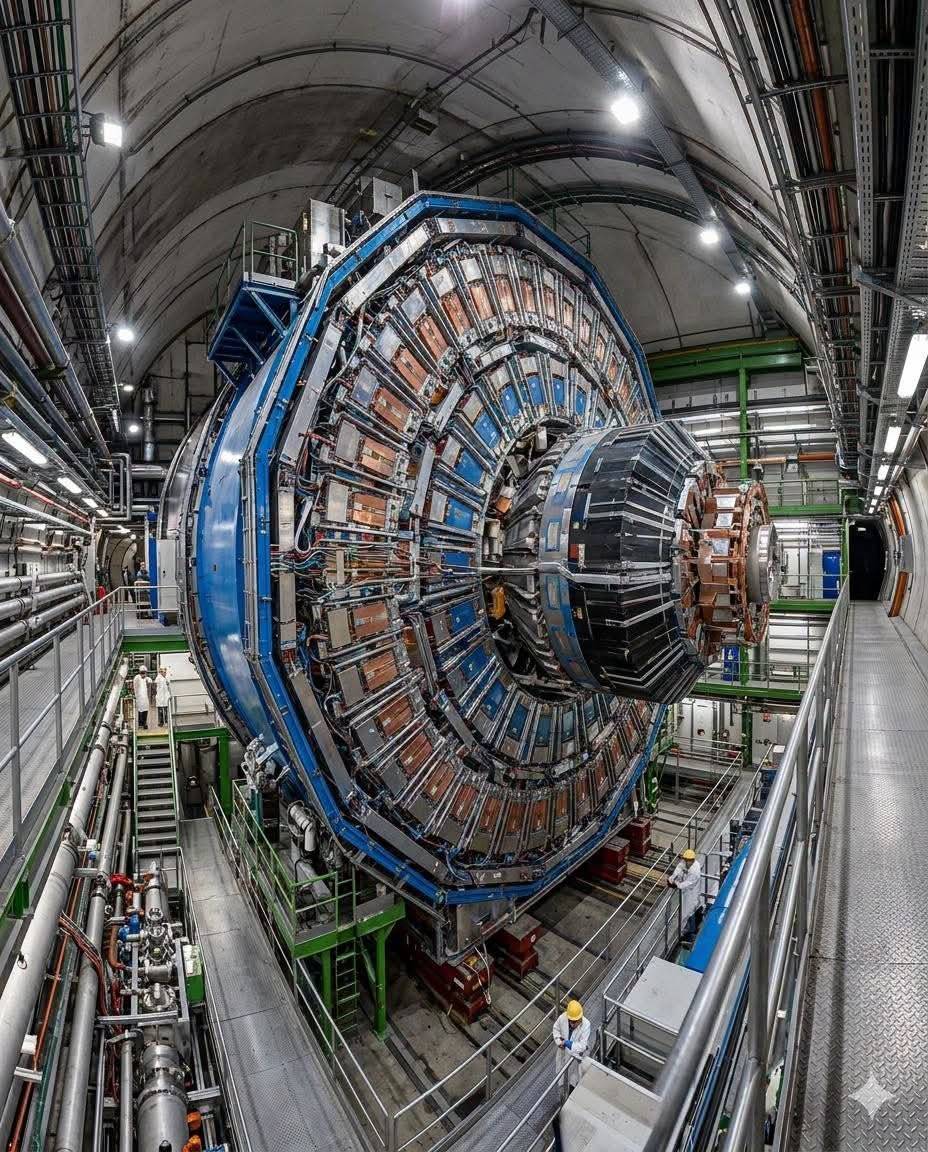
The Largest Machine Ever Built: The Large Hadron Collider at CERNIt’s not just a machine. It’s a 27-kilometre ring of pure engineering ambition buried beneath the Swiss-French countryside — the biggest, most complex device humans have ever constructed.Weighing in at 10,000 tonnes of superconducting magnets, the LHC operates at an astonishing -271.3°C — colder than the vacuum of outer space itself. In fact, it is the coldest extended region anywhere in the known universe.This extreme chill is non-negotiable. The superconducting magnets must hover just a fraction of a degree above absolute zero to completely eliminate electrical resistance. Even the slightest warming, and the entire system fails in a spectacular “quench” — a runaway release of stored energy powerful enough to melt the magnets themselves.In 2008, one such quench caused $40 million in damage and kept the collider offline for 14 months. A brutal reminder of just how unforgiving this technology is.Yet when the LHC is firing on all cylinders, the numbers become almost unbelievable:Protons race around the ring at 99.9999991% the speed of light
They complete 11,245 laps every single second
Up to 600 million collisions occur each second inside the detectors
The experiments generate 15 petabytes of data every year
Keeping a 27-kilometre machine at near-absolute zero, year after year, while orchestrating hundreds of millions of particle collisions per second is an engineering triumph that borders on the miraculous.The physics discoveries are legendary.But the sheer audacity and precision required to make it all work might be the most impressive achievement of all.
0 likes · 0 comments · 0 shares