Post by Ibrahim Mohammed Alkaitawi (@alkaitawi)
Extreme Wealth, Systemic Inequality, and the Crisis of Economic Legitimacy
#Insight by #Alkaitawi
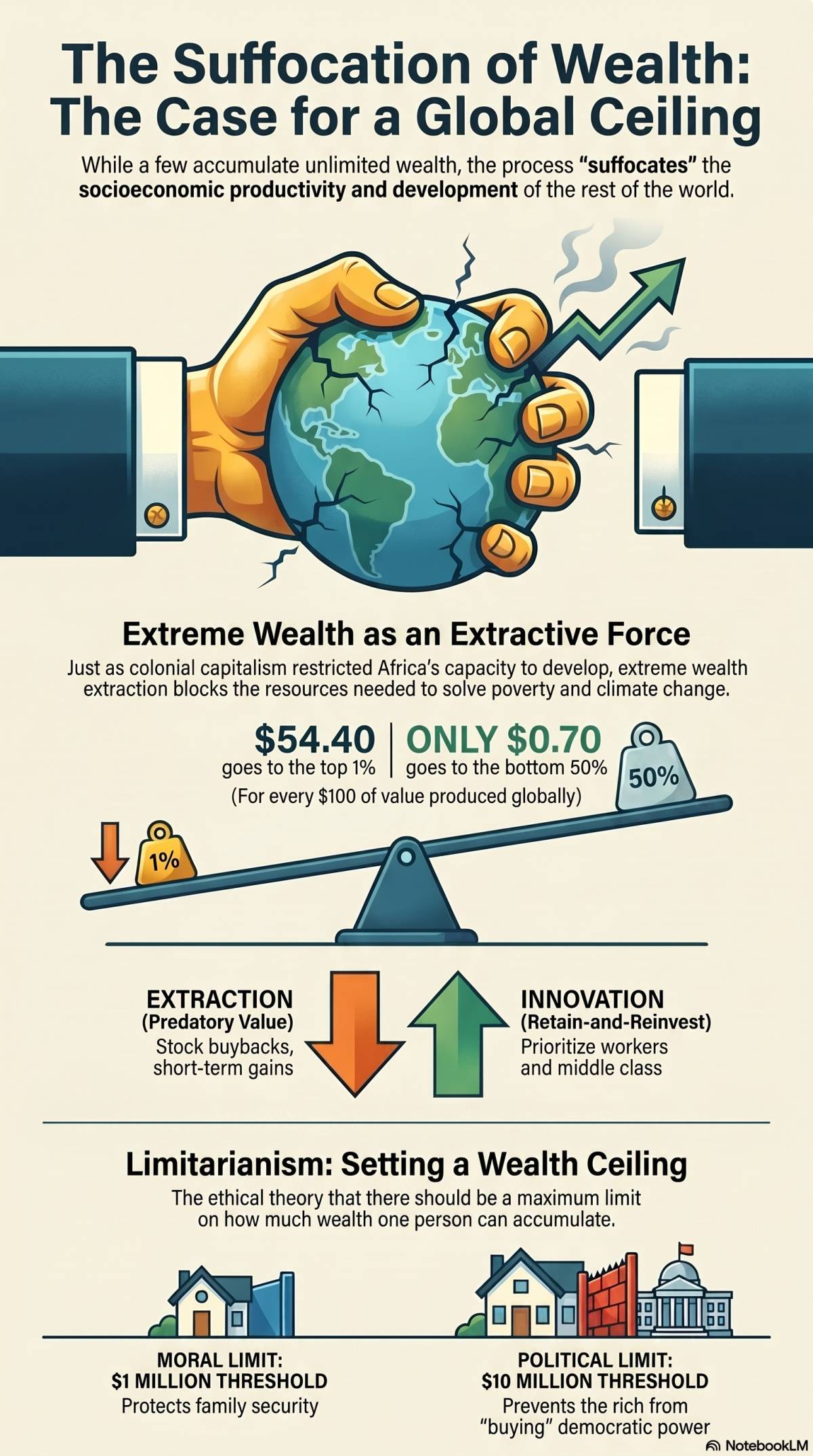
My position on extreme wealth is direct. The world is moving into an era where trillionaire-level accumulation is no longer theoretical. It is emergent as a real possibility within a global system that continues to concentrate resources at the top while large segments of humanity struggle to meet basic needs.
This is not simply an issue of individual wealth. It is a structural question about how modern economies distribute power, resources, and opportunity.
The Structure Behind Inequality
What is often described as “the system” is presented as neutral, almost natural. Yet its outcomes are consistent. Wealth moves upward, consolidates, and reproduces itself across generations and institutions. At the same time, poverty and insecurity remain widespread, even in economies that are highly productive.
This contradiction is not accidental. It reflects the way global capitalism is organized, where capital accumulation is prioritized over equitable distribution.
Market Fundamentalism and Its Contradictions
A central feature of this system is market fundamentalism, the belief that markets are inherently self-correcting and sufficient for organizing society.
In periods of growth, this belief is strongly defended. Markets are treated as efficient, rational, and optimal. However, in times of crisis, the same system relies heavily on state intervention. Public funds are used to stabilize financial institutions and prevent systemic collapse.
This creates a clear contradiction. Private profits are protected in normal times, while public resources absorb losses during crises. The result is a recurring pattern where risk is socialized and reward is privatized.
Competing Responses to Inequality
Different intellectual traditions offer different responses to this condition.
Limitarianism argues that extreme wealth should have ethical and political limits. It does not reject wealth creation but challenges the legitimacy of unlimited accumulation in the presence of widespread deprivation.
Socialist and Marxist traditions go further, arguing that the structure of ownership and production itself generates inequality and must therefore be transformed.
Even within broader democratic debate, there is growing recognition that inequality is not just an economic outcome but a political condition that shapes access to power, education, health, and dignity.
Beyond Reformism
The persistence of extreme inequality raises a deeper question about reform. Decades of policy adjustments have not fundamentally altered the concentration of wealth. Instead, inequality has expanded alongside economic growth.
This is why more radical critiques continue to emerge. They are not simply ideological positions but responses to lived realities across different societies.
Conclusion
The issue is not whether wealth exists. The issue is how it is distributed, how it is protected, and how it shapes the structure of society itself.
If trillionaire accumulation becomes normalized while basic human needs remain unmet, then the question is no longer technical. It becomes moral and political.
These debates are increasingly present in our panAfrican digital spaces, including emerging African platforms such as #BeeYarn, and #kwot in podcas
t where new voices are beginning to challenge old assumptions and expand the scope of economic discussion.
#InsightByAlkaitawi
#economicInequality
#limitarianism
#socialism
Marxist
0 likes · 0 comments · 0 shares