Post by Omni_Kno'est (@nkang_richard_etima_omni)
In 1799, a British scientist named George Shaw received a strange dried skin in the mail from Australia.
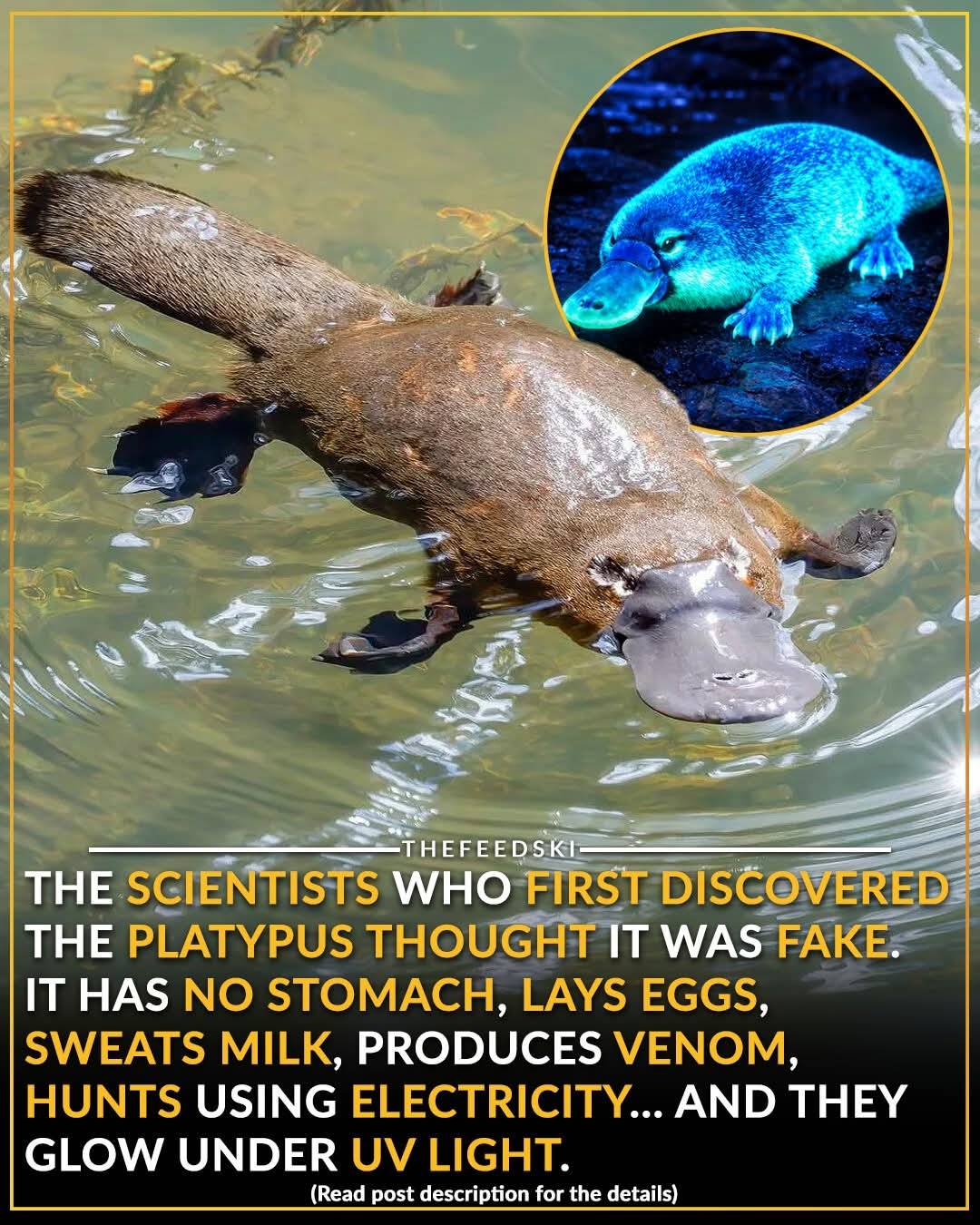
It had the bill of a duck, the body of an otter, the tail of a beaver, and webbed feet with claws. Shaw stared at it for a long time. Then he picked up a pair of scissors and checked the bill for stitches.
He was convinced someone was pulling a prank.
There were no stitches. It was real. Shaw published a description anyway and his colleagues spent years debating whether the specimen was genuine. It was the platypus, and it has been confusing scientists ever since.
It is a mammal that lays eggs. When the eggs hatch, the mother feeds her young milk that seeps directly through pores in her skin. She has no nipples. The young lap milk off her belly.
It has no stomach. Food passes directly from the esophagus to the intestine, bypassing an organ that almost every other vertebrate on earth possesses.
The male has venomous spurs on its hind legs. The venom is powerful enough to cause excruciating pain in humans that can last for months. No painkiller relieves it.
Its bill contains thousands of electroreceptors that detect the electrical fields produced by the muscle movements of prey. It hunts completely blind and deaf underwater, navigating entirely by electricity. It closes its eyes, ears, and nose when it dives.
In 2020 scientists discovered that platypus fur glows a vivid blue-green under ultraviolet light. Nobody knows why.
When researchers first sequenced its genome they found it has ten sex chromosomes. Most mammals have two.
Every time scientists think they have finished being surprised by the platypus, the platypus finds a new way to be impossible.
0 likes · 0 comments · 0 shares