Post by Làgídìgbò (@aHeritager)
POWER FOR THE PRESIDENCY, POWER FOR THE PEOPLE: THE BIGGER QUESTION BEHIND ASO ROCK'S SOLAR PROJECT
#aHeritable
------
Renewable energy is part of the future, but national development requires a strategy that powers both the Presidency and the people. A nation prospers when reliable electricity becomes a public utility, not a privilege.
------
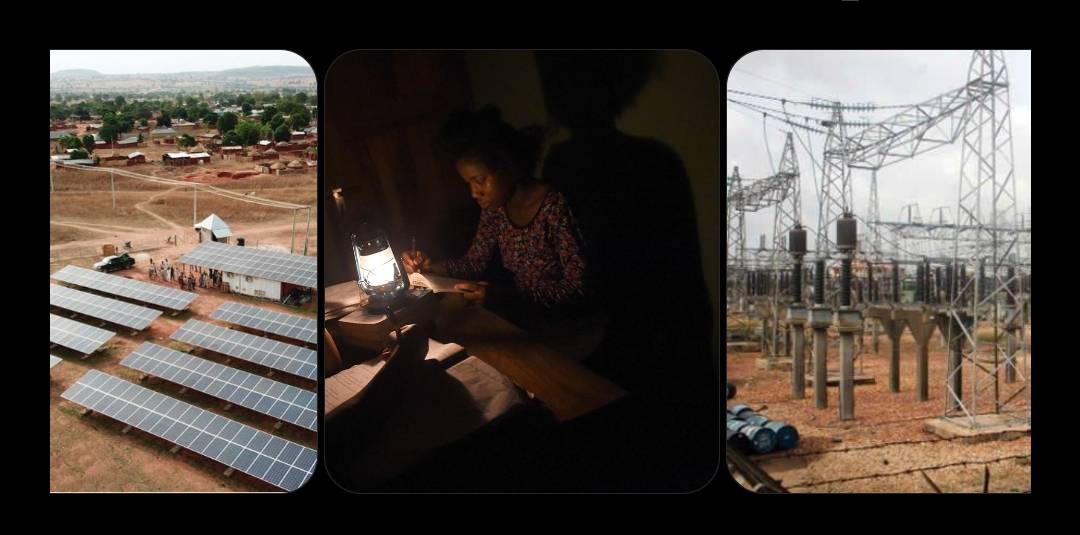
The Federal Government's decision to construct a ₦10 billion solar mini-grid to power the Presidential Villa in Abuja has sparked debate across the country. According to reports, the project is intended to address the high cost of electricity, reduce dependence on the national grid, and guarantee uninterrupted power supply to the seat of government.
From a purely technological and economic perspective, there is nothing inherently wrong with the project. Around the world, governments, businesses, and households are increasingly embracing solar energy as a cleaner, more reliable, and cost-effective alternative to traditional power sources. In fact, Nigeria, blessed with abundant sunshine throughout the year, is ideally positioned to benefit from solar power development.
Yet the project raises a larger and more uncomfortable question: if the nation's highest office no longer considers the national grid sufficiently reliable for its operations, what confidence should ordinary Nigerians have in the same system?
This question goes to the heart of public perception. For decades, Nigerians have listened to promises of stable electricity supply. Successive administrations have pledged reforms, investments, and improvements. Yet many homes, schools, hospitals, and businesses continue to rely heavily on generators, inverters, and alternative energy sources. The decision to provide an independent power solution for the Presidency may therefore be interpreted by many citizens as an acknowledgment of the deep challenges still facing the national grid.
The concern is not the adoption of solar technology itself. Indeed, renewable energy should be encouraged. The concern is whether such projects are being pursued as isolated solutions for privileged institutions rather than as part of a comprehensive national energy transformation strategy.
The real challenge facing Nigeria is not merely electricity generation. It is the entire value chain. Power plants may generate electricity, but inadequate transmission infrastructure, weak distribution networks, technical losses, energy theft, and poor maintenance continue to undermine service delivery. Increasing generation alone without addressing these bottlenecks will not solve the problem.
A more comprehensive approach would involve simultaneous investment in generation, transmission, and distribution. Nigeria possesses enormous natural gas reserves capable of supporting reliable base-load electricity generation. The country also has significant potential in solar, hydro, wind, and other renewable energy sources. Rather than viewing these options as competitors, policymakers should pursue a balanced energy mix.
The most effective long-term policy would combine large-scale grid modernization with aggressive support for decentralized power systems. Communities, industries, universities, hospitals, and government institutions should be encouraged to develop mini-grids and embedded power projects while the national grid undergoes modernization and expansion.
Equally important is regulatory certainty. Investors need confidence that policies will remain stable and contracts will be respected. Improved metering, reduction of technical losses, and stronger accountability within the electricity sector are also essential.
For ordinary Nigerians, the ultimate concern is not whether power comes from solar panels, gas turbines, hydro stations, or transmission lines. What matters is affordability, reliability, and availability. Citizens want electricity that powers homes, supports businesses, creates jobs, improves education, strengthens healthcare, and drives economic growth.
The Aso Rock solar project should therefore be viewed not as an end in itself but as a reminder of what is possible when reliable energy is prioritized. The challenge before government is to ensure that the same urgency applied to powering the Presidency is extended to powering the nation.
For a country seeking industrial growth and economic transformation, the goal must not be uninterrupted power for a few government buildings. The goal must be uninterrupted power for more than 200 million Nigerians.
That is the true measure of energy success.
#aHeritager #Trending #ClimateAction #SafeCommunities #Nigeria #ProtectOurFuture #BringBackOurChildren
0 likes · 0 comments · 0 shares