Post by Làgídìgbò (@aHeritager)
CNG TODAY, ELECTRIC TOMORROW? NIGERIA'S TRANSPORT REVOLUTION AT A CROSSROADS
#aHeritager
--------
Nations that plan only for today's needs often struggle tomorrow. The challenge for Nigeria is to use its abundant gas resources wisely while preparing for the technologies that will define the next generation of transportation and economic growth.
----
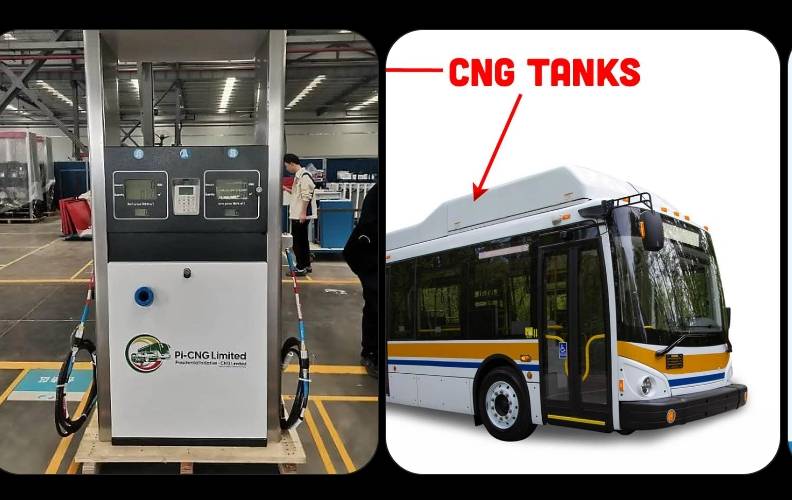
Nigeria's ongoing rollout of Compressed Natural Gas (CNG) infrastructure under the Presidential CNG Initiative (Pi-CNG) represents one of the most ambitious energy-transition programmes in the country's recent history. With hundreds of conversion centres and refuelling stations being established across the federation, the initiative aims to reduce transportation costs, ease pressure on household incomes, and lessen the nation's dependence on expensive petrol.
The immediate benefits are difficult to ignore. For commercial drivers, transport operators, and ordinary motorists, CNG offers significantly lower fuel costs compared to petrol and diesel. This translates into lower transportation expenses, reduced operating costs for businesses, and potentially lower prices of goods and services. At a time when inflation and rising living costs remain major concerns, the programme provides a practical relief mechanism for millions of Nigerians.
The initiative also makes economic sense because Nigeria possesses one of the largest proven natural gas reserves in Africa. Rather than relying heavily on imported refined petroleum products, greater use of domestic gas resources could improve energy security, stimulate investment, create jobs, and retain more value within the local economy.
However, while CNG may be an effective short- and medium-term solution, the global transportation industry is increasingly moving toward electric vehicles (EVs). Countries around the world are investing heavily in battery technology, charging infrastructure, and renewable energy systems. As technology improves, electric vehicles are expected to become more affordable, efficient, and environmentally sustainable.
This raises an important question: Where does electric mobility fit into Nigeria's future?
The answer may not be "either CNG or EVs" but rather "both." Nigeria's current electricity generation and transmission challenges make a rapid transition to electric vehicles difficult. Widespread EV adoption requires reliable electricity, charging networks, battery recycling systems, and substantial investment in power infrastructure. These conditions are still developing.
Consequently, CNG can serve as a bridge technology—providing immediate economic relief while the nation gradually prepares for a cleaner electric future. In the short term, CNG helps reduce fuel expenses and supports economic activity. In the long term, electric vehicles may offer lower maintenance costs, reduced emissions, and greater energy efficiency, particularly if powered by renewable energy sources.
The government should therefore pursue a dual-track strategy. While expanding CNG infrastructure, policymakers should simultaneously invest in electricity generation, renewable energy projects, battery research, EV pilot programmes, and charging networks. Local manufacturing and assembly of both CNG and electric vehicles should also be encouraged to create jobs and reduce import dependence.
For ordinary Nigerians, the benefits of such an approach are substantial. Lower transport costs today can ease economic hardship, while investments in modern transportation technologies can create a more sustainable and competitive economy tomorrow. Businesses would enjoy reduced operating costs, consumers would benefit from lower transportation expenses, and future generations would inherit a cleaner environment.
Nigeria's vast gas reserves make CNG a practical solution for the present. Yet the future of transportation is increasingly electric. The wisest path is not to choose one at the expense of the other, but to use today's gas advantage to build tomorrow's clean-energy economy.
If managed properly, the CNG initiative could become more than a fuel programme—it could serve as the first chapter in Nigeria's broader journey toward energy security, industrial growth, and sustainable development.
#ClimateAction #SafeCommunities #Nigeria #ProtectOurFuture #Trending #BringBackOurChildren #aHeritager
0 likes · 0 comments · 0 shares