Post by Udeze Nestor (@Nesmoore1)
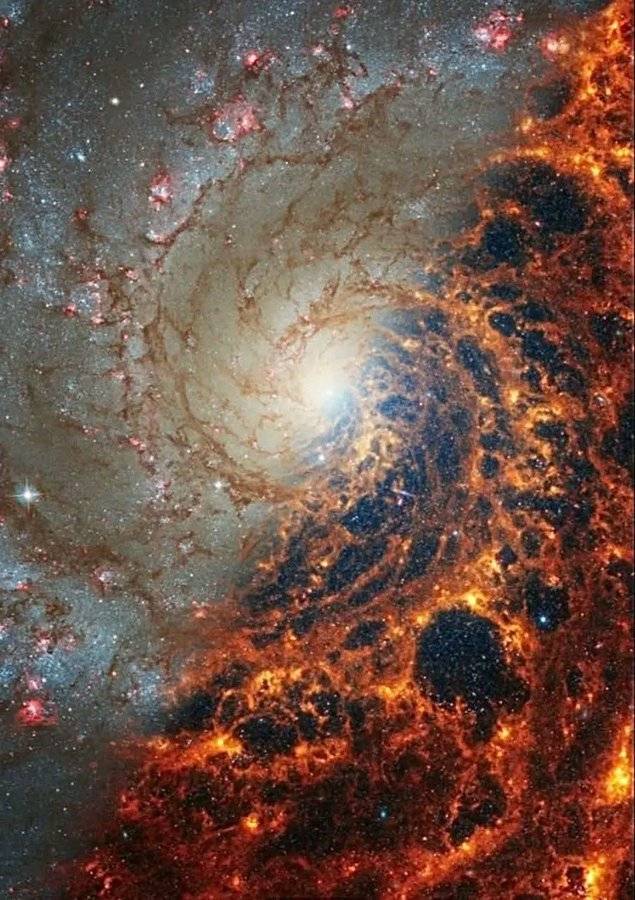
Mind-blowing side-by-side: NGC 628 (M74) — The Phantom Galaxy Left: James Webb Space Telescope
Right: Hubble Space TelescopeThis stunning face-on spiral galaxy lies in the constellation Pisces. With a diameter of roughly 100,000 light-years, it spins at incredible speeds — its stars whipping around at over 200 km/s.The difference between the two telescopes is dramatic:Webb (infrared) pierces through dust and reveals glowing clouds of gas, intricate filamentary structures, and regions of active star formation in vivid orange, red, and gold. It shows the galaxy’s hidden skeleton of warm dust and newly forming stars in breathtaking detail.
Hubble (visible light) gives us the classic majestic view: bright blue star-forming arms, dark dust lanes, and a glowing core. It captures the beauty we’re used to seeing, but hides much of what lies behind the dust.
Together, they show the same galaxy in completely different “languages” of light — proving just how powerful this duo is when working side by side.Webb unveils the hidden infrared universe where stars are born, while Hubble delivers the crisp visible-light beauty. One galaxy, two radically different — yet complementary — perspectives.Absolutely mesmerizing. The Phantom Galaxy has never looked more alive! Which side blows your mind more — Webb’s fiery detail or Hubble’s classic elegance?
0 likes · 0 comments · 0 shares