Post by Deborah Udy Okusaga Akanne (@deborah_udy_okusaga)
Most nurses spend 80% of their OSCE prep on clinical skills stations.
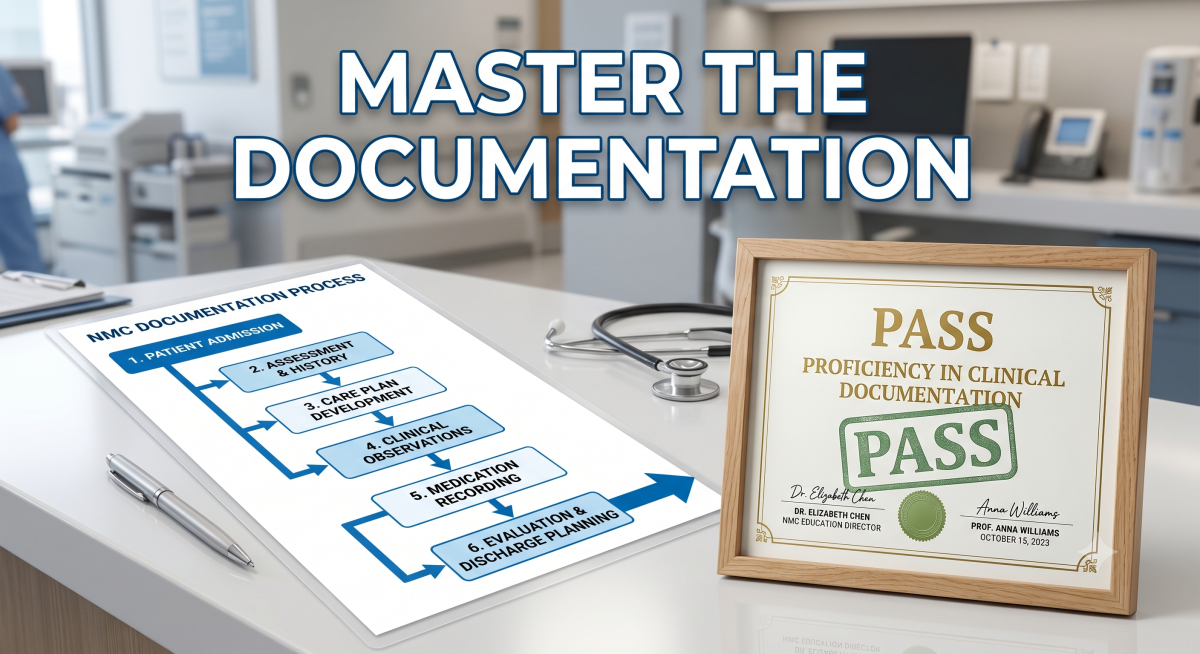
The examiners spend 80% of their marking on documentation.
That mismatch is why so many brilliant nurses fail.
The OSCE is structured around a framework called APIPI — Assessment, Planning, Implementation, Patient Education, and Evaluation.
Understanding it isn't optional. It's the architecture the entire exam is built on.
Here's where the hidden failures happen: Evaluation.
Most nurses reach the end of a station, complete the intervention, and stop.
But the examiner is still watching. They want to see you close the loop — reassess the patient, document the outcome, confirm the care plan reflects what actually happened.
Skipping Evaluation doesn't just cost you marks on that step.
In the NMC's marking framework, it signals incomplete clinical reasoning — and that can fail an otherwise strong station.
I work with my clients until they can produce a UK-standard care plan, within the OSCE timeframe, that covers every APIPI component without prompting.
We don't drill skills in isolation. We engineer the full clinical picture the examiner needs to see.
Documentation is not the admin part of the OSCE.
IT IS THE EXAM!
💬 Need the APIPI Documentation Template I use with my clients?
Comment APIPI below and I'll send it over.
#APIPI #NursingDocumentation #OSCEPrep #NMCOSCE #UKNursingJobs #sovereignstrategy
0 likes · 0 comments · 0 shares