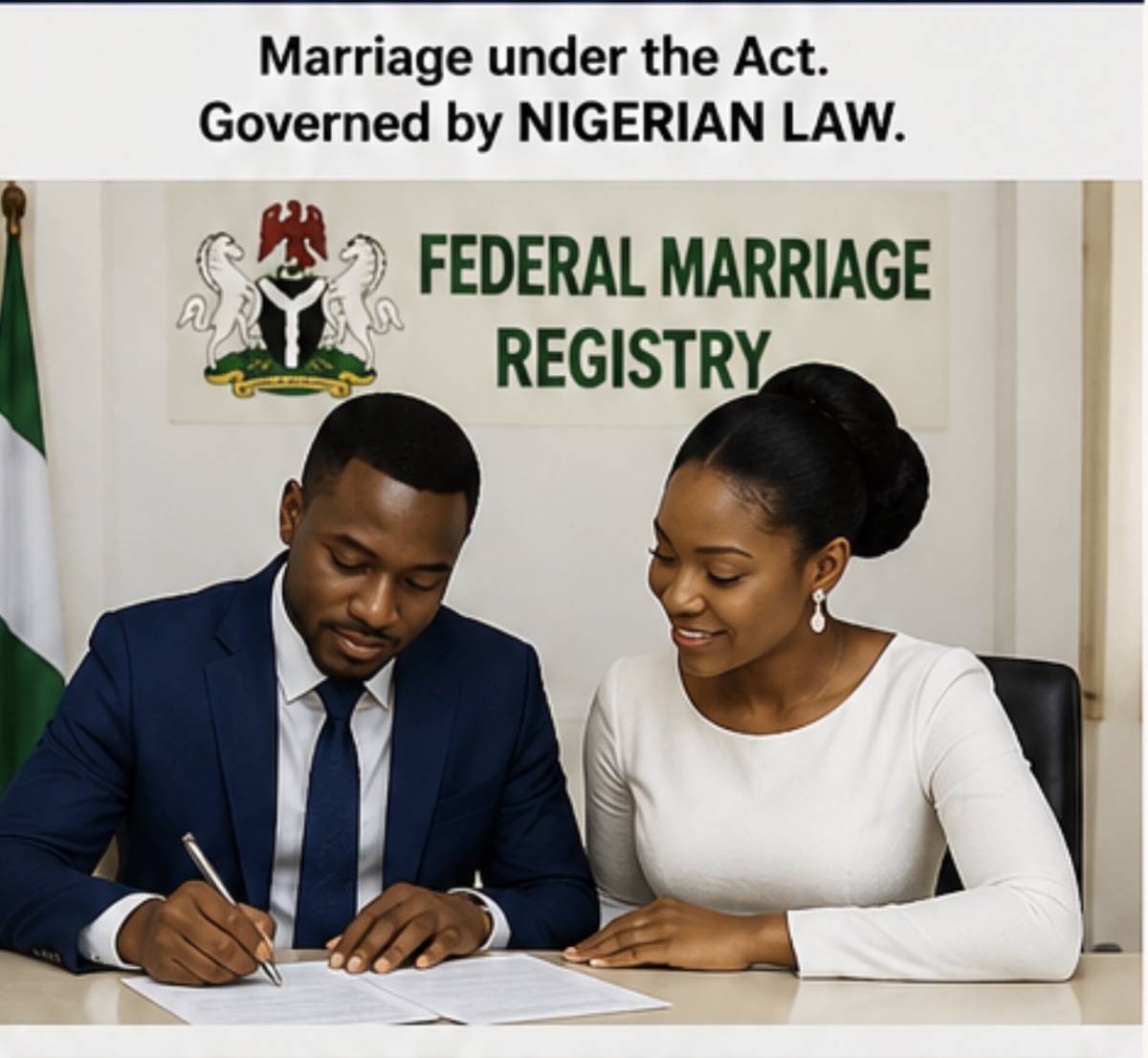
In Nigeria, there are major differences between a Traditional Marriage and a Statutory Marriage (popularly called “Court Marriage”), especially when it comes to dissolution.
TRADITIONAL MARRIAGE
This is marriage conducted according to native customs and family traditions.
If problems arise, it can usually be dissolved through customary processes such as:
• Family agreement
• Return of bride price (depending on the culture)
• Traditional/community rites
In many cases, no High Court divorce is needed.
STATUTORY MARRIAGE (COURT MARRIAGE)
This is Marriage under the Act — the one done at the registry or under a licensed church.
This type is governed by Nigerian law, and there are basically only TWO ways it ends:
-Divorce through the court
-Death
Until a court issues a divorce decree, the marriage still legally exists.
Many couples do BOTH traditional marriage and statutory marriage.
Once the statutory marriage is added, customary separation alone is NOT enough to legally end the marriage.
That is why some people unknowingly enter another marriage while still legally married under the law — creating serious legal complications.
Marriage is not just emotional.
It is also legal.
Before signing any marriage certificate, understand the type of marriage you are entering and the legal implications attached to it.
Comments
Titilayo: This is a very clear and accurate breakdown of the legal landscape in Nigeria. You've highlighted the exact point where many couples face unexpected hurdles—the moment a Statutory Marriage is contracted, it supersedes the customary union in the eyes of the law, regardless of whether the traditional...
Mild Uchenna: Very important information, Many people focus only on the emotional side of marriage and ignore the legal implications attached to it.
Understanding the type of marriage you're entering can save people from serious future complications.
Onyisi of Lagos: Can one file a marriage with the conditions that incase there is annulment, individual parties is only entitled to what he or she has under their name instead of giving another party his property as a form of settlement in divorce
LekeeLekee User: Before saying “I do,” how many couples truly understand whether they are entering a cultural union, a legal contract, or both?
Comfort Yako Asala: Thank you for the clarity especially with the statutory marriage. Many assume that even after getting married in a church, once the couple separate, they are free to re-marry not minding the implications should the other partner seek legal advice
David Onyedikachi: Thanks for this. Now I'll just do only the traditional part so that once you give me headache, I'll return the bride price fast fast
The Wealth architect: Understanding the legal distinction between these two unions is crucial because, in the eyes of Nigerian law, the statutory marriage supersedes the traditional one, meaning a "traditional divorce" provides no legal protection against a charge of bigamy if one party decides to remarry under the Act.
Being Ready And Stable (BRAS): This is very insightful. Some people don’t realize that doing both marriages puts them under statutory law, irrespective of tradition. Thanks for breaking it down clearly.
CSO intl: The key takeaway here is awareness. Doing both traditional and court marriage without understanding the implications can lead to serious issues, especially when separation happens informally. What feels “settled” culturally may still be legally unresolved.