Post by Engr. Olayiwola Adeleke (@Elizcrown)
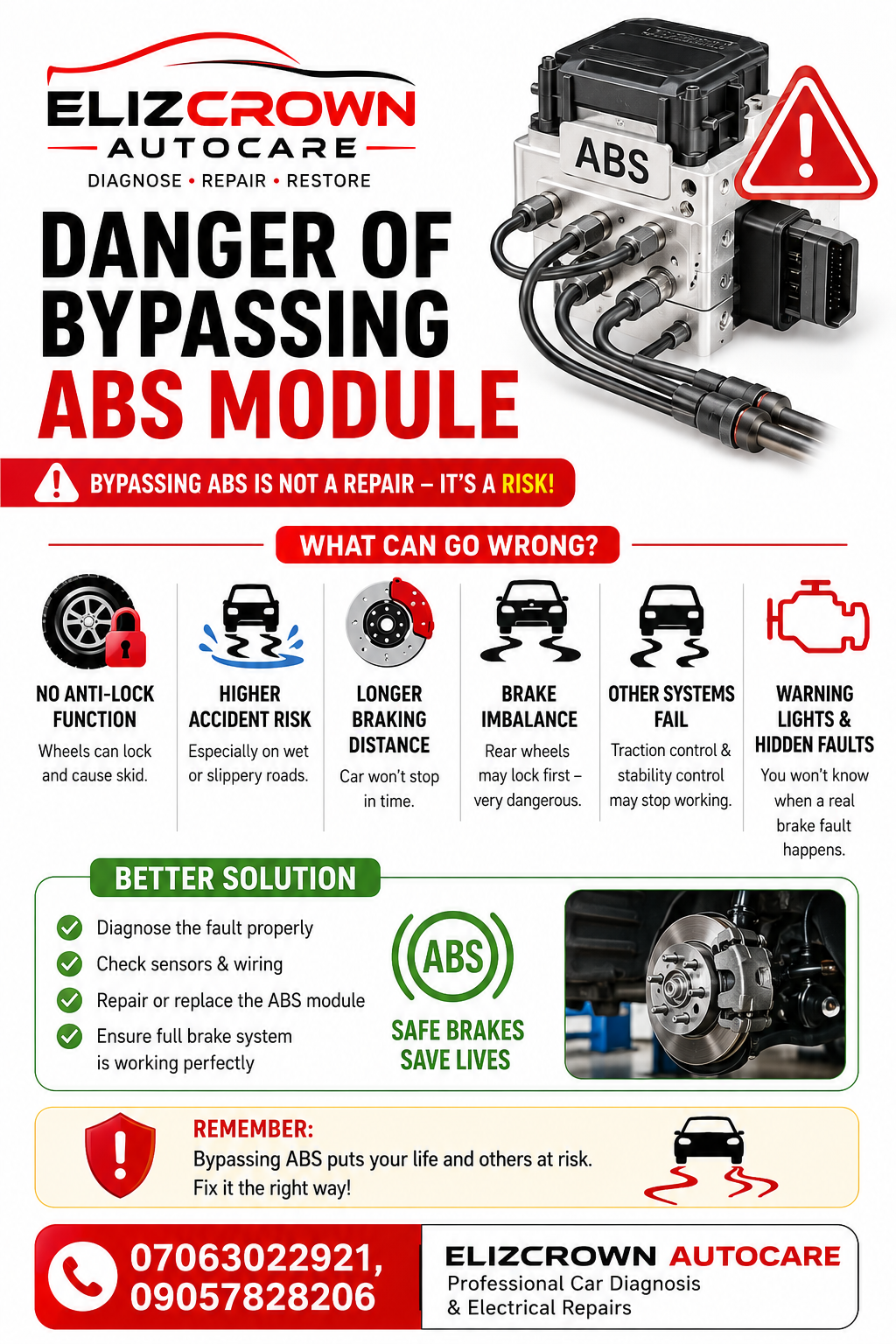
Bypassing an ABS control module is a serious safety risk. It might seem like a quick fix when there’s a fault, but it creates more problems than it solves—especially on Nigerian roads where sudden braking is common.
Here’s what you should know:
⚠️ Major Dangers of Bypassing ABS
1. Loss of Anti-lock Braking Function
The Anti-lock Braking System prevents wheel lock during hard braking.
If you bypass it, wheels can lock up → leading to:
Skidding
Loss of steering control
Longer stopping distance
2. Increased Accident Risk (Especially in Rain)
On wet or slippery roads, ABS is critical. Without it:
Your car can slide uncontrollably
Emergency braking becomes dangerous
3. Brake System Imbalance
Modern systems use Electronic Brakeforce Distribution with ABS.
Bypassing can cause:
Uneven braking force
Rear wheels locking first (very dangerous)
4. Warning Lights & Hidden Faults
Bypassing doesn’t fix the root problem:
ABS light may stay ON or be disabled incorrectly
You won’t know when a real brake fault happens
5. Damage to Other Systems
ABS is linked to:
Traction Control System
Electronic Stability Control
Bypassing can disable all of them → reducing overall vehicle stability.
6. Legal & Professional Risk:
Is not a professional repair method
Can make you liable if a customer has an accident
✅ Better Solution (What You Should Do Instead)
Run proper diagnosis (scan tool + wiring check)
Common issues:
Faulty wheel speed sensor
Broken wiring
Bad ABS pump/module
Repair or replace the faulty part
Perform proper bleeding and calibration
🔧 Practical Advice (From Experience)
If the ABS module is bad and customer cannot afford replacement:
Leave the system disconnected properly (not bypassed)
Inform the customer clearly: “No ABS – drive with caution”
Fix base braking system (pads, discs, fluid) to 100%
0 likes · 0 comments · 0 shares