Post by Charlx Bodun (@Godsol)
THE BEAUTY OF FAILURES
Failure is not the interruption of your journey—it is the architecture of it. 🚧✨
We’ve been conditioned to celebrate polished outcomes: the win, the applause, the visible success. But what is rarely honoured is the raw, unfiltered process that makes those moments possible. Failure sits at the centre of that process, not as an enemy, but as a master instructor—precise, honest, and uncompromising.
Failure strips away illusion. It tells you, without flattery, what doesn’t work. That kind of feedback is rare. In a world full of noise and validation, failure gives you clarity. It forces you to confront your assumptions, refine your methods, and rebuild with intention. That’s not weakness—that’s engineering at a higher level. 🔍
There is also a psychological transformation embedded in failure. The first time you fail, it feels personal. The second time, it feels painful. But over time, something shifts. You stop attaching your identity to outcomes. You begin to see failure as data, not a definition. That shift is powerful—it turns fear into curiosity.
Think about it: resilience is not built in comfort. Confidence is not formed in constant success. They are forged in moments where things fall apart and you decide—deliberately—to continue anyway. 🔥
Failure also develops depth. People who have failed—and reflected—carry a different kind of wisdom. They are less naive, more strategic, more grounded. They understand timing, patience, and the cost of shortcuts. They don’t just chase success—they are prepared for it.
And here’s the paradox: the more you try to avoid failure, the more you limit your growth. Playing it safe may protect your ego, but it restricts your potential. Every meaningful pursuit carries risk. Every bold step invites the possibility of falling short. But that’s exactly where expansion happens.
So instead of asking, “How do I avoid failure?” a better question is: “How do I fail intelligently?”
Fail fast enough to learn. Fail honestly enough to grow. Fail forward enough to improve.
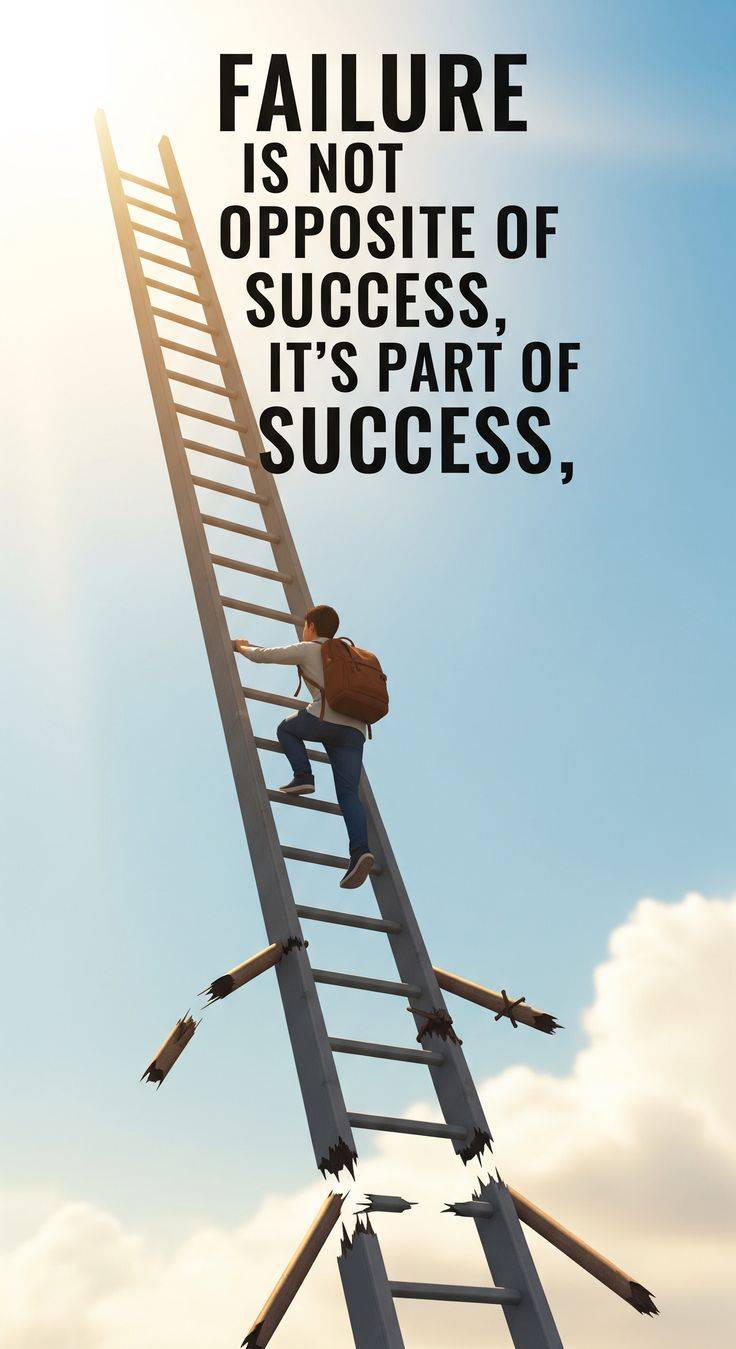
Because in the end, failure is not the opposite of success—it is a component of it. 🧩
If you can learn to embrace failure—not emotionally, but strategically—you gain an advantage most people never access. You stop fearing the process, and you start mastering it.
And that’s where real success begins.
0 likes · 0 comments · 0 shares