Post by Upperity wellness (@Ikwen)
Check comment section 👇
#acidrefluxrelief
#indigestionsolution
#healthcare
#fypシ #fypageシ #fypviral
0 likes · 0 comments · 0 shares
Comments
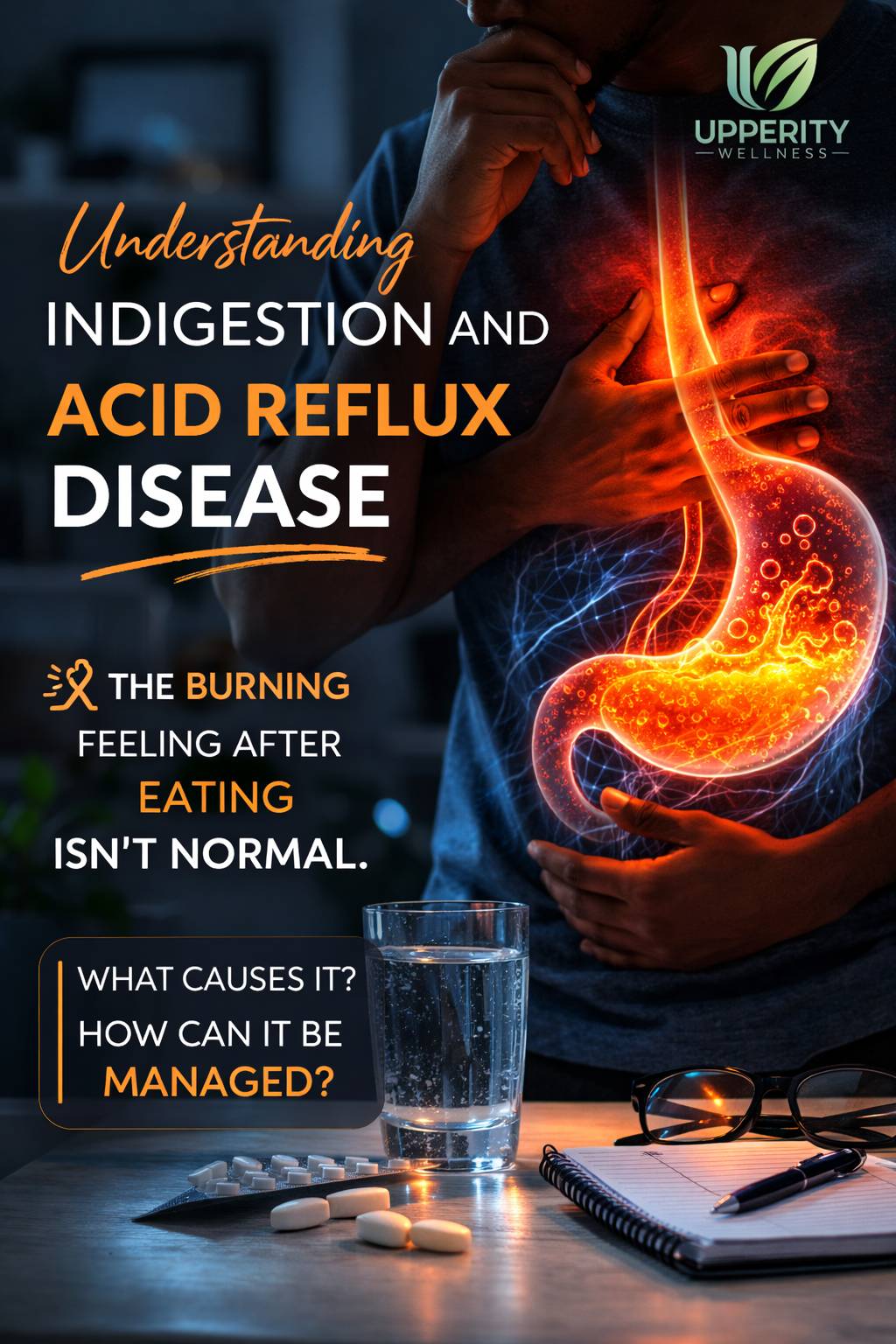
Upperity wellness: Indigestion is simply discomfort in the upper part of the stomach. It is not a disease on its own but a symptom that something is disturbing the digestive system. Many people describe it as a heavy, bloated feeling after eating, even when the meal was not large. Some feel full very quickly, experien...
Upperity wellness: Acid reflux is closely related but slightly different. It happens when stomach acid flows back into the oesophagus, the tube that carries food from the mouth to the stomach. Normally, a small valve called the lower oesophageal sphincter opens to allow food down and then closes immediately. When this...
Upperity wellness: The most common symptom of acid reflux is heartburn, a burning sensation in the chest that may worsen when lying down. Some people feel a sour or bitter taste in the mouth, regurgitation of food, chest discomfort, or even nighttime cough. Because of chest pain, reflux is sometimes mistaken for heart...
Upperity wellness: Indigestion symptoms often include early fullness, bloating, excessive belching, mild stomach pain, and nausea. Acid reflux symptoms focus more on chest burning, acid coming back up, throat irritation, and sour taste. Though different, both conditions are frequently linked to excess stomach acid or...
Upperity wellness: One major cause of both conditions is overeating. When the stomach is overloaded, acid production increases and pressure builds up, making reflux easier. Eating late at night and lying down immediately after meals also encourages acid to move upward into the chest.
Upperity wellness: Certain foods and drinks are common triggers. Spicy foods, fried meals, oily dishes, and excessive pepper can irritate the stomach. Coffee, alcohol, and carbonated drinks may worsen symptoms. Smoking weakens the lower oesophageal valve, while stress slows digestion and makes symptoms more noticeable...
Upperity wellness: Being overweight, especially with excess belly fat, increases abdominal pressure and pushes stomach contents upward. Some medications, particularly non-steroidal anti-inflammatory drugs (NSAIDs) like diclofenac and ibuprofen, can irritate the stomach lining and contribute to indigestion
Upperity wellness: Treatment often starts with antacids, which neutralize acid already present in the stomach and provide quick relief. For bloating and gas, simethicone helps by breaking down gas bubbles. These are useful for occasional or mild symptoms.
Upperity wellness: For more frequent or severe symptoms, doctors may prescribe acid-reducing medications such as H2 blockers or Proton Pump Inhibitors (PPIs). PPIs reduce acid production more effectively and are commonly used for persistent reflux. However, long-term use should be monitored by a healthcare professiona...
Upperity wellness: Lifestyle changes remain the foundation of long-term control. Eat smaller portions, avoid lying down for two to three hours after meals, reduce trigger foods, manage stress, stop smoking, and aim for healthy weight loss if necessary. Seek medical attention if symptoms are severe, persistent, or asso...