The School Had to Trend Before Anyone Remembered It Existed
By The Insight Desk with Ismail Auwal ·
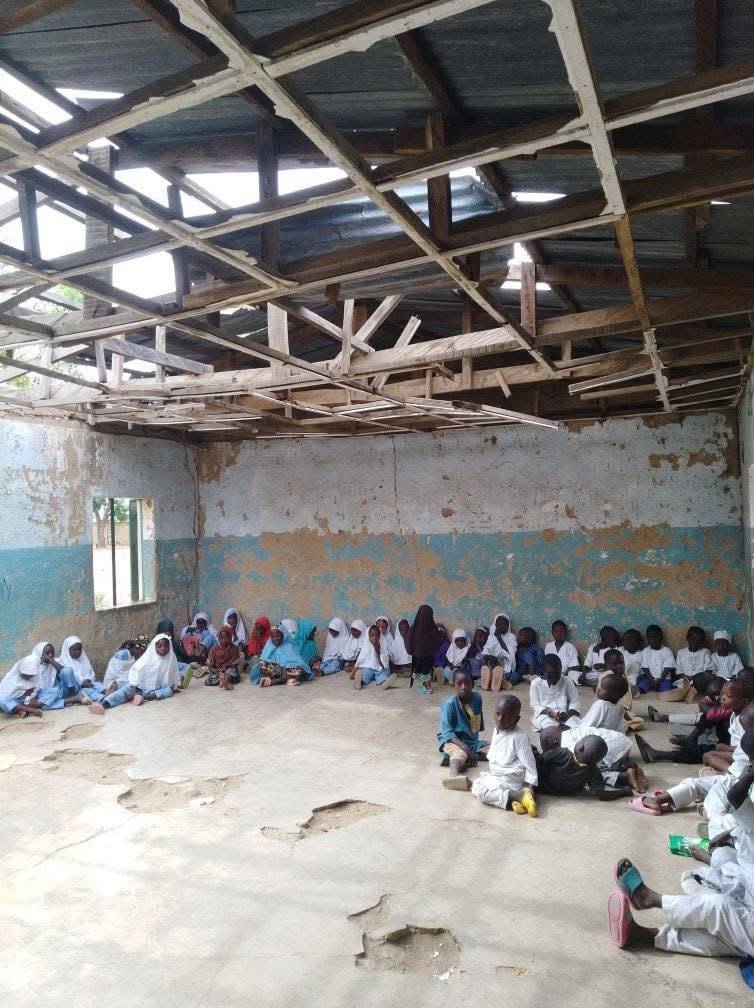
There was something painfully familiar about watching another public school in Kano become famous for all the wrong reasons. For the second time in just a few months, Governor Abba Kabir Yusuf ordered the total renovation of a government secondary school only after disturbing videos of its condition spread across social media. The first was Day Science College, Kano, my alma mater, and the second was a technical school under the same Science and Technical Schools Board, an institution that once represented the pride of public education in Northern Nigeria and produced generations of doctors, engineers, scientists and innovators who helped build Kano.When I first saw the videos from Day Science College, I found myself staring at the screen in disbelief. This was not just another public school; it was a place where thousands of young people, including myself, dreamt about becoming doctors, engineers and professionals capable of transforming society. Located barely a few minutes from the Kano State Government House, the school had deteriorated to a point where collapsed roofs, broken classrooms and abandoned facilities had become its defining features, all while existing almost in the shadow of political power.The outrage that followed was both encouraging and disturbing. Encouraging because citizens refused to stay silent as alumni, journalists and influencers collectively forced attention onto the school's condition. Disturbing because it suggested that without social media outrage, without viral videos and public embarrassment, one of Kano's most historic schools might have remained forgotten for many more years.Governor Abba Kabir Yusuf deserves recognition for responding decisively once the situation came to public attention. He personally visited the school, ordered a comprehensive renovation and ensured that work was completed within a relatively short period. In a political environment where many leaders often ignore criticism, his willingness to intervene deserves acknowledgement and should not be dismissed simply because legitimate questions remain.Yet only a few months later, history repeated itself. Another technical school under the same board became the latest symbol of educational decay after photographs and videos exposed classrooms that no child should ever be expected to learn inside. Once again, the discovery did not come through an inspection report, an education ministry assessment or an internal government monitoring system; it came from ordinary citizens armed with smartphones, forcing the government to respond after the damage had already become a public spectacle.These two incidents should concern us far beyond the question of whether the affected schools will now be renovated. They force us to ask whether our education system has quietly become reactive instead of proactive, waiting for institutions to collapse before attempting to rescue them. More importantly, they raise perhaps the most uncomfortable question of all: if these schools had never trended online, would anybody in government have known—or cared—that generations of children were learning under such conditions?The governor has repeatedly stated that his administration has renovated hundreds of schools across Kano, with some reports placing the number close to one thousand, although independent verification is still necessary. If that figure is accurate, it represents one of the largest school rehabilitation programmes undertaken by any recent administration in the state. However, these two viral schools also reveal something equally important: despite the ongoing renovations, the backlog of neglected schools remains enormous, suggesting that decades of underinvestment cannot be erased within a few years.After these incidents, I deliberately began paying more attention to public schools across Kano State. The more schools I visited, the more I realised that the two viral schools were not exceptions but reflections of a much deeper crisis affecting basic education across the state. There are communities where classrooms have become unsafe, schools have been abandoned entirely, roofs have disappeared, walls have cracked beyond repair and children now study in environments that no serious society should ever accept.The buildings themselves tell only part of the story. It is common to find classrooms with well over 200 or even 300 students squeezed into spaces originally designed for fewer than 50 pupils, making meaningful teaching almost impossible. Laboratories have become empty rooms, libraries have disappeared from many schools, instructional materials are scarce, and in numerous communities students complete their education without ever experiencing the practical learning that modern science and technology demand.The teachers are fighting a battle they were never equipped to win. Many work under extremely difficult conditions, with inadequate welfare, insufficient teaching materials and very limited opportunities for professional development. Even the most dedicated teacher cannot effectively educate hundreds of children at once while lacking the resources needed to prepare them for an increasingly competitive world.This crisis is not unique to Kano. From Sokoto to Zamfara, from Kebbi to Yobe, from Bauchi to Niger State, remarkably similar stories unfold every day inside public schools that rarely receive national attention. Northern Nigeria continues to carry one of the highest burdens of out-of-school children anywhere in the world, while the schools that remain operational are themselves struggling under the weight of decades of neglect, population growth and inconsistent public investment.This is why our public spending priorities deserve much deeper scrutiny than they currently receive. While schools continue to collapse and healthcare systems remain overstretched, some state governments continue allocating billions of naira to sponsor mass weddings for thousands of couples. Helping vulnerable citizens marry is not inherently wrong, particularly where poverty prevents many from doing so, but responsible governance is ultimately measured by the choices leaders make when resources are limited.Every marriage potentially creates another family. Every family eventually produces children who will require classrooms, teachers, hospitals, immunisation, antenatal care, clean water, employment opportunities and countless other public services throughout their lives. Have our governors paused to ask where these children will go to school, whether enough teachers exist to educate them, or whether the nearest primary healthcare centre can even safely deliver them into the world?Development cannot be reduced to ceremonies or headlines. A government that spends generously on helping adults get married must demonstrate equal commitment to educating the children born into those marriages and providing healthcare that keeps mothers and infants alive. Otherwise, public policy merely celebrates the beginning of life while neglecting everything necessary to sustain it afterwards.Perhaps this helps explain why many parts of Northern Nigeria continue to struggle with poverty despite having some of Africa's youngest and fastest-growing populations. Population is only an asset when governments consistently invest in human capital through quality education, accessible healthcare and economic opportunity. Without those investments, rapid population growth simply places greater pressure on already fragile public institutions, creating cycles of poverty that become increasingly difficult to break.History offers overwhelming evidence that no nation has escaped underdevelopment without first transforming its education system. South Korea invested heavily in schools before becoming an industrial giant. Singapore built world-class classrooms long before becoming a global financial hub. Even countries across Africa that are now making steady economic progress have increasingly recognised that classrooms—not political rallies—are where national transformation truly begins.Nigeria often speaks about industrialisation, digital innovation and artificial intelligence, yet these ambitions cannot be realised by children studying under leaking roofs, sharing outdated textbooks or sitting three to a desk in overcrowded classrooms. Every abandoned school represents more than a failed government project; it represents doctors who will never practise medicine, engineers who will never build roads, scientists who will never make discoveries and entrepreneurs whose ideas may never leave the classroom because the classroom itself failed them.The solution begins with changing how governments define success. Every state should maintain a live database showing the condition of every public school, supported by regular independent inspections instead of waiting for schools to become social media trends. Governments must invest simultaneously in infrastructure, teacher recruitment, teacher welfare, instructional materials, digital learning and technical education while ensuring that healthcare and population planning evolve alongside educational expansion.Governor Abba Kabir Yusuf has demonstrated that he is willing to respond when confronted with evidence, and that willingness deserves genuine praise. The greater challenge now is building institutions capable of identifying problems before they become public scandals, because good governance should not depend on viral videos. A society that waits for schools to trend before fixing them has already allowed failure to become part of its governance model, and until that changes, Nigeria's greatest natural resource—its young people—will remain its most neglected.