Millions of Africans Cannot Afford a Healthy Diet in the World’s Richest Continent
By The Insight Desk with Ismail Auwal ·
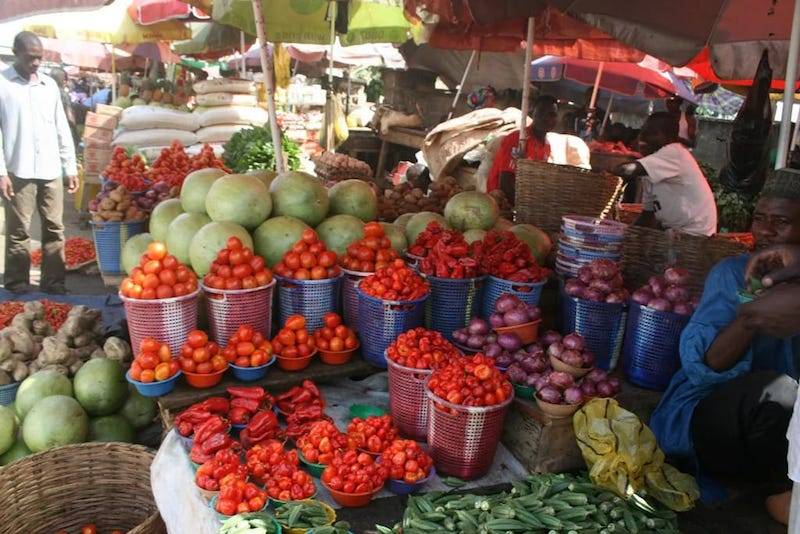
Africa is rich in land, minerals, water, sunlight and human labour. It contains countries that export oil, gas, gold, cocoa, coffee and other commodities to the world. Yet most people on the continent cannot afford the food required to maintain a healthy life.The 2026 State of Food Security and Nutrition in the World report estimates that 2.69 billion people could not afford a healthy diet in 2025. The global figure fell from 2.97 billion in 2021, but Africa moved in the opposite direction. About 66.6 per cent of the continent’s population could not afford a healthy diet, more than twice the levels recorded in Asia and Latin America and the Caribbean.This means that close to seven out of every ten Africans lack the income needed to buy a balanced combination of grains, vegetables, fruits, protein and other nutritious foods. Many of them eat every day, but the meals available to them do not meet their nutritional needs. Their problem is not always the complete absence of food; it is the absence of choice.That distinction matters. Hunger is often presented as an empty plate, but malnutrition can exist on a full plate. A person can consume enough calories to control hunger while lacking the nutrients needed for growth, learning, immunity and productivity.The market exposes the crisisThe crisis can be seen in markets across African cities and rural communities. Food is present, but household incomes have lost the race against prices. Families stand before stalls filled with eggs, fruits, fish, meat and vegetables, yet leave with the few items their earnings can cover.A mother may reduce the number of eggs she buys because transport fares have increased. A father may choose a large measure of grain over vegetables and protein because the grain can feed more people for less money. These are not choices based on preference; they are decisions produced by low wages, unstable incomes and rising living costs.The poor do not need lectures on balanced diets when the structure of the economy has placed those diets beyond their reach. They know that children need eggs, milk, vegetables, fish and fruits. The problem is that knowing what to eat does not provide the income required to buy it.A healthy diet protects people against malnutrition and reduces the risk of diseases such as diabetes, heart disease, stroke and cancer. When most Africans cannot afford such a diet, the continent is not facing a food issue alone. It is facing a public health, education and economic crisis.African governments often measure progress through gross domestic product, public revenue, foreign investment and infrastructure projects. These indicators have value, but they do not show how economic policy affects the daily life of a household. A country can record economic growth while its citizens lose the ability to buy nutritious food.The affordability of a healthy diet should become a central measure of development. It shows whether wages are adequate, whether prices are stable and whether economic growth reaches ordinary people. It also reveals whether agriculture, transport, energy and social protection systems are working together.A road project should not be judged only by its length. It should also be judged by whether it reduces the cost of moving tomatoes, grains, milk and livestock from farms to markets. An electricity project should be judged by whether it supports cold storage, food processing and the preservation of perishable goods.The same standard should apply to agricultural budgets. Governments announce fertiliser programmes, irrigation projects, farm loans and support for smallholder farmers each year. The test is whether these interventions increase production, reduce waste and lower the cost of food for consumers.When food remains expensive after years of agricultural programmes, there is a gap between policy and outcome. That gap may come from poor planning, weak implementation, political interference or corruption. Whatever the cause, the cost is paid by families at the market.Insecurity is also a food crisisFood affordability begins with production, and production depends on security. Across parts of Nigeria, Sudan, the Sahel, the Horn of Africa and the Democratic Republic of the Congo, conflict has displaced farming communities and disrupted trade. Farmers cannot produce at full capacity when they risk attack, abduction or death on the way to their fields.The effects move through the food system. A farmer who cultivates fewer hectares sends fewer crops to the market. A transporter who travels through an unsafe route adds the cost of risk to the price charged to traders.The trader then transfers that cost to the consumer. By the time the food reaches a family, the price reflects not only the cost of production but also the failure to protect farms and transport routes. Insecurity enters the kitchen through higher prices and reduced supply.Security policy must therefore include food production as an outcome. Restoring safety to farming communities can increase supply, protect rural livelihoods and reduce pressure on prices. Protecting highways and rural roads can also improve the movement of food between areas of surplus and areas of shortage.The food insecurity crisis in the Greater Horn of Africa shows the connection between conflict, displacement, health and nutrition. The World Health Organization continues to classify the situation as an emergency affecting several countries in the region. This is evidence that food security cannot be separated from stability, healthcare and functioning public institutions.Weak infrastructure raises food pricesAfrica loses large quantities of food between the farm and the market. Poor roads delay transportation, limited storage exposes crops to damage and unreliable electricity restricts refrigeration. These weaknesses reduce the quantity of food available for sale and increase the price of what survives.The farmer bears the first loss when produce spoils after harvest. The trader bears another loss during transportation and storage. The consumer pays for both losses through higher prices.This is why food policy cannot focus on seeds and fertiliser alone. It must include rural roads, storage facilities, processing centres, electricity, water and market access. Production without an efficient distribution system will not make healthy food affordable.The problem also affects the type of food available to poor households. Staple foods with longer shelf lives may remain within reach, while fruits, vegetables, dairy products, meat and fish become more expensive because they require faster transportation or cold storage. The result is a diet built around what can survive a weak system rather than what the body needs.This creates a direct link between infrastructure and nutrition. A broken rural road can reduce the supply of vegetables in a city. An unreliable electricity system can raise the cost of fish, milk and meat across an entire region.Corruption takes food from householdsCorruption in the food system does not end with missing public funds. It appears in failed irrigation schemes, abandoned rural roads, inflated contracts and agricultural inputs diverted from farmers. It reduces production and raises the cost of food.A fertiliser programme can receive a large budget while farmers struggle to obtain fertiliser at the official price. A farm loan scheme can be announced as support for smallholders while access is controlled by political networks. An irrigation project can remain incomplete after public funds have been released.Each failure reduces the capacity of farmers to produce. Lower production creates scarcity, scarcity raises prices and higher prices force families to remove nutritious foods from their meals. The path from corruption to malnutrition is direct.The fight against corruption should therefore be linked to food security. Public officials who divert agricultural funds are not stealing from an abstract budget. They are taking resources meant to increase harvests, protect livelihoods and make food affordable.Accountability also requires better measurement. Governments should publish the number of farmers reached, the location of completed projects, the cost of each intervention and its impact on production and prices. Announcements are not evidence of success.Hunger has changed its appearanceThe traditional image of hunger is a person with nothing to eat. But the current crisis is more complex. It includes people who eat every day but are trapped in diets that cannot support healthy bodies and minds.A child may eat enough food to stop crying but still lack the nutrients needed for physical and mental development. An adult may consume enough calories to continue working but remain vulnerable to illness because the diet lacks variety. A household may therefore escape starvation while remaining trapped in malnutrition.Africa now faces several forms of malnutrition at the same time. Some people do not get enough food, others consume meals that lack nutrients, while many depend on cheap products high in sugar, salt or unhealthy fats. Hunger, nutrient deficiency and diet-related diseases can exist within the same community.This should change the way African governments design food policies. Success cannot be measured only by the quantity of grain produced or distributed. It must also be measured by whether families can afford diets that protect them from disease and allow children to develop.Malnutrition weakens Africa’s futureThe inability to afford a healthy diet has consequences beyond the household. Poor nutrition affects physical growth, resistance to disease and the capacity to learn. A child who lacks adequate nutrition may enter school at a disadvantage that lasts for years.When this affects millions of children, the consequences become national. Schools struggle with pupils who cannot concentrate, health systems carry illnesses linked to poor nutrition and economies lose the productivity of people whose potential was weakened early in life. What begins as an inadequate meal becomes a long-term development burden.Africa cannot build competitive economies while a large part of its population lacks the nutrition required to learn and work. It cannot speak about innovation, industrialisation and global competitiveness while children are entering classrooms hungry or undernourished. Human capital begins with the food available in the home.The cost of inaction will not be limited to hospitals or humanitarian programmes. It will be seen in weaker educational outcomes, lower workplace productivity and generations unable to achieve their full potential. A continent that fails to nourish its children reduces the strength of its own future.Africa’s young population is often described as one of its greatest assets. That claim depends on whether young people receive adequate food, education and healthcare. A population cannot become a demographic dividend when poor nutrition limits its potential from childhood.Producing more food is not enoughAfrican food policy has often focused on increasing the volume of staple crops. More production is necessary, but it is not sufficient. A country can produce more maize, rice or cassava while families remain unable to afford fruits, vegetables and protein.Governments must shift from food production targets to nutrition targets. The question should not be limited to how many tonnes of grain were harvested. It should also ask whether the cost of a balanced diet fell and whether poor households gained access to a wider range of foods.This requires support for farmers who produce vegetables, fruits, livestock, fish and other nutrient-rich foods. It also requires investment in local processing and storage. A food system centred on a narrow group of staples may control hunger without addressing malnutrition.The private sector also has a role in this transition. Investment in cold storage, transport, processing and agricultural technology can reduce losses and expand access. But public policy must prevent markets from excluding low-income households.Food should not become more available while remaining unaffordable. Supply must rise, distribution costs must fall and household incomes must improve. These three conditions must be addressed together.Income is part of food securityThe affordability crisis is also an income crisis. Markets can be full while families remain hungry because their earnings are too low. Food security depends on purchasing power as much as it depends on production.Inflation reduces the value of wages and informal earnings. When food, transport, rent, electricity and healthcare costs rise at the same time, households cut spending where they can. Nutritious foods are often among the first items removed.This is why governments must connect agricultural policy with employment, wages and social protection. School feeding programmes, maternal nutrition support and targeted assistance for poor households can protect vulnerable groups. These measures should be treated as investments in human development.Social protection cannot replace a productive economy. Families need stable jobs, fair earnings and opportunities to build assets. A food system will not remain secure when most households depend on temporary assistance.Economic reforms should also be assessed through their effect on food affordability. A policy may improve a national balance sheet while placing new costs on poor households. Governments must measure both outcomes.Africa’s wealth must produce human welfareAfrica’s wealth is not in doubt. The continent has fertile land, rivers, minerals, energy resources, farmers, entrepreneurs and a young workforce. The question is why these assets have not produced basic security for most of its people.Natural wealth does not become development on its own. It must pass through institutions that can plan, invest, regulate and deliver public services. Where those institutions are weak, resources create profit for a small group while the majority remain poor.The inability of 66.6 per cent of Africans to afford a healthy diet is evidence of this institutional failure. It shows that wealth exists without broad access to its benefits. It also shows that economic growth has not created enough protection against hunger, inflation and income loss.The continent does not need another set of promises about becoming the world’s food basket. It needs secure farms, functional roads, irrigation, storage, electricity, fair markets and incomes that allow families to buy what is produced. It also needs public institutions that can implement these priorities without waste.The real measure of progress is not found in the number of policies launched. It is found in the amount and quality of food a family can place on its table. Until healthy diets become affordable to ordinary Africans, the continent’s wealth will remain disconnected from the lives of its people.A mother who removes eggs, vegetables or fish from her basket because the total is too high is not making a lifestyle choice. She is responding to the failure of the economic and food systems around her. Her basket is an assessment of African development, and at present, that assessment is poor.