How Gaza Changed the Way the World Watches Football
By The Insight Desk with Ismail Auwal ·
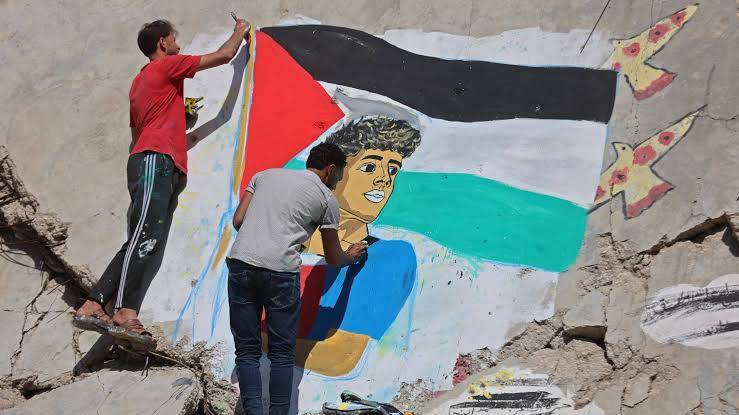
I do not watch football. I cannot tell you which manager prefers a high press, which striker has scored the most goals this season or which club has won the most trophies. Yet over the past few weeks, I have spent an unusual amount of time following football supporters on LekeeLekee, X, Facebook, TikTok and Instagram. I was not watching the matches. I was watching the people.What I discovered had very little to do with football itself. It had everything to do with humanity. Somewhere between the opening whistle and Spain’s final celebrations, I realized that Gaza had quietly changed not only global politics but also the way millions of people experience the world's most popular sport.For generations, football supporters chose teams for familiar reasons. Some inherited their loyalties from their parents. Others admired gifted players or identified with a nation's style of play. International tournaments were usually about rivalries, tactics, history and moments of sporting brilliance. Politics occasionally entered the conversation, but it rarely defined how ordinary supporters chose their teams.This World Cup felt remarkably different. As I scrolled through thousands of posts, I found people explaining their support in language that sounded less like football analysis and more like moral reflection. They were not talking about formations or possession statistics. They were talking about justice, solidarity, compassion and shared humanity. For many, supporting a team had become an expression of values rather than simply a prediction about who would play better football. One theme appeared again and again. Gaza.Almost every major conversation surrounding Spain's journey through the tournament eventually returned to Gaza. Some supporters spoke about Spain's political positions. Others referred to gestures by Spanish public figures and footballers that they believed demonstrated solidarity with Palestinians. Still others shared videos of celebrations in Gaza after Spain's victories, describing those scenes as the reason they wanted Spain to lift the trophy. Football and conflict had become inseparable in ways that would have seemed unusual only a few years ago.What fascinated me was not whether these supporters were right or wrong. It was that they were making these connections at all. They were choosing football teams through the lens of events taking place thousands of kilometres away. A match played inside a stadium had become a conversation about people living under unimaginable hardship. That alone says something profound about how global conflicts now shape everyday human behaviour.Wars have always influenced politics and diplomacy. They affect economies, elections and international relations. What is less frequently discussed is how they reshape ordinary cultural experiences. They change what music people listen to, which companies they support, where they travel, the films they celebrate and, increasingly, the football teams they cheer. Conflict no longer remains confined to battlefields. Through digital platforms, it travels into living rooms, smartphones and conversations across continents.Social media has accelerated this transformation. Previous generations watched football largely through television broadcasts and newspaper reports. Today's supporters experience tournaments alongside millions of online conversations unfolding in real time. A goal is immediately followed by political commentary. A celebration is interpreted through global events. A player's gesture becomes a worldwide discussion within minutes. The match itself is only one part of a much larger digital experience.That digital experience has made football more human than many of us realize. When supporters explain why they are backing a particular team, they are often revealing something about themselves. They are sharing their fears, hopes, convictions and identities. The conversation is no longer simply about sport. It becomes an opportunity to express what kind of world they wish to see.The scenes from Gaza following Spain's victory captured this transformation with striking clarity. Images of children, families and young people celebrating spread rapidly across social media. Those celebrations resonated far beyond football because they reminded millions that joy can still exist amid immense suffering. For many viewers, those images were not simply about a football result. They were about the enduring human desire to feel seen, acknowledged and connected to the wider world.That is perhaps why I found myself paying closer attention to the supporters than to the footballers. The players were competing for a trophy, but the supporters were telling a much larger story. Their comments revealed how people increasingly use global sporting events to communicate moral beliefs, political sympathies and emotional connections. Football had become a language through which they explained who they were.None of this means that everyone watched the tournament for the same reasons. Millions of supporters continued to enjoy football simply because they love the game. Others supported teams because of family heritage, friendships or admiration for exceptional players. Those motivations remain entirely valid. Yet alongside those traditional loyalties, another layer has clearly emerged, one shaped by global events and amplified by social media.This evolution reflects something broader about our time. We live in an era where distance matters less than connection. A child in Gaza, a football fan in Lagos, a student in Jakarta and a family in São Paulo can all watch the same match while participating in the same online conversation. Geography still separates people physically, but digital platforms increasingly unite them emotionally. That shared emotional space allows conflicts, humanitarian crises and symbols of solidarity to influence audiences far beyond the regions where those events occur.Perhaps that explains why I kept reading comments long after the matches had ended. I was not searching for football highlights. I was searching for patterns in human behaviour. I wanted to understand why so many people were attaching deeper meanings to ninety minutes of sport. What I found was a reminder that football remains one of the few global experiences capable of bringing together people who would otherwise never share the same conversation.In many ways, this World Cup was never just about determining the best football team. It became a reflection of how interconnected our world has become. The stadium remained the centre of attention, but the emotions surrounding it stretched far beyond the pitch. Every celebration carried different meanings for different communities. Every victory became part of larger conversations about identity, dignity and belonging.I still do not watch football in the traditional sense. I cannot analyse a tactical system or explain why one midfielder outperformed another. But after following supporters throughout this tournament, I have come to appreciate something I had overlooked for years. Football is not merely a game watched by billions. It is one of humanity's greatest storytelling platforms, where people project their values, hopes and struggles onto a common stage.If this World Cup taught me anything, it is that Gaza has changed more than diplomatic conversations and international politics. It has changed how millions of people relate to football itself. Increasingly, supporters are no longer choosing teams only because of what happens on the pitch. They are also choosing them because of what those teams, their players or their countries have come to represent beyond it. In today's interconnected world, the biggest story in football may no longer be who wins the trophy, but what that victory means to people far away from the stadium.