Corruption, Not Poverty, Is Africa's Greatest Development Crisis II
By The Insight Desk with Ismail Auwal ·
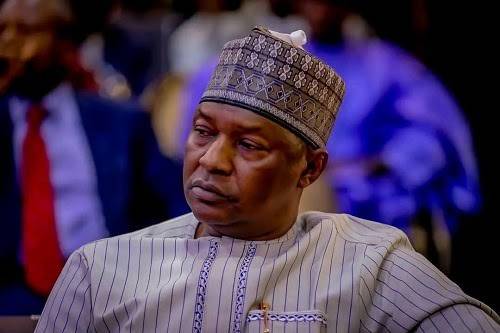
If corruption steals hospitals, schools and roads, it also steals something less visible but equally important: confidence. Citizens gradually lose faith in government when they repeatedly hear about budgets running into billions while their daily realities remain unchanged. Investors become cautious when contracts are uncertain, procurement processes appear compromised and institutions fail to inspire confidence. Over time, corruption erodes not only public resources but also public trust, and without trust, sustainable development becomes increasingly difficult.This is why the fight against corruption should never be reduced to arrests, media headlines or political rivalry. The objective is not simply to punish wrongdoing but to protect development itself. Every successful anti-corruption effort should ultimately be measured by whether more children attend school, more mothers survive childbirth, more communities gain access to clean water and more young people find meaningful employment. Accountability is valuable because it protects the future, not merely because it punishes the past.The recent judgment involving former Attorney-General of the Federation and Minister of Justice, Abubakar Malami, offers an opportunity to rethink how Africa discusses corruption. The Federal High Court ordered the final forfeiture of 48 properties linked to the former minister while releasing nine others after determining that there was insufficient basis for their forfeiture. Whatever legal processes may follow, the judgment demonstrates the importance of allowing courts to determine disputes through evidence rather than political rhetoric.That distinction matters because anti-corruption efforts derive their legitimacy from due process. Every individual accused of wrongdoing deserves a fair hearing, while every anti-corruption institution must equally be allowed to investigate allegations without intimidation or political interference. Courts exist precisely to weigh evidence, distinguish lawful wealth from unlawful enrichment and protect the rights of all parties involved. That commitment to the rule of law strengthens democracy and gives citizens confidence that justice is not selective.Yet beyond the legal questions lies a much larger development question. Reports associated with the proceedings placed the value of the properties initially targeted at approximately ₦213.2 billion. Whether one looks at that figure from a legal, political or economic perspective, it represents an extraordinary amount of public wealth. The real tragedy is not simply that such resources became the subject of judicial proceedings. The tragedy is what such resources could have achieved if fully invested in public development.Imagine what approximately ₦213.2 billion could mean for communities that still lack basic healthcare. Across Nigeria and much of Africa, thousands of primary healthcare centres require renovation, equipment or personnel. Many operate without reliable electricity, essential medicines or qualified health workers. For expectant mothers, elderly citizens and children, the absence of these facilities often determines whether illness becomes recovery or tragedy.Imagine the same resources invested in education. Hundreds of schools could be rehabilitated or newly constructed with modern classrooms, science laboratories, libraries and digital learning facilities. Teachers could receive better training and improved welfare while technical institutions prepare young Africans for careers in manufacturing, engineering, agriculture and technology. Rather than producing another generation constrained by poor educational outcomes, such investments could produce the innovators and entrepreneurs who drive long-term economic growth.Consider infrastructure. Across Africa, poor road networks continue to isolate farming communities from markets, increase transportation costs and discourage industrial investment. Electricity shortages force businesses to depend on expensive generators, making African products less competitive globally. Water infrastructure remains inadequate in many rural and urban communities, exposing millions to preventable diseases and limiting economic productivity.Now imagine resources worth ₦213.2 billion directed towards solving these problems. Roads could connect isolated communities to commercial centres. Rural electrification projects could power small industries and encourage local manufacturing. Clean water schemes could dramatically improve public health. Digital infrastructure could connect schools, businesses and healthcare facilities to the wider economy. Development is not simply about spending money; it is about directing resources towards priorities that improve people's lives.Agriculture would also benefit enormously from investments of this magnitude. Africa continues to import billions of dollars' worth of food annually despite possessing some of the world's most fertile agricultural land. Farmers frequently lose significant portions of their harvest because of inadequate storage facilities, poor transportation networks and limited processing capacity. Irrigation projects remain incomplete in many regions despite recurring droughts and changing climate conditions.If resources equivalent to ₦213.2 billion were consistently invested in agriculture, the continent could significantly increase food production, reduce imports, strengthen rural incomes and improve food security. Farmers would have better access to modern equipment, extension services, storage facilities and rural infrastructure. Agriculture would become not merely a means of subsistence but a driver of industrialisation through agro-processing and value addition.The consequences extend beyond economics. Corruption also affects national security. Poverty, unemployment and weak institutions create conditions that criminal networks, insurgent groups and organised crime often exploit. Communities without opportunities become more vulnerable to recruitment by violent actors. Young people without employment become easier targets for criminal organisations promising income and identity. Development and security therefore reinforce one another, while corruption undermines both.This is why Africa's development conversation requires a fundamental shift. Too often, governments celebrate ambitious budgets without equally celebrating transparent implementation. Development plans are announced with great optimism, but citizens rarely measure success by completed projects or improved public services. Instead, politics frequently revolves around personalities rather than performance. The continent cannot afford to continue treating corruption as merely another political issue when its consequences affect every aspect of development.International development partners have repeatedly emphasised governance as the foundation of sustainable growth. The African Union's Agenda 2063 envisions a prosperous and integrated continent driven by its own citizens. The Sustainable Development Goals seek to eliminate poverty, improve healthcare, expand education and promote inclusive economic growth. These ambitions remain achievable, but they depend upon one essential condition: public resources must consistently reach public priorities.This explains why corruption should be understood as Africa's greatest development crisis rather than simply a financial crime. Corruption delays every hospital that should have opened, every school that should have welcomed children, every road that should have connected communities and every power project that should have energised industries. It converts national wealth into private accumulation while leaving millions without the services that public institutions exist to provide.The lesson from the Malami case therefore extends beyond one individual or one institution. Whether the subject is a former minister, governor, legislator or local government official, the central question should remain the same. What opportunities were lost? What communities remained underserved? What development projects failed to materialise? Measuring corruption solely by the amount allegedly diverted understates its true cost. Its real cost is measured in human potential that was never realised.Africans have become accustomed to hearing figures running into billions and even trillions. We discuss them as though they exist only in government accounts or court documents. Yet every large corruption case should prompt a different calculation. Instead of asking only how much was allegedly stolen, we should ask how many hospitals could have been built, how many schools could have been equipped, how many kilometres of roads could have connected forgotten communities and how many young people could have found employment through productive investment.Ultimately, Africa does not suffer from a shortage of ideas, natural resources or human talent. It suffers from a shortage of accountability. The continent has produced ambitious development blueprints, attracted international investment and demonstrated remarkable resilience in the face of adversity. What has consistently undermined these efforts is the failure to ensure that public wealth serves public purposes.Until corruption is confronted with the seriousness it deserves, Africa's development ambitions will remain perpetually unfinished. The continent will continue launching impressive strategies while communities wait for clinics that never open, schools that never receive funding and roads that never reach completion. Development cannot flourish where accountability is absent because corruption quietly consumes the very resources required to build a better future.Perhaps that is the most important lesson from the figure ₦213.2 billion. It is not simply a valuation attached to a court case. It is a reminder of what Africa stands to lose whenever public resources are diverted from public good. It is the measure of hospitals that never treated patients, classrooms that never welcomed children, irrigation schemes that never reached farmers, factories that never employed graduates and opportunities that never became reality.Africa's greatest challenge, therefore, is not the absence of wealth. It is ensuring that wealth reaches the people. The continent does not need another generation of speeches promising transformation. It needs a generation of governance that understands that every naira, every cedi, every shilling and every rand entrusted to public office represents a promise made to citizens. Breaking that promise does not merely violate the law. It postpones the future of an entire continent.