Corruption, Not Poverty, Is Africa's Greatest Development Crisis
By The Insight Desk with Ismail Auwal ·
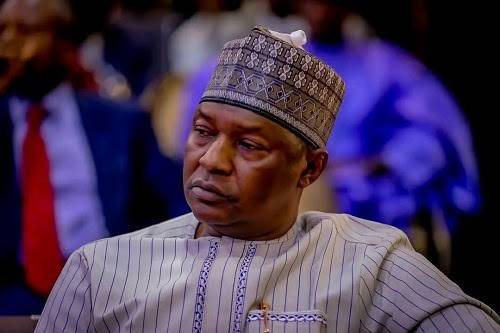
There is something deceptive about large numbers. When Nigerians hear figures running into billions of naira, the mind often struggles to appreciate their true meaning. The numbers become political talking points, court exhibits or newspaper headlines, but rarely do they become real. They lose their human face, and with it, the true cost of corruption disappears from public consciousness.The recent judgment of a Nigerian Federal High Court ordering the final forfeiture of 48 properties linked to former Attorney-General of the Federation and Minister of Justice, Abubakar Malami, has once again brought corruption into the national conversation. Earlier proceedings had placed the value of the properties initially targeted at approximately ₦213.2 billion, an amount so enormous that it is almost impossible for an ordinary citizen to comprehend. The public debate has understandably centred on the personalities involved, the legal arguments presented and the implications for Nigeria's anti-corruption campaign.Yet the most important question may not be whether one individual wins or loses in court. The more profound question is this: what could approximately ₦213.2 billion have done if it had been invested in development instead? That question shifts the conversation from politics to people, from personalities to progress, and from accusations to opportunity. It forces us to measure corruption not by the money allegedly diverted, but by the future that was denied.This is the conversation Africa has largely failed to have. Across the continent, corruption is often discussed as a criminal offence or a political weapon. Governments celebrate arrests, opposition parties celebrate scandals, and supporters defend those they admire. Meanwhile, the real victims rarely feature in the discussion. They are the children learning under leaking roofs, the pregnant woman travelling fifty kilometres to reach the nearest clinic, the farmer whose produce rots because there is no road to the market, and the graduate searching endlessly for work in an economy that never received the investment it deserved.For decades, Africa has been described as poor. International organisations publish reports ranking countries by poverty levels, human development, healthcare outcomes and literacy rates. Donors pledge billions of dollars, governments launch ambitious development plans, and global conferences produce declarations promising a better future. Yet despite possessing extraordinary natural resources and one of the youngest populations in the world, much of Africa continues to struggle with problems that many regions solved decades ago.The continent is not poor because it lacks wealth. It is poor because too much of its wealth never reaches the people for whom it was intended. Africa holds vast reserves of oil, gas, gold, diamonds, cobalt, lithium, fertile agricultural land and an energetic workforce capable of transforming its economies. If natural resources alone determined prosperity, Africa would already rank among the world's most developed regions. Instead, it continues to battle poor infrastructure, weak healthcare systems, inadequate education and widespread unemployment.This is why corruption should never be viewed simply as the theft of public funds. It is the theft of development itself. Every naira, cedi, shilling or rand diverted from public service represents opportunities that disappear forever. Every inflated contract, abandoned project, fictitious procurement exercise or misappropriated budget creates consequences that extend far beyond financial statements. Corruption delays development by years, sometimes by generations.Take healthcare as an example. Across Africa, millions of people still live without access to functional primary healthcare centres. Rural communities continue to depend on poorly equipped clinics or travel long distances to seek basic medical attention. Women die during childbirth because essential emergency services are unavailable. Children succumb to diseases that modern medicine has long learned to prevent or treat. These tragedies are often attributed to poverty, but poverty alone does not explain why healthcare systems remain underdeveloped despite decades of public spending.Now imagine what approximately ₦213.2 billion could mean if channelled into primary healthcare. It could finance the construction and equipping of hundreds of modern primary healthcare centres across underserved communities. It could procure ambulances, diagnostic equipment and life-saving medicines. It could recruit thousands of doctors, nurses, midwives and community health workers while improving their welfare. For millions of Africans, the difference between life and death is often not advanced technology but simply the availability of a functioning clinic within reasonable distance.Education presents another equally compelling picture. Africa has the youngest population in the world, yet millions of children remain outside the classroom. Many schools operate without libraries, laboratories, electricity or digital learning facilities. Teachers frequently work in difficult conditions with inadequate teaching materials, while overcrowded classrooms make effective learning almost impossible. These are not merely educational shortcomings; they are symptoms of governance failures.Imagine the possibilities if resources on the scale of ₦213.2 billion had been consistently invested in education. Hundreds of modern schools could be built or rehabilitated. Technical colleges could prepare young people for careers in engineering, manufacturing and technology. Teachers could receive better training, improved remuneration and access to modern teaching resources. Scholarships could support talented students from disadvantaged communities, creating a generation capable of competing in a rapidly changing global economy.Infrastructure tells an equally painful story. Across much of Africa, poor roads continue to isolate rural communities from economic opportunities. Farmers lose substantial portions of their harvest because they cannot transport produce to markets in time. Businesses spend enormous amounts generating their own electricity because national power systems remain unreliable. Manufacturers struggle to compete internationally because logistics costs are among the highest in the world. These challenges reduce productivity, discourage investment and slow economic growth.Yet infrastructure does not collapse because Africa lacks engineers or construction companies. It often deteriorates because resources meant for development fail to reach their intended destination. Every abandoned road project, every inflated construction contract and every unfinished bridge represents more than wasted public money. It represents businesses that never emerged, markets that never expanded and families that remained trapped in poverty despite living in resource-rich communities.Agriculture, the backbone of many African economies, provides another illustration of corruption's hidden cost. The continent possesses nearly two-thirds of the world's uncultivated arable land, yet millions of Africans continue to experience food insecurity. Farmers struggle with poor irrigation systems, inadequate storage facilities, limited access to extension services and insufficient rural infrastructure. These challenges reduce productivity and increase dependence on food imports despite Africa's enormous agricultural potential.Imagine if even a portion of ₦213.2 billion had been invested in irrigation schemes, rural roads, storage facilities and agricultural mechanisation. Smallholder farmers could significantly increase productivity. Food losses after harvest would decline. Agricultural exports could grow, rural incomes would improve and food prices could become more stable. Corruption therefore does not merely steal public money; it contributes directly to hunger and malnutrition.The same argument applies to electricity. Reliable power is the foundation of industrialisation, digital innovation and modern economic growth. Without electricity, factories cannot operate efficiently, hospitals cannot preserve medicines, schools cannot maximise technology and entrepreneurs cannot build competitive businesses. Every failed power project postpones development, discourages investors and limits job creation.Youth unemployment is another casualty of corruption that often goes unnoticed. Africa's greatest comparative advantage lies in its youthful population. Properly educated, equipped and employed, this generation could transform the continent into one of the world's fastest-growing economic regions. Instead, millions of young Africans remain unemployed, underemployed or forced to migrate in search of opportunities elsewhere. Their frustration is not simply the result of economic circumstances; it is also the consequence of development projects that never materialised because public resources failed to reach their intended purpose.Corruption therefore creates a vicious cycle. Poor infrastructure discourages investment. Limited investment reduces employment. High unemployment increases poverty. Poverty fuels insecurity and social instability. Governments then spend even more resources responding to crises that might have been prevented through earlier investments in development. In this sense, corruption does not merely accompany underdevelopment; it actively reproduces it.[End of Part 1]Part 2 will examine justice, governance, the Malami case as a development case study, what ₦213.2 billion represents in concrete development terms, why accountability is central to Africa's future, and conclude with a powerful call for reframing corruption as the continent's greatest barrier to development.